Exclusive! Abhishek Banerjee on breaking down in ‘Stolen’ and being challenged by Jaideep Ahlawat
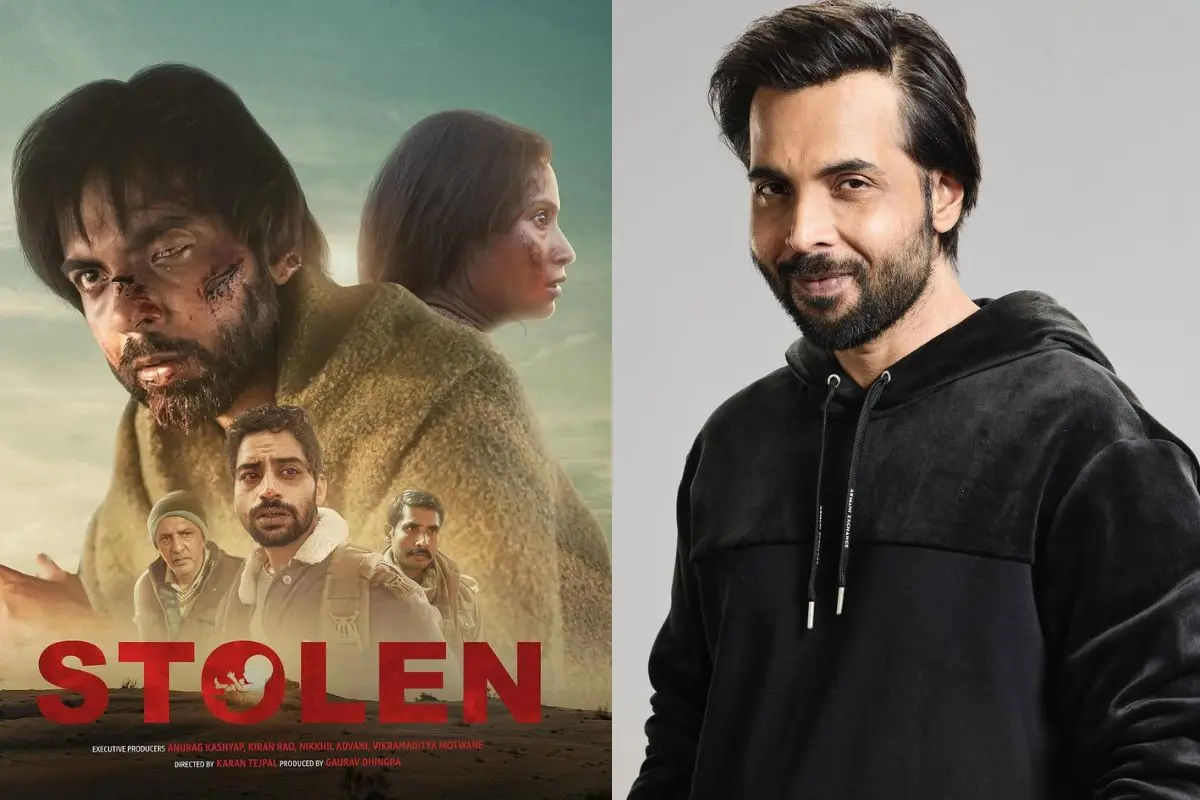
From the chaos of a powerful mob lynching scene in ‘Stolen’ to the quiet lanes of Bhopal for his next film, Abhishek Banerjee is a man constantly shifting gears—and giving it his all. The actor was recently in Madhya Pradesh for the shoot of ‘Baaghi Bechare’, a Sumit Purohit directorial that also features Pratik Gandhi, Faisal Khan, and Durgesh Kumar.
In an exclusive chat with Mathrubhumi English, Abhishek spoke about wrapping up the Bhopal schedule, the emotional weight of ‘Stolen’—an award-winning crime drama that first premiered at festivals in 2023 and recently released on Prime Video on June 4—and how his early years as a casting director still influence the roles he picks. He also recalled how he broke down after filming the intense lynching scene in ‘Stolen’, a moment that continues to linger long after the cameras stopped rolling.
Reflecting on his journey as a casting director and an actor, Abhishek also shared that Jaideep Ahlawat is the first actor who truly challenged him in the audition room—an experience that left a lasting impression.
From intense roles to industry insights, Abhishek holds nothing back. Read the full interview for the complete story.
Q. You recently finished shooting the Bhopal schedule of ‘Baaghi Bechare’. What can you tell us about the film and your experience working on it?
Abhishek: We have wrapped up the first schedule of the film. The main and important aspect has been shot. Now we have to shoot some other parts, which will be shot in Mumbai. I can’t really talk much about the story since it’s still under wraps. But what I can tell you is that it’s a very unique one.
Pratik (Gandhi), Faisal (Khan), and Durgesh… they are all fantastic actors. Sumit Purohit is one of the finest minds in the industry. It’s a very universal film; a film which, when it comes out, we all will be very proud of, as Indians. It has a lot to offer to the global audience, too. It’s a film based in India, but has a very global thought.
Q. ‘Stolen’ has marked a turning point with global festival acclaim. How do you feel about the response the film has been getting?
Abhishek: I’ve often said it’s high time we create stuff which are universal and global. Usually, what happens is that we look at other shows - Korean, Spanish, etc, and keep talking about how great ‘Money Heist’ is or how great ‘Squid Games’ is, or how good ‘Narcos’ is. But it’s now time for Indian artists to showcase their talent.
‘Stolen’ has really surprised us. When we started making this film, we always used to say on the sets that it is a very universal film. We wanted to make a film that caters to all kinds of audiences. The kind of response we’ve had in Venice and in British Film Institute (BFI) and other countries like Singapore, Japan, China, and all the European and American film festivals has been received very well.
In fact, even till today, it has been two years, we are getting enquiries about playing the film in festivals. That shows the kind of reach the film has. It has truly been a global success in that sense, and now that it has a platform like Prime Video, and it’s trending in many countries, I feel very satisfied. Probably, we are geared up for the next project now. We want to really kill it in the next project.
Q. How did you prep to play Gautam’s character, especially scenes highlighting mob mentality?
Abhishek: Whether it is today’s modern age or medieval times, the mob has always played a role in serving or not serving justice. Big emperors have been lynched by a mob, a thief has been lynched by a mob… Since childhood, we have been listening to cases of mob lynching where ‘bheed’ is taking charge. Over the past few years, we of course now have the internet and social media, which is why you see a lot of these videos, and every time you see that, it’s appalling -- that kind of violence on the streets where somebody is getting beaten up brutally; it’s very appalling. And that’s exactly what I probably wanted to show - just not rehearse it, but go with the flow.
Once I finished shooting for the (mob) scene, I was completely torn down as a human being. The only thing I did was, because for me, as research for the character, I realized that I don’t need to plead my innocence. When you get beaten up so much, you’re just suffocated. You just want to breathe, and that was the entire process for me for that particular scene.
Once the scene was over, as my character and as myself, I was actually breathing, and I almost broke down. That’s what my team tells me that I broke down, but if you ask me, I have no memory of it. It was almost as if I were in a trance.
Q. You’ve portrayed a wide range of characters—from the quirky Jana in ‘Stree’ to Jitendra in ‘Vedaa’ and the intense Gautam in ‘Stolen’. How challenging is it to shift between such varied roles?
Abhishek: For me, it’s like a game of cricket or football. Like how a cricketer loves his sport a lot. He’s not thinking whether he’s playing a one-day match, a test match, or a T20. He’s just going and playing the match. Sometimes they’re failing, sometimes they’re batting, bowling, or fielding. For me, acting is that. It’s like playtime for me; I don’t see it as a job or something I stress myself with. I love to do it, and that’s why I like to explore different characters. Also, thankfully, the directors trust me with these characters. That gives me a lot of belief, in a way. I just love acting; it’s my true love, and you can do anything for your love.
Q. Having worked across comedy, action, horror, social thrillers, and intense drama, which genre scares you as a performer, and why?
Abhishek: Action is a genre that is easy to play. Something that is serious, intense, and has action is easy for me to play. For action, you just need some kind of presence or aura. It comes easily to me. Something like ‘Vedaa’ or ‘Apurva’ comes easy to me. For Jana (‘Stree’) and Gautam (‘Stolen’), I have to work hard.
Q. Would you say that comedy is the most challenging genre among them all?
Abhishek: The problem with comedy is whether you are taking your character seriously or not. If you start making fun of your own character, then the comedy fails for me. I respect my character a lot. Even if I’m playing Jana, I respect him and I value his opinions and thoughts, and from there the humour comes. The more seriously Jana takes himself, the funnier it will be for the audience.
That’s the most difficult part in comedy - how to take the character seriously, and do it as seriously as possible, and not like go for the comedy or landing lines or punches. It’s about just playing the part and making it so believable that it’s funny.
Q. You began your career by casting others. Does that inner casting mindset still influence how you choose or shape your own roles?
Abhishek: I am very bad at casting myself. In fact, every time I have gotten good roles, it is always because the directors saw something in me. Amar Kaushik saw Jana in me, Devashish Makhija saw Dhavle in me for ‘Ajji’, Sudip Sharma saw me as Jana and cast me in ‘Pataal Lok’. I have been completely wrong about what I think I look like or what I can do. But people have always gotten it right. I always trust others when it comes to them casting me in a particular role.
Having said that, casting helps me in understanding what the director really wants. It also helps me in choosing the kind of scripts that I want to be a part of. Since I have read so many scripts in the past few years, and it’s a constant process when you’re reading a script, it helps you develop an instinct about whether the scenes are working or whether the story is really talking to you.
When the scripts used to come to us as a casting company, it has happened so many times that we used to know whether the film was going to work or not, even before the film was made. Nine out of 10 times, we are always right about our choices; sometimes, the director may have surprised us. But usually, the script is always a testimony of how the film is going to be.
That is something which I have benefited from. I really think that being a casting director and reading so many scripts has helped me a lot.
Q. Has there been a time when you thought that maybe this character or the film won’t work, and it turned out to be a blockbuster?
Abhishek: No, not yet.
Q. Do you ever revisit your audition tapes, not out of nostalgia, but to check how much you have unlearned or evolved?
Abhishek: I had to unlearn a lot of things that I carried from my theater days. Theatre acting is different, and it requires different skills and different craft. Film acting is completely different because you’re working for a lens; working for one pair of eyes. Film acting is more intimate, and audition rooms have taught me that. Sometimes, audition rooms can be very intimate - it’s between you and the actor, and sometimes you also have to help the actor.
When you audition actors like Jaideep (Ahlawat)… Why Jaideep is because he was the first actor in the audition room who challenged me as an actor. Usually in the audition room, I was always used to be in command when it came to acting. But with Jaideep, whenever he used to come, I used to be more prepared. I would read my lines more. So that really helped… when we had amazing actors in front of us who are doing their stuff, it helped me understand a thing or two about camera acting.
Q. Could you share any updates on ‘Stree 3’ or the Maddock horror comedy universe?
Abhishek: Both ‘Stree 3’ and ‘Bhediya 2’ are happening.. All good things take time. These guys are maniacs - Amar Kaushik, Niren Bhatt, and Dinesh Vijan. I hope they don’t mind it, but I would really like to call them maniacs. They are so passionate about what they are doing that they are constantly doing it. They’re working 24 hours. Even when they’re sleeping, they’re thinking of plots. That’s the kind of environment Maddock is in right now. They are building the stories; they are building the scripts. I’m eager to read the next series (of scripts) whenever they give it to me. But I think nothing is going to start happening before next year for sure.