‘No actor wanted to work with me…’ How Harshvardhan Rane revived Milap Zaveri’s career with Ek Deewane Ki Deewaniyat
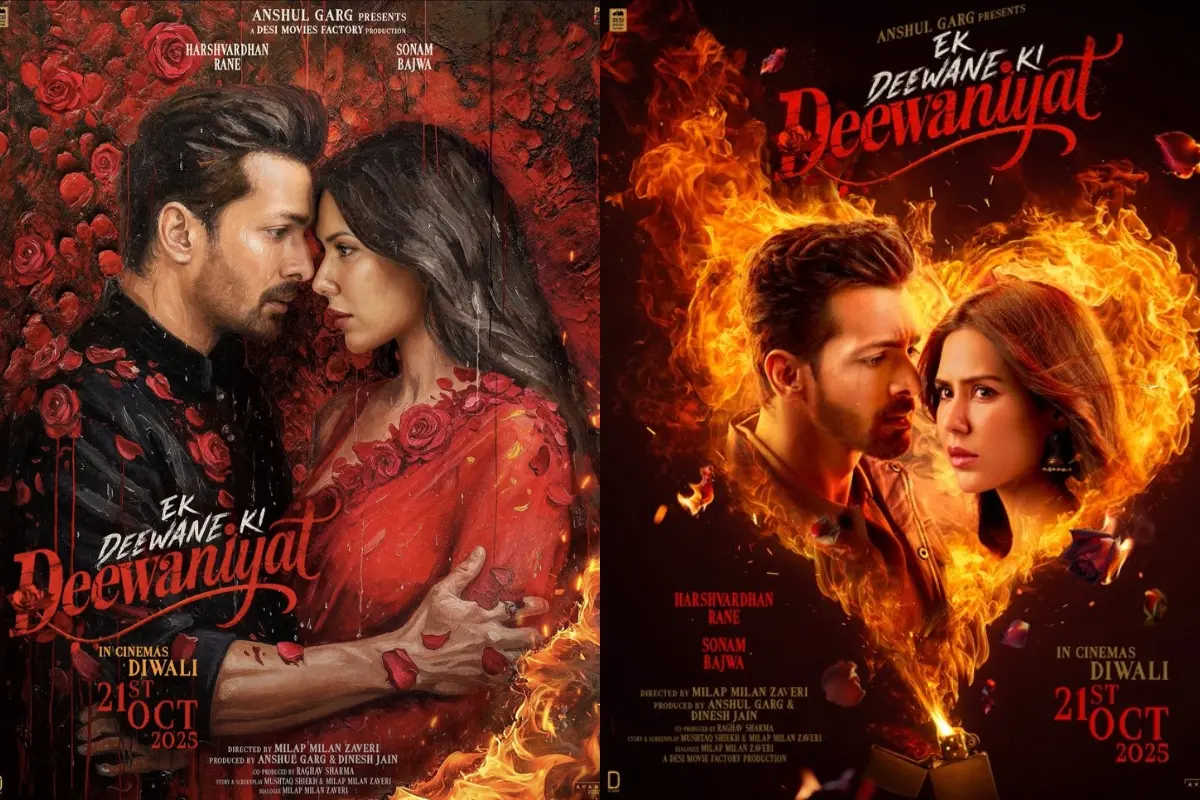
Filmmaker Milap Milan Zaveri is witnessing a significant career revival with Ek Deewane Ki Deewaniyat crossing Rs 100 crore in worldwide collections. The Bollywood film, starring Harshvardhan Rane and Sonam Bajwa, has completed a month in cinemas and is nearing the Rs 79 crore mark in India alone, despite opening alongside Ayushmann Khurrana and Rashmika Mandanna’s Thamma. Its global performance has propelled it into the Rs 100 crore club, placing it among the year’s few notable box office successes.
The achievement carries added weight for Zaveri after the disappointing outcome of Satyameva Jayate 2. Speaking to Etimes, he described the film’s success as “surreal”, calling it an unexpected “dark horse” that gathered momentum despite fierce Diwali-week competition. Some publications have even placed it among the year’s major super hits.
Reflecting on the setbacks that followed his earlier release, Zaveri said Harshvardhan Rane’s willingness to take on the project proved pivotal at a time when other actors were hesitant due to his previous box office performance. According to Zaveri, Rane agreed to the film immediately after hearing the script and later contributed significantly to shaping his character’s trajectory in the second half.
Following the film’s success, Zaveri is now gearing up for Mastii 4, the latest instalment in the comedy franchise he has been associated with since its inception. The film features Vivek Oberoi, Riteish Deshmukh, Aftab Shivdasani, Arshad Warsi and Tusshar Kapoor, and is scheduled to clash with Farhan Akhtar’s 120 Bahadur.
However, the film has also reignited debate about Bollywood’s persistent romanticisation of toxic masculinity. Despite festive-season cheer, the industry has released yet another title that frames obsession, entitlement and possessiveness as “passionate love”. Ek Deewane Ki Deewaniyat, directed by Zaveri and co-written by Mushtaq Shiekh, opened in cinemas on 21 October 2025. In the film, Harshvardhan Rane plays Vikramaditya, a powerful politician, while Sonam Bajwa portrays Adaa, a young woman who embraces love without restrictions. Although the promotional material generated early interest, the on-screen narrative depicts Vikramaditya’s obsession intensifying from emotional control to suffocating possessiveness. The climax attempts to present this descent as an “evolution” of love, blurring already fragile boundaries between loyalty and dangerous fixation.
Social media reactions were immediate and unforgiving. Viewers accused the film of glamorising harassment, controlling behaviour and the long-standing trope of men refusing to accept rejection. The portrayal of a man who relentlessly pursues a woman despite repeated refusals—yet is still positioned as the romantic lead—sparked criticism, with many asking: “What happened to ‘no means no’?” One viewer wrote: “Watched 20 mins of Ek Deewane Ki Deewaniyat and asked myself, ‘Why am I even here?’” Memes, threads and opinion posts spread rapidly online, comparing the film to earlier entries in the so-called “Vanga-verse”, including Arjun Reddy, Kabir Singh and Animal.
The controversy deepened when filmmaker Hansal Mehta offered public congratulations to Zaveri on X (formerly Twitter). Netizens quickly highlighted what they saw as a contradiction from a director widely regarded as socially aware. One comment read: “This ‘sensitive, intelligent’ man is congratulating the maker of misogynistic films where ‘no’ means ‘yes’. He calls it a success, without realising how deeply such films poison young minds.”
Critics argue that Ek Deewane Ki Deewaniyat continues Bollywood’s pattern of romanticising control and obsession, promoting persistence at the cost of consent. Once again, personal boundaries become obstacles rather than principles. At a time when audiences are increasingly rejecting toxic tropes, it remains disheartening to see mainstream cinema persist with outdated and harmful narratives. Instead of absorbing the lessons from recent backlash, the industry appears more inclined to turn male obsession into spectacle.