Ed Sheeran’s Macklemore Controversy Explained: What Happened, Who Said What And Why?
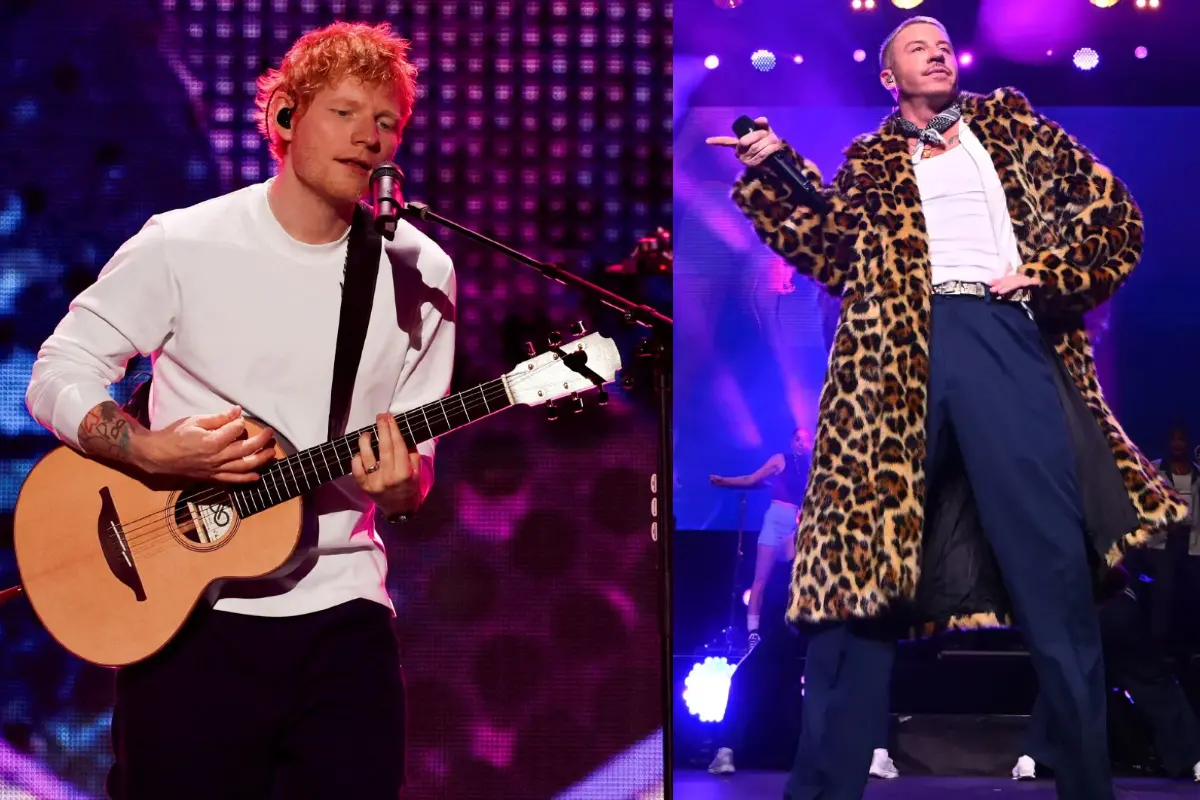
Ed Sheeran’s Loop Tour has been caught up in a controversy over free speech, the Israel-Palestine conflict and the question of whether political statements should have a place on a concert stage. What began with rapper Macklemore’s pro-Palestinian remarks at a New Jersey show has since led to his removal from Sheeran’s US tour, the withdrawal of several other supporting acts and protests outside Sheeran’s concerts.
Sheeran has repeatedly said that Macklemore’s removal was not his decision and that it was ultimately made by the tour promoter after venue concerns. But the singer has nevertheless faced criticism from some fans and artists over how the situation was handled.
The controversy took another turn when Sheeran addressed Gaza during his Philadelphia concert on September 19, describing the situation as “catastrophic and unjustifiable” and apologising for the way he had handled the fallout.
Here is everything that happened.
How did the Ed Sheeran-Macklemore controversy begin?
Macklemore was originally announced as the opening act for several shows on the US leg of Sheeran’s Loop Tour.
The controversy began at Sheeran’s September 4 concert at MetLife Stadium in East Rutherford, New Jersey, when Macklemore used part of his set to speak about Gaza and Palestine.
Introducing his protest song ‘Hind’s Hall’, the rapper said he wanted people in Gaza and the occupied West Bank to know they had not been forgotten. He also said “Free Palestine” and expressed support for people affected by conflicts in several parts of the world.
The following day, during another performance, Macklemore addressed Jewish members of the audience and argued that criticism of Israel and opposition to what he described as apartheid and genocide should not be equated with criticism of Jewish people. He said his message was about peace, love, dignity and equality.
Macklemore has been publicly supportive of the Palestinian cause for years. His 2024 song ‘Hind’s Hall’ was released in support of pro-Palestinian protesters and was inspired by the killing of five-year-old Palestinian girl Hind Rajab.
Why was Macklemore removed from Ed Sheeran’s tour?
Macklemore was subsequently dropped from the remaining US dates of the Loop Tour.
According to the tour promoter, Messina Touring Group, several venues informed the promoters that they would not host shows with Macklemore still on the lineup. Sheeran later said the decision to remove him was made by the promoter and was not his own.
Macklemore, however, attributed a significant part of the pressure to New England Patriots owner Robert Kraft, whose Kraft Group owns Gillette Stadium in Massachusetts. Sheeran was scheduled to perform there later in September.
Macklemore said Kraft and other stadium owners had indicated that they would not host Sheeran's shows if he remained part of the lineup.
Kraft subsequently defended the decision. He said it followed Macklemore’s recent comments as well as what he described as a broader history of antisemitic rhetoric and imagery.
Macklemore has rejected accusations that his criticism of Israel is antisemitic, arguing that criticism of the Israeli government and its actions should not be treated as hostility towards Jewish people.
What did Ed Sheeran say about Macklemore's removal?
Sheeran initially tried to distance himself from the political controversy.
In a statement, the singer said:
“Macklemore coming off tour was the promoter’s decision, it was not mine.”
He also said he had spoken extensively with venues during the week in an attempt to “build a bridge” and avoid disappointing fans who had already bought tickets.
Sheeran explained that he generally does not use his professional platform for political discussions because his concerts attract audiences from different backgrounds, including young people and children.
He also said he did not want to abandon the touring crew, musicians and other workers whose livelihoods depended on the concerts continuing.
Why did other artists quit Ed Sheeran’s tour?
The controversy grew significantly after Macklemore’s removal.
Within hours of Sheeran publicly explaining his position, several artists associated with the Loop Tour announced that they were withdrawing.
Danish band Lukas Graham and Irish singer Aaron Rowe had been brought in as replacements for Macklemore on the remaining US dates. Both subsequently pulled out.
Irish folk group Beoga, which had been performing with Sheeran during parts of his set, also left the tour.
Finneas, who was scheduled to perform with Sheeran during the South American leg later this year, announced his withdrawal as well.
The artists gave different explanations, but several statements focused on freedom of expression and opposition to the silencing of pro-Palestinian voices.
Finneas said artists should not be silenced when speaking up for oppressed people. Beoga referred to its Irish history and support for Palestinian causes, while Aaron Rowe said he could not support billionaires using their influence to silence political expression.
The departures left Sheeran without the group of supporting acts that had been associated with the US and South American legs of the tour.
What happened to Ed Sheeran's Philadelphia concert?
Sheeran's September 19 concert at Lincoln Financial Field in Philadelphia became the first major test of the tour after the controversy erupted.
He began the show without an opening act and later performed with other musicians during parts of the concert.
Ed Sheeran concert-goers greeted by anti-genocide protesters in Philadelphia tonight, September 19. #edsheeran #macklemore pic.twitter.com/CqAry0GCk3
— 𝕬𝖗𝖆𝖘𝖍𝖎𝕱𝖑𝖆𝖒𝖊🗝️🫒☝🏻 (@Arashi_Flame) September 21, 2026
Outside the venue, pro-Palestinian demonstrators gathered to protest Sheeran's handling of the Macklemore controversy.
The reaction among concertgoers was mixed. Some criticised Sheeran for not taking a stronger position, while others argued that concerts should remain focused on music rather than political debate.
What did Ed Sheeran say about Gaza in Philadelphia?
At the Philadelphia concert, Sheeran directly addressed the conflict for the first time since the controversy intensified.
He condemned the October 7, 2023 Hamas attacks in Israel as horrific while describing Israel's subsequent actions in Gaza as “catastrophic and unjustifiable”. He also spoke about what he described as systemic injustice in the West Bank.
Sheeran said he had never wanted to be an “activist musician”, but acknowledged that the Macklemore controversy had put him at the centre of a wider debate about freedom of speech and the Israel-Palestine conflict.
He also apologised to fans, saying he had been forced to make difficult decisions and had made mistakes.
The comments marked a significant change from his earlier emphasis on keeping politics out of his concerts.
Sheeran also raised concerns about venues controlling artists
Another important part of Sheeran's Philadelphia speech was his criticism of venues potentially determining what performers can say or do on stage.
He said he was concerned about performances being pre-approved by venues and argued that such restrictions raise broader questions about artistic freedom and free expression.
The issue is at the centre of the Macklemore controversy because the rapper's removal was linked to venue objections rather than a direct announcement from Sheeran himself.
What happened between Macklemore and Robert Kraft?
Robert Kraft became a central figure in the controversy after Macklemore identified him as one of the people behind the pressure to remove him.
Kraft owns the New England Patriots and Gillette Stadium, one of the venues scheduled to host Sheeran.
Kraft said the decision was connected to Macklemore's recent comments as well as what he described as previous antisemitic rhetoric and imagery.
Macklemore rejected that characterisation and continued to defend his position on Palestine. The disagreement has therefore become part of a wider debate over where criticism of Israel ends and antisemitism begins, with the two sides offering fundamentally different interpretations of the rapper's remarks and history.
What did Macklemore do after leaving the tour?
After his removal, Macklemore announced that he would donate $1 million from his net earnings from the tour to organisations supporting Palestinians.
He also challenged Kraft to match the contribution.
Kraft subsequently said that Sheeran had contacted him and asked him to match a $2 million donation. A spokesperson for Kraft confirmed that Kraft would contribute $2 million, while Sheeran was also said to have committed $2 million. The recipients of those latter donations had not been fully specified in the reports.
The development shifted some attention from the tour dispute towards financial support for humanitarian relief.
So, why is Ed Sheeran facing backlash?
The backlash against Sheeran is largely centred on the circumstances surrounding Macklemore's removal and Sheeran's initial response to it.
Critics have questioned why Sheeran continued with the tour after Macklemore was removed and argued that allowing venue concerns to determine who could perform amounted to suppressing political expression.
The withdrawal of Finneas, Lukas Graham, Aaron Rowe and Beoga intensified those criticisms. Their decisions turned what had initially been a dispute involving two artists into a wider debate about artists, promoters, venue owners, money and freedom of expression.
ALSO READ: What to know about Ed Sheeran's tour after Macklemore was cut and other artists dropped out
At the same time, Sheeran has consistently maintained that he did not personally remove Macklemore and that he was trying to balance the interests of fans, venues, performers and the large touring workforce.
His Philadelphia speech subsequently showed that he was willing to speak about Gaza directly, even while maintaining that he did not want his concerts to become political forums.
Where does the controversy stand now?
The immediate fallout has changed the shape of Sheeran's Loop Tour, with Macklemore and the other announced supporting acts no longer part of the remaining schedule.
The dispute, however, has grown beyond the tour itself. It has raised questions about whether musicians should be free to make political statements during commercial performances, whether venues should have the power to object to an artist's views and whether artists with enormous platforms can realistically separate their work from major humanitarian and political issues.
For Sheeran, the Philadelphia concert marked the first time he addressed the controversy at length in front of an audience. His comments about Gaza, his apology and his concerns about venue control have now become another part of a story that began with two words from Macklemore on a New Jersey stage: “Free Palestine.”