Dia Mirza's Diwali video row explained: BMC's move, BJP backlash and her strong response
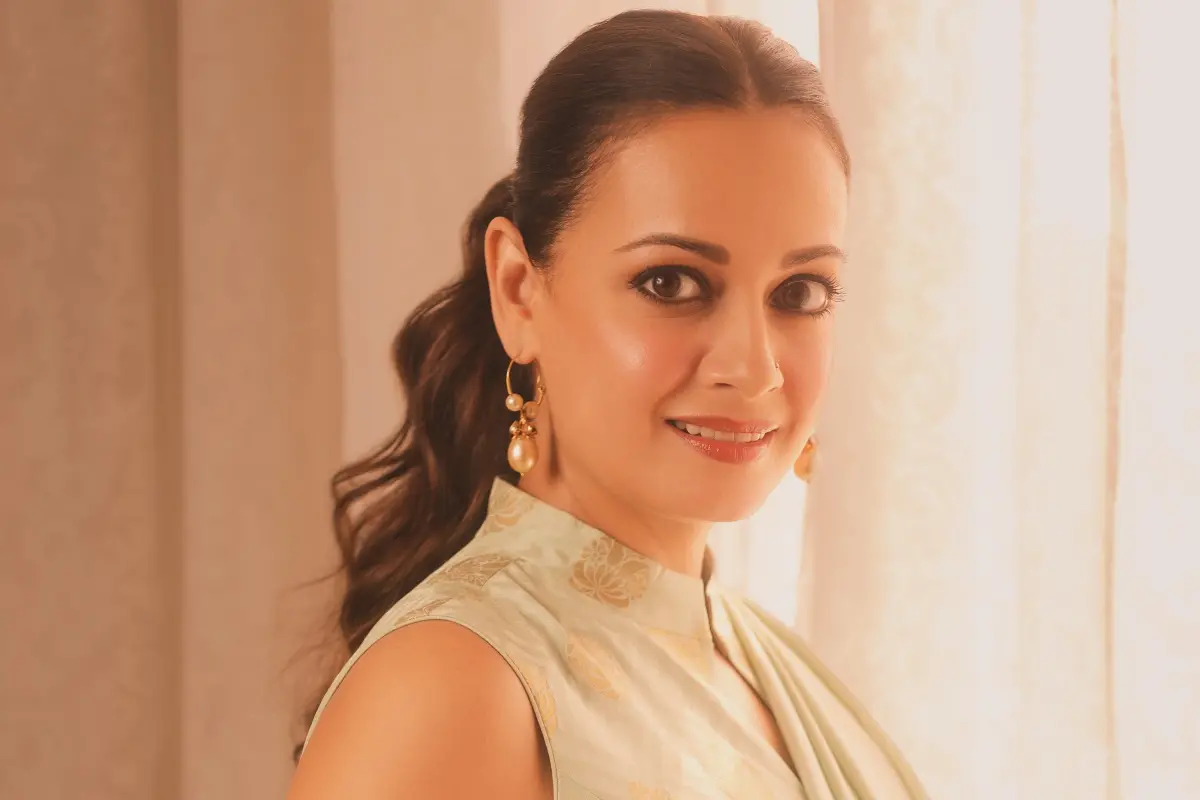
An appeal to celebrate Diwali without adding to air and noise pollution has unexpectedly turned into a political controversy in Maharashtra. Actor Dia Mirza, who recorded a public awareness message for the Brihanmumbai Municipal Corporation’s (BMC) eco-friendly Diwali campaign, found herself at the centre of a debate after the civic body removed her video following objections from BJP leaders.
The controversy has since taken a political and religious turn, with the BJP questioning Mirza's suitability to be part of a campaign associated with a Hindu festival, while opposition parties have accused the ruling party of communal politics. Mirza, meanwhile, has defended her participation, maintaining that the message was about public health and environmental protection.
But what exactly happened, what did the BMC do, and why did the actor's video become a flashpoint? Here is a breakdown of the controversy.
What was Dia Mirza's Diwali video about?
The video was part of the BMC's official campaign encouraging Mumbai residents to celebrate an environment-friendly Diwali by avoiding firecrackers that contribute to air and noise pollution.
The civic body had roped in several public figures to spread awareness as part of its anti-firecracker initiative. Apart from Mirza, actors Madhuri Dixit and Nishigandha Wad, along with cricketer Ajinkya Rahane, were among those associated with the campaign.
Mirza recorded an appeal asking people to be mindful of the environment and public health while celebrating the festival. According to civic officials, she had voluntarily recorded and submitted the video without charging a fee.
The campaign was also linked to directions issued by the Bombay High Court. In its accompanying social media post, the BMC stated that bursting firecrackers on public roads, lanes and footpaths was strictly prohibited in accordance with the court's directions.
Why did the BMC remove Dia Mirza's video?
The controversy began after BJP Mumbai president Ameet Satam objected to Mirza's participation in the campaign.
@mybmc We don’t need lessons on how to celebrate #Diwali from @deespeak Our traditions are deeply rooted in our culture.
— Ameet Satam (@AmeetSatam) November 1, 2026
On X, Satam tagged the BMC and wrote: "@mybmc We don't need lessons on how to celebrate #Diwali from @deespeak. Our traditions are deeply rooted in our culture."
Following his objection, the BMC removed Mirza's video from its official social media platforms. The clip, which had reportedly been uploaded at 8.25 am on Sunday, November 1, was taken down later that night.
What raised further questions was the fact that the civic body continued to retain the other celebrity videos from the same campaign, including those featuring Madhuri Dixit and Ajinkya Rahane.
#WATCH | Maharashtra: On the controversy over Actress Dia Mirza's pollution-free Diwali campaign, Mumbai Mayor Ritu Tawde says, "If we look at Dia Mirza’s entire profile, we see that she has opposed the Narmada project and the Uniform Civil Code (UCC). She has also spoken against… pic.twitter.com/lBnktC58G5
— ANI (@ANI) November 2, 2026
Mumbai Mayor Ritu Tawde subsequently criticised the BMC administration and said that her clearance should be sought before celebrities are appointed for civic campaigns in the future.
She also made it clear that the objection was not to the message itself, but to the person delivering it.
What is the Hindutva angle in the controversy?
The political disagreement soon moved beyond the question of firecracker-related pollution and into a debate about Hindutva and the celebration of Hindu festivals.
Mayor Ritu Tawde accused Mirza of taking an anti-Hindutva position, citing her previous public statements and positions on issues such as the Narmada project, the Uniform Civil Code (UCC) and comments concerning Prime Minister Narendra Modi.
Tawde argued that the actor's broader public profile reflected opposition to Hindutva and questioned why someone with those views had been chosen to deliver a message about celebrating Diwali.
Maharashtra minister Nitesh Rane also criticised the actor's involvement. He questioned why Mirza spoke about environmentally responsible celebrations during Diwali and Holi but, according to him, did not make similar appeals during Eid, Muharram or Bakri Eid.
Rane accused people like Mirza of being against Sanatan Hindu religion and said he would raise the issue with the Chief Minister to prevent similar appointments in the future.
The BJP's objection, therefore, was not limited to the content of the video. Its leaders questioned the actor's ideological position and her association with a campaign connected to a Hindu festival.
What did Dia Mirza say in response?
Mirza stood by her video and questioned the criticism directed at an appeal that she said was recorded in the public interest.
Speaking to news agency ANI, the actor said the video was made following directions from the Bombay High Court and the BMC, with the objective of addressing air pollution.
"Why should anyone be critical of a video that the Honourable Bombay High Court and BMC have made me record in public interest? Air pollution is an area of concern and all efforts to reduce pollution should be welcomed because it is a matter of public health," she said, as quoted by ANI.
In another response to Mumbai Mirror, Mirza reportedly described the criticism as "ridiculous and pathetic" and said it was disappointing to have to respond to what she termed bigotry.
She also clarified that she had not accepted any payment for the campaign. In a social media post, the actor wrote, "Koi paise nahi liye hain. Bhalai ka zamana hee nahi raha."
Later on Monday night, she reiterated that the video was intended to encourage healthier and more mindful celebrations. She also described Diwali as a festival that celebrates the triumph of light over darkness, knowledge over ignorance and hope over despair.
Mirza is also associated with environmental advocacy and has been appointed the UN Environment Goodwill Ambassador for India.
How have political parties reacted?
The BMC's decision to remove the video has drawn criticism from opposition parties, which have questioned the civic administration's decision to act following a political leader's objection.
Shiv Sena (UBT) leader and former Mumbai mayor Kishori Pednekar accused the administration of giving in to the BJP's pressure. She also argued that Mirza should not be targeted because of her name.
Congress leader Vijay Waddettiwar accused the BJP of pursuing a communal and divisive political agenda despite its leaders taking an oath to uphold the Constitution.
Mumbai Congress president Varsha Gaikwad alleged that the video was removed under political pressure and demanded the removal of Municipal Commissioner Ashwini Bhide. She also called for the video to be restored and an unconditional public apology to be issued to Mirza.
Interestingly, the BJP's ally Shiv Sena did not appear to share the same objection. Deputy Mayor Sanjay Ghadi said he did not find anything inappropriate in the actor's appeal and questioned why the video had to be removed.
Union Minister Ramdas Athawale also offered a different perspective, saying that while firecrackers are associated with the significance of Diwali, excessive pollution remains a concern.
What happens next?
The controversy has raised questions about the role of civic bodies in public awareness campaigns, the selection of public figures for government-backed initiatives and the growing intersection of environmental messaging with political and religious debates.
At the centre of the disagreement is a video that asked citizens to be mindful of air and noise pollution during a festival. While the BJP has questioned the actor's ideological position and her suitability for the campaign, Mirza has maintained that her participation was driven by a public health concern and the need to protect the environment.
For now, the video remains at the centre of a political debate that has moved well beyond its original message: whether an appeal for cleaner air during Diwali should be viewed through the lens of environmental responsibility or the ideological positions of the person delivering it.