'Being woman is a violent experience...' Kristen Stewart’s unflinching take on womanhood shines at Cannes
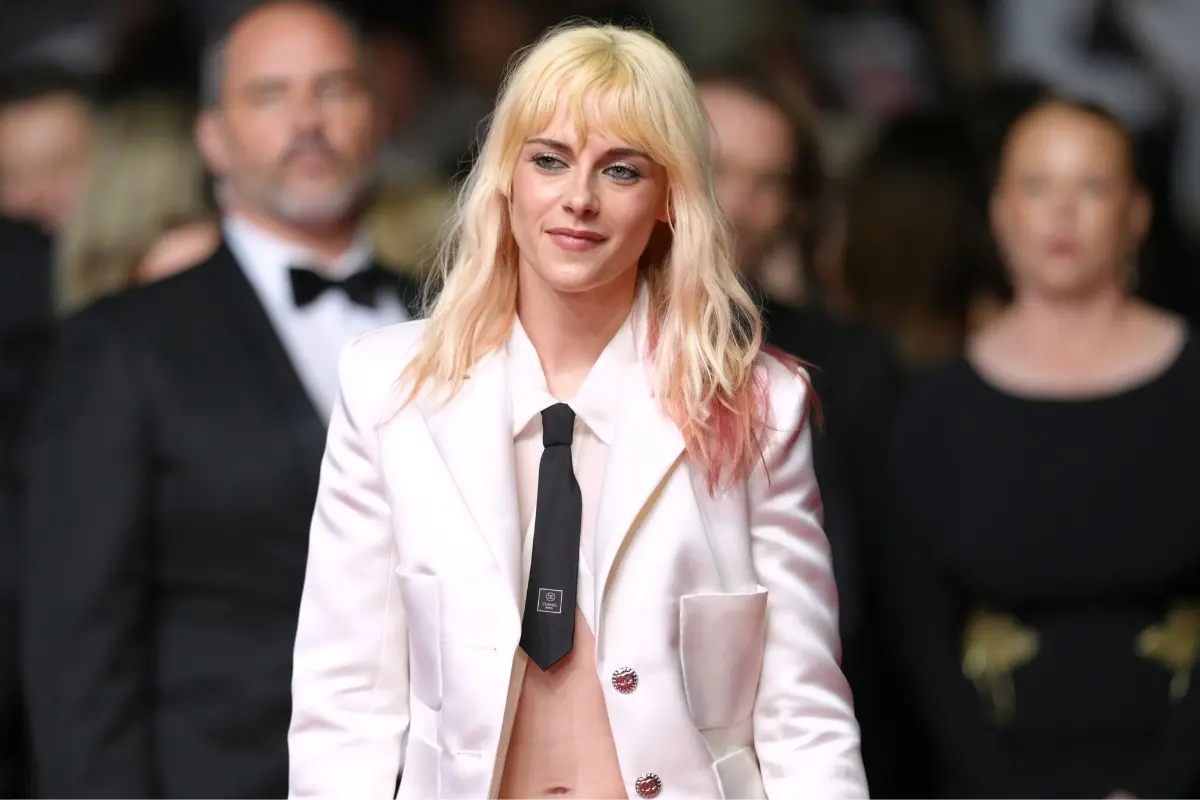
Kristen Stewart expressed excitement about her future projects following the premiere of her directorial debut, ‘The Chronology of Water’, at the Cannes Film Festival. The film, based on American swimmer Lidia Yuknavitch’s memoir detailing her survival of childhood abuse, has earned rave reviews from critics.
Stewart shared, “I can't wait to make 10 more movies,” reflecting her enthusiasm after receiving widespread acclaim. Rolling Stone described the film as “one hell of a directorial debut,” while Variety called it “a stirring drama of abuse and salvation, told with poetic passion.”
IndieWire’s David Ehrlich noted, “there isn't a single millisecond of this movie that doesn't bristle with the raw energy of an artist.”
A story that demanded to be told
Despite earlier producers dismissing the script as “really unattractive” due to its heavy subject matter, Stewart persisted, driven by her deep connection to Yuknavitch’s writing.
“I had just never read a book like that that is screaming out to be a movie, that needs to be moving, that needs to be a living thing,” she said.
Stewart praised Yuknavitch’s ability to transform painful experiences into something “you can live with, something that actually has joy.”
She added, “The reason I really wanted to make the movie is because I thought it was hilarious in such a giddy and excited way, like we were telling secrets. I think the book is a total lifeboat.”
On the violence of womanhood
Speaking candidly about the themes of the film, Stewart said, “Being a woman is a really violent experience, even if you don't have the sort of extreme experience that we depict in the film or that Lidia endured and came out of beautifully.”
She clarified that while there were no direct autobiographical links for her, she understood the story deeply.
“I don’t have to have been abused by my dad to understand what it is like to be taken from, to have my voice stifled, and to not trust myself.”
Stewart believes the film connects with “anyone who is open and bleeding, which is 50 percent of the population.”
Casting and creative choices
Rather than playing Yuknavitch herself, Stewart cast British actor Imogen Poots in the role, calling her “the best actress of our generation.”
She praised Poots for her ability to portray the character’s intense emotional journey, saying, “She has this big boob energy in the film—even though she is quite flat-chested—these big blue eyes and this long hair.”
Stewart described the film’s tone as having “a pink muscle that is throbbing,” capturing the fierce but chaotic fight to rebuild and find happiness.
Art as a path to healing
The film explores “what art can do for you after people do things to your body—the violation and the thievery, the gouging out of desire. Which is a very female experience,” Stewart explained.
She emphasised the power of storytelling and creativity: “It is only the stories we tell ourselves that keep us alive.” For Yuknavitch, art and writing were a way to reclaim herself and find a life she could live fully.
Stewart concluded, “The only way to take desire back was to bespoke it… and repurpose the things that have been given to you in order for you to own them.”
Summing up the complex nature of womanhood, Stewart said, “I'm not being dramatic, but as women we are walking secrets.”
AFP inputs