Before and after Bharathiraja: The director who redefined direction of Tamil Cinema
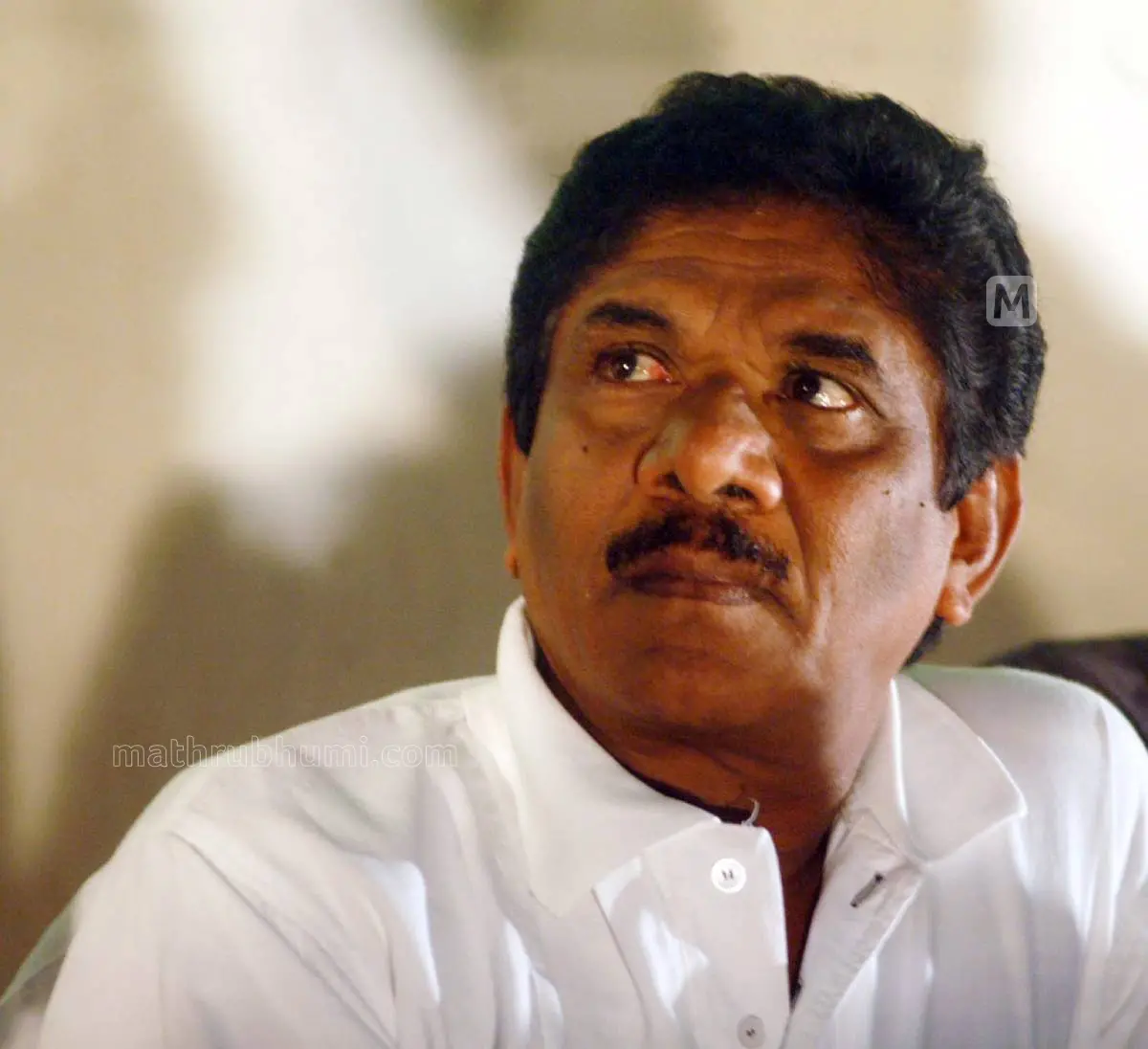
The journey of certain individuals through life, and their ascent to success, serves as a timeless inspiration. The life story of Bharathiraja—who arrived in the metropolis of Madras from the impoverished village of Allinagaram in Theni and completely shifted the trajectory of Tamil cinema—is one such inspiring tale
Whenever the iconic phrase "En Iniya Tamil Makkale" (My sweet Tamil people) echoed, people across Tamil Nadu would invariably turn around to listen, applaud, and pay heed, no matter how busy they were. Such was the deep affection they held for Bharathiraja’s warmth-filled voice.
The distance traversed by Chinnasamy—born to Periyamaya Thevar and Meenakshi Ammal in Theni Allinagaram—to transform into the legendary director Bharathiraja, was paved with sheer hard work and bitter experiences. Although he possessed a keen interest in playwriting and direction from his childhood, it was watching Sivaji Ganesan’s ‘Parasakthi’ in 1977 at a thatched-roof theatre in Theni that completely upended Chinnasamy's world. Having watched the film multiple times, the powerful performance of the actor left an indelible mark on young Chinnasamy's heart. He began reenacting Sivaji's performances at home, at school and on village porches, eventually earning the nickname 'Chinna Sivaji'. However, for a boy from a remote village like Allinagaram, Madras was a distant, unreachable dream. After completing his tenth standard, the question of what to do next loomed large. Higher education required moving to Madurai city, an option Chinnasamy disliked and one his family could not afford. Moreover, theatre alone could not put food on the table.
During a period when malaria was spreading through Theni and nearby villages, an announcement for daily-wage workers to raise public awareness caught the attention of Periyamaya Thevar. The basic qualification required was a tenth-standard education. A government job! If one proved their capability, the position could become permanent. With a lingering dream of acting buried deep within his heart, Chinnasamy took up the role of a sanitary inspector, walking from door to door to educate people about malaria.
While working in a village called Pannayapuram near Theni, he happened to watch a play. The background score for the production was composed by none other than Ilaiyaraaja. In an era when they did not own proper musical instruments, Chinnasamy watched in sheer amazement as Ilaiyaraaja generated music using a Dindigul lock on stretched iron wires. Rajaa’s elder brother was Bhaskar, and his younger brother was Gangai Amaran. When the brothers travelled as a troupe to provide background scores for plays, Chinnasamy joined them.
One night, while returning after a play, they encountered a massive crowd lining one side of the road, guarded by a heavy police presence. Prominent playback singers T M Soundararajan and P Susheela had arrived to perform at a local temple festival. Both were at the absolute pinnacle of their cinematic careers.
It suddenly struck Chinnasamy that if one truly desired money and fame, they had to break into the film industry. The exact same thought occurred to Ilaiyaraaja as well. To break into cinema, however, one had to reach Madras—the undisputed city of celluloid dreams. It was Chinnasamy's mother who recognised this burning obsession in her son. For days, her son would mutter "Madras, Madras" like a person possessed, magnifying his cinematic ambitions. Realising that her boy would lose his mind if he remained in the village, his mother packed him off onto a Madras-bound lorry with 300 rupees borrowed from others and a bag of clothes.
The lorry journey from Theni to Madras took two days. The plan was to stay at a close relative's house until a room could be arranged. To survive his long hours of wandering through Kodambakkam in search of opportunities, Chinnasamy would secretly pocket a portion of the breakfast served by his relatives to eat later when hunger struck, relying entirely on tap water for the rest of the day.
This habit of relying on tap water had sustained him through several difficult phases of his life. As a teenager, following an argument with his father, he had run away from home and taken shelter at the Madurai railway station. Before a single day had passed, his stomach began to protest bitterly. The station happened to be filled with goods wagons loaded with sacks of rice. Poking a sack with a sharp stone, he opened his trouser pockets to catch the cascading grains of rice, and subsequently filled the same pockets with tap water. After a while, the rice would soak sufficiently in the water to become edible. This resourceful tactic had been a regular feature of his life; on that occasion, his strike for survival lasted two days before he returned home on the third day, unable to hold out any longer.
By this time, Ilaiyaraaja and his brothers had also arrived in Madras, earning a livelihood by providing background scores for plays. Chinnasamy joined forces with them once again. He went on to stage a ticketed play at the Mylapore Tamil Club. It was through a producer associated with Ilaiyaraaja's troupe that Chinnasamy secured an introduction to the noted Kannada filmmaker Puttanna Kanagal. Puttanna gently smiled and remarked that the name 'Chinnasamy' might not resonate well with audiences when he became a film director in the future. Chinnasamy spent days brainstorming a new name. He shared a close bond with his younger brother Jayaraj, and held his dear sister Bharathi in high regard. Blending the 'Raj' from Jayaraj with Bharathi, the name 'Bharathiraja' was born, receiving an immediate nod of approval from Puttanna.
As his schedule grew increasingly hectic, Puttanna shifted his base to Bengaluru to focus better on his projects. Following this move, Bharathiraja worked as an assistant to several prominent directors, including M Krishnan Nair and K S Sethumadhavan. He received a major breakthrough when he got the opportunity to work from start to finish on ‘Daaham’, a film project created by the students of the Adyar Film Institute. ‘Daaham’ served as a comprehensive training ground, teaching him the intricate nuances of various stages of filmmaking and instilling the confidence to direct a film independently.
He began crafting numerous stories, pitching them to every producer he encountered. It was during this period that he crossed paths with a producer named Rajkannu, who was in Madras exploring concepts for a new film venture. Of the three stories pitched to him, Rajkannu took a strong liking to a story titled ‘Mayil’. When the question arose as to who would direct it, Bharathiraja suggested several prominent names, including S P Muthuraman. However, Rajkannu remained unimpressed by the suggestions. Later, while walking along a quiet street during a break for tea, Rajkannu pulled out a five-rupee note, slipped it into Bharathiraja’s pocket, and declared, "Nee thaan intha padathukku iyakkunar..." (You are the director of this film).
Meanwhile, Ilaiyaraaja and his brothers had travelled to Mumbai for a month-long musical programme. Upon their return, their elder brother Bhaskar was accompanied by his new wife—an alliance formed suddenly while in Mumbai. Shortly thereafter, Ilaiyaraaja also got married, making Bharathiraja's mother anxious to see her son settled. When they went to see a prospective bride in a neighbouring village, Bharathiraja chose to be completely transparent about his reality, explaining that an assistant director earned barely as much as a clerk, though income and a proper home would follow once he became an independent director. Appreciating his honesty, the girl's family verbally agreed to the alliance. However, while visiting the Theni market to purchase goods, the girl's family decided to make inquiries about the groom. The subsequent feedback—that he was someone chasing film opportunities without a steady income—caused the alliance to break off. Later, Chandraleela, a distant relative, became Bharathiraja’s wife during a period when his life was rocked by uncertainty, with no clear indication of where his career was headed.
Although Rajkannu had liked the story of ‘Mayil’, progress on the film had stalled. One afternoon, an Ambassador car pulled up outside the tiny, shop-like rented house where Bharathiraja lived. By then, he had become a father. Stepping out of the car, Rajkannu placed a bundle of hundred-rupee notes on the chest of the infant sleeping in the cradle, instructing Bharathiraja to commence work on the film immediately. The very next day, Bharathiraja set out with cinematographer Nivas to scout for locations.
This marked the genesis of ‘16 Vayathinile’, the masterpiece that would permanently alter the course of Tamil cinema. For his maiden venture, his childhood friend Ilaiyaraaja composed the background score and tracks. The song 'Sindoora Poove' won S Janaki the National Film Award for Best Female Playback Singer. For their roles in the movie, Kamal Haasan was paid a salary of Rs 30,000, Sridevi received 8,000 and Rajinikanth was signed for Rs 3,000. Produced in 1977 on a modest budget of Rs 5 lakh, ‘16 Vayathinile’ ran for over a year, creating history in Tamil Nadu.
The Tamil film industry, which had hitherto revolved almost entirely around the star value of its actors, began to look at the creative prowess of the director.
The director had effectively become the star. Inspired by his monumental success, young aspirants from various villages across Tamil Nadu began boarding trains to Madras with directorial dreams of their own. A brand new path of sensibility and direction was forged in Tamil cinema, ushering in an era of neo-realism. Consequently, the history of Tamil cinema continues to be analysed through two distinct eras: before and after Bharathiraja.