Why does Dolly Parton’s music still resonate with feminists today?
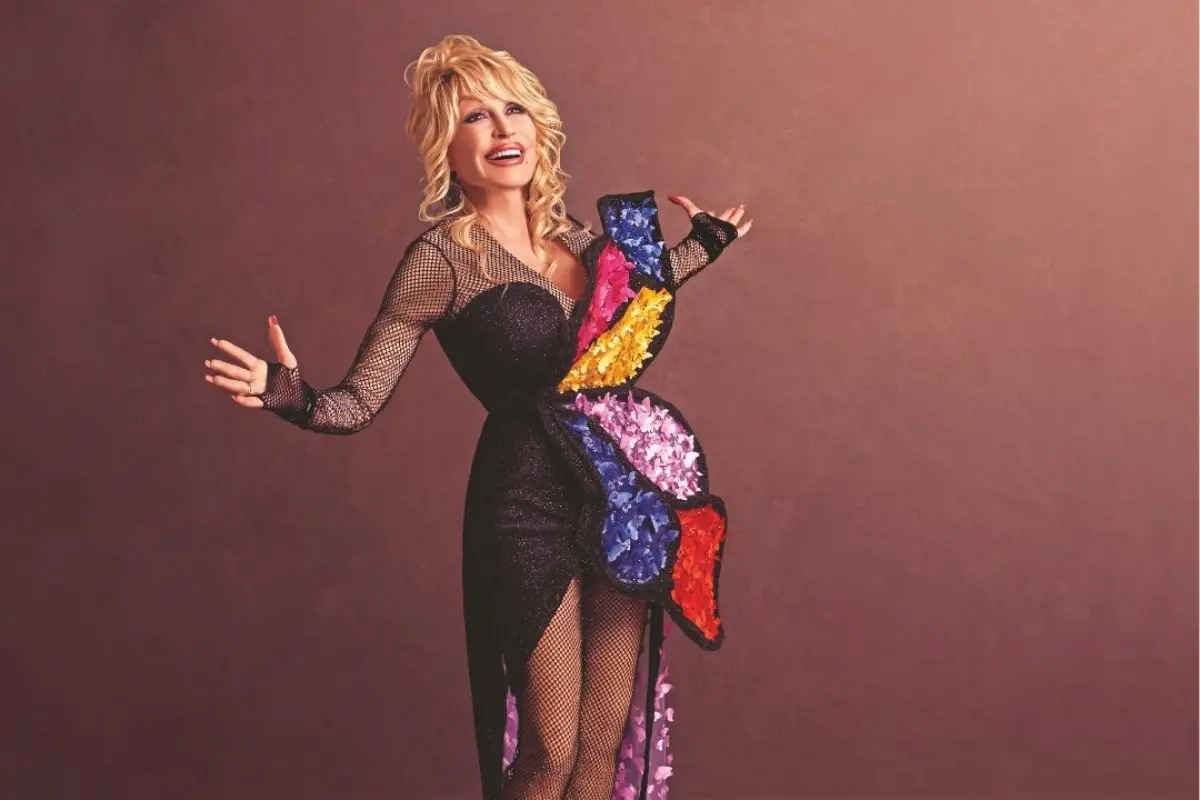
When Ms. magazine put together its January 1987 list of Women of the Year, Dolly Parton found herself in the company of some of the most influential women of the time. The cover featured 12 women, among them a US senator, a celebrated novelist and a former nun who had helped Central American refugees. And then there was Parton, the country music superstar with the towering hair, rhinestones and unmistakable voice.
Parton, who died this week at 80, never really embraced the word "feminist" to describe herself. She was similarly reluctant to attach political labels to her identity. But labels can only say so much. For many of the women who listened to her music, Parton's choices, career and songs said plenty.
Long before feminism became the more familiar cultural language it is today, Parton was building a career on her own terms. She wrote about women's lives, independence, work, relationships, double standards and survival. She also built a business empire around herself and used her success to create opportunities for others.
So while Parton may not have called herself a feminist, generations of feminist fans had no trouble claiming her as one.
"She showed us"
Lynn Melnick, who wrote I've Had to Think Up a Way to Survive: On Trauma, Persistence, and Dolly Parton, spent years looking at the role Parton's music played in her own life and recovery from trauma.
During that process, Melnick kept looking for a moment when Parton herself might have simply said she was a feminist.
What she found instead was something more complicated, and perhaps more powerful.
"She didn't tell us she was a feminist," says Melnick, author of I've Had to Think Up a Way to Survive: On Trauma, Persistence, and Dolly Parton. "She showed us - in her actions and her words and in her songs. And I think that's why people loved her so much."
That ability to make a point without turning it into a lecture was central to Parton's appeal. She could tackle uncomfortable subjects, but she usually did it with warmth, humour and a sense that she was speaking to ordinary people rather than preaching to them.
The double standard Dolly Parton sang about
One of the clearest examples came with "Just Because I'm a Woman", a song Parton used to call out the different standards applied to men and women.
At the Newport Folk Festival in 2019, Parton, then in her early 70s, performed the song and received a particularly enthusiastic response from the women in the audience when she reached its famous line:
"My mistakes are no worse than yours, just because I'm a woman."
Before singing it, Parton explained the personal experience behind the song. She recalled a conversation with her husband soon after they married, when he asked whether she had been with other men.
"When you boys get married you want us to be just as pure as snow - well, sometimes we're not!" she told the crowd. "This is for you, gals, and your boys just gotta take it, OK?"
It was classic Parton. She could point directly at a double standard while making the subject feel approachable rather than heavy.
For Melnick, that was part of the reason people across very different backgrounds could see something of themselves in Parton.
"One thing about Dolly is that no matter what side of the political spectrum you're on, you think she's with you," Melnick says.
"Everyone claims her. And so as a feminist I always thought, well, obviously she's a feminist, and the more I read about her and wrote about her, it was just undeniable - first of all because of how she lived her life completely on her own terms."
She knew exactly how to use the image people saw
Parton's appearance was impossible to ignore. The blonde hair, dramatic eyelashes, fitted clothes, curves and glitter became as recognisable as her music.
But music writer Caryn Rose believes Parton understood that the image could work in her favour.
"She knew she was blonde and pretty, and that it was always going to work against her," says Rose. "So she figured out how to make it work FOR her. There's not anything more feminist than that!"
Rather than allowing the assumptions attached to her appearance to define her, Parton turned them into part of her power.
Evelyn McDonnell, editor of the music anthology Women Who Rock and a professor at Loyola Marymount University, makes a similar argument. She sees Parton's glamorous appearance as something that allowed her to get away with saying things audiences might not have expected from her.
"She took the objectification of being a pop star and embraced it," says McDonnell. "It was like her magic cloak - she could be saying feminist things and doing feminist things and modeling a life and a voice that was outspoken, progressive, political. But you saw the package and you're like, Oh, okay.' It made it safe."
Gloria Steinem saw it too
Parton's approach did not go unnoticed by Gloria Steinem, the feminist writer and activist who co-founded Ms. magazine.
Writing about Parton in the magazine's 1987 Women of the Year issue, Steinem acknowledged that the country star might not immediately seem like an obvious feminist figure.
"People who haven't listened to Dolly Parton or to feminism may be surprised to learn that they go together," Steinem wrote.
Steinem pointed to another part of Parton's success: she had not simply built a career for herself. She had also used her business skills to help other women and people from poorer backgrounds.
"She has used her business sense to bring other women and poor people along with her. And her flamboyant style has turned all the devalued symbols of women to her own ends."
Steinem ultimately offered her own definition of why Parton belonged in the conversation.
"If feminism means each of us finding our unique power, and helping other women to do the same," Steinem wrote, "Dolly Parton certainly has done both."
The feminist ideas hiding in her songs
Parton's feminism, whether or not she would have used that word herself, is perhaps easiest to find in her songwriting.
Take "9 to 5", the hit she wrote for the 1980 film in which she starred alongside Lily Tomlin and Jane Fonda. The song became an anthem for working women, touching on workplace inequality, money, male authority and the frustrations of being undervalued.
As McDonnell puts it, "It's all about feminism, right? About women in the workplace, economic empowerment, pushing back against the male supervisor, uniting women's voices."
Then there was "The Bargain Store", a song that used the language of a shop selling second-hand goods to talk about a woman recovering from a broken relationship.
"I may have just what you're looking for, if you don't mind the fact that all the merchandise is used," Parton wrote. "But with a little mending, it could be as good as new."
The song was reportedly misunderstood by country radio, with Parton later saying some stations believed it was about prostitution. Her actual subject was emotional recovery after a relationship.
Melnick sees another message beneath the metaphor: the idea that a woman does not lose her value simply because a relationship has ended.
She wrote about women society didn't want to talk about
Parton was also willing to write about subjects that were uncomfortable for the mainstream country music audience of her time.
"Down from Dover" tells the story of a young unmarried mother waiting for the father of her baby to return. It dealt with pregnancy outside marriage at a time when the subject was rarely discussed openly.
"I wrote that back during a time when people didn't talk about unwed mothers," Parton told Vulture in 2023. "They wouldn't play that on the radio."
That willingness to write about women whose experiences were often pushed to the margins is another reason her work continues to resonate with feminist listeners.
A feminism built around choice
Melnick goes a step further, suggesting that Parton can be viewed as an early example of what later became known as third-wave feminism.
The movement, which gained wider attention during the 1990s, placed greater emphasis on individual choice and the idea that feminism did not have to come with one particular look or lifestyle.
In that sense, Parton's career seems remarkably ahead of its time.
She could wear enormous heels, towering hair and sparkling rhinestones while writing songs about working women, double standards, single mothers, heartbreak and female independence. She could embrace glamour without allowing glamour to become the whole story.
Perhaps that is why the question of whether Dolly Parton was a feminist has always felt slightly beside the point.
She did not need the label to write women into the centre of her songs, build a career without apologising for who she was, challenge double standards or encourage other women to find their own power.
Her fans saw that. So did Gloria Steinem.
And perhaps, ultimately, that was the most Dolly Parton thing of all: she did not have to tell people what she stood for. She simply kept showing them.