‘I grew up learning Carnatic music on and off’: Mary Ann Alexander on how Kerala shaped her sound
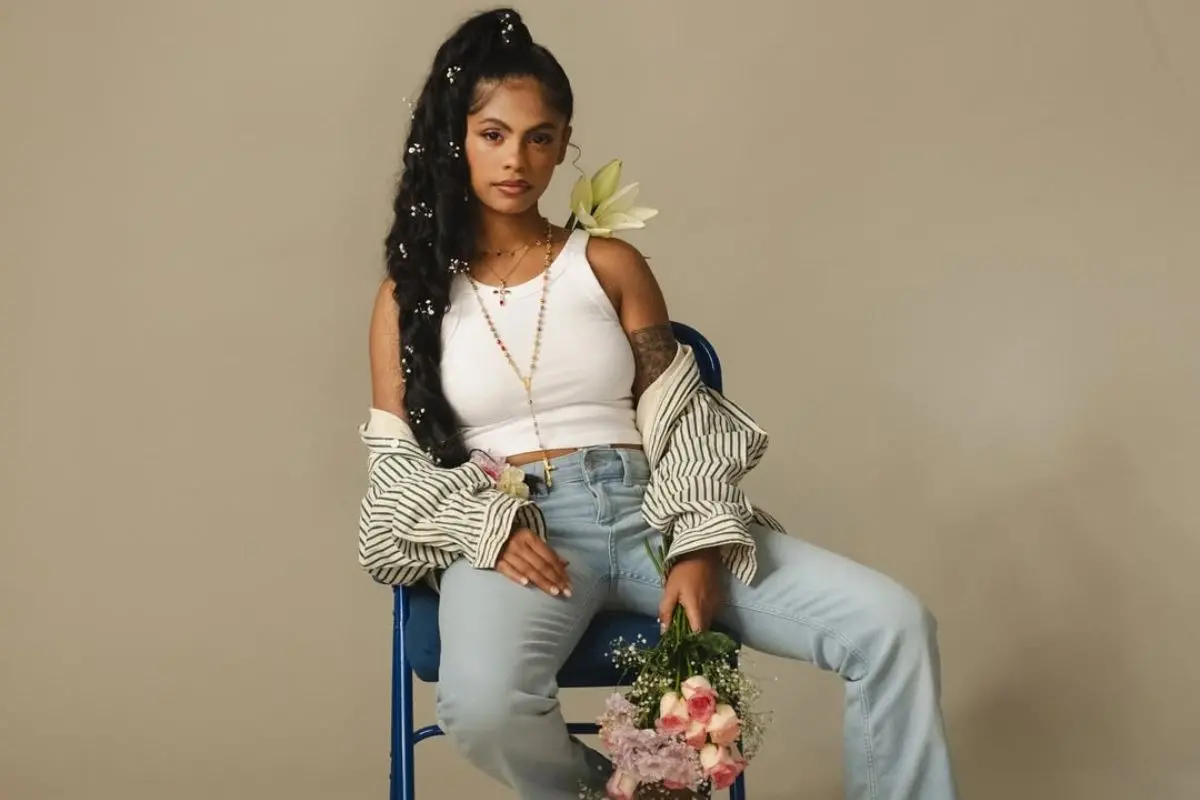
Kozhikode: Malayali R&B and indie artist Mary Ann Alexander, born and raised in Thiruvananthapuram, has released her new single 'Student of Love', a lush, slow-burning track created in collaboration with UK-based producer Ceebeaats.
Known for blending R&B warmth with jazz, Afrobeat, and modern pop, Mary Ann represents a young generation of Kerala artists expanding beyond traditional genres while still rooted in cultural memory.
Her new single becomes a marker of devotion — to life, love, and her evolving craft. Speaking to Mathrubhumi, Mary Ann delves into how Kerala, Malayalam, early studio exposure, and the Bengaluru creative atmosphere continue to shape her voice and artistic intuition.
Excerpts from the interview:
1. Q: Your new single 'Student of Love'—a lush, slow-burning ballad created with UK-based producer Ceebeaats—has just been released. What sparked this collaboration, and what does this song represent for you at this stage of your musical journey?
A: When Cee sent me a batch of beats, I remember actively searching for something that felt fresh but still carried that sense of familiarity and nostalgia. This particular beat for 'Student of Love' immediately had my attention. I didn’t overthink it. I just got to work right away. 'Student of Love' represents where I am right now in my life and in my artistry. I’m feeling much more devoted to my craft, to life, and to love. And I think that presence and openness come through in the song.
2. Q: You’re a Malayali from Thiruvananthapuram, a place deeply rooted in classical arts. How has growing up in Kerala shaped your musical sensibilities, especially considering you work in genres like R&B, jazz, and Afrobeat?
A: I grew up learning Carnatic music on and off, and I competed in youth festivals, and we’d train really hard the whole year. The pieces we learned were so intricate, with rich harmonies, counterparts, rhythms, and all of that shaped my ear. I even used to sing for Margam Kali, so there’s a lot of cultural and musical memory in me, whether I tap into it consciously or not.
3. Q: You once said that Malayalam itself has a rhythm that seeps into your music. Can you talk about specific elements of Kerala’s soundscape or cultural memory that show up—subtly or otherwise—in your work today?
A: My childhood was surrounded by art, and Kerala’s artistic traditions carry so much yearning, longing, and emotion. But at the same time, as a society, we don’t really show affection openly. I think that contrast influenced me deeply. When I found R&B, it gave me a space where all my big feelings could exist freely. So even though I make global music, a lot of my sensitivity — my emotional grounding — definitely comes from growing up in Kerala.
4. Q: Your journey began early—you walked into a recording studio at seven. Looking back, how did that early exposure to music influence the way you write, compose, or even approach experimentation now?
A: Most people actually find it really difficult to sing freely in a studio for the first time. Hearing your own voice in the headphones, the silence of the room, the pressure of the mic. It’s a very unnatural environment. I’m grateful my father took me into a studio really early on, because I became comfortable with that world quite quickly.
I used to sit next to the engineer while my dad recorded his vocals, so I understood the process long before I ever made my own music. Nothing about recording intimidated me; the mic, the booth, even the idea of experimenting. I think that’s why, today, I’m able to write and create with a lot of freedom. The studio doesn’t feel like a place to perform; it feels like a place to play.
5. Q: Your time in Bengaluru, studying Visual Communication, seems to have been formative. How did that environment help crystallise your identity as an artist who blends R&B warmth with modern pop textures?
A: When I moved to Bengaluru to study Visual Communication, my mom told me to find my tribe. Little did she mean a musical one, haha. I genuinely thought I would become a designer or a brand strategist, but being in Bengaluru opened me up to the bigger idea of following my passion. The city has this energy where anything feels possible and where there’s space for anyone who is trying to create something.
I watched people around me become photographers, illustrators, and documentary filmmakers. Everyone was building something from scratch. Seeing that made me feel like I could grow into myself too. I didn’t know what it fully meant at the time.
6. Q: You’ve worked across an impressive range—from film tracks like Over the Ocean, Sthuthi, and Ulfat to singles like In My Zone, Bling Bling, and Good Girl. How do you navigate these different musical spaces while staying true to your artistic voice?
A: I’ve got a vision for myself and my singles reflect that. That’s the world I’m building and the artist I’m becoming. But stepping into someone else’s vision at times and playing a character can feel like a fulfilling side mission. It’s like tapping into a different part of myself for a moment. It’s a challenge, and I enjoy finding ways to bring my own voice into it without losing the story the song is trying to tell.
For me, it’s about being present in whatever space I’m in. When it’s for a film, it’s about respecting that world while still letting my instincts and emotions shape what I deliver.
7. Q: For young musicians in Kerala who look up to you—especially those drawn to genres not traditionally associated with the region—what would you say about forging a path in R&B, jazz, or indie pop from here?
A: I’d say trust your instincts. The world is evolving, and we evolve with it. There’s never been this much access to put ourselves out there in the history of mankind, so make use of it. Do whatever you want, but do it responsibly. Don’t let Jesus take the wheel, let him shift gears, haha.