Exclusive! Bhagyashree on cult classics, OTT revolution and Bollywood parties
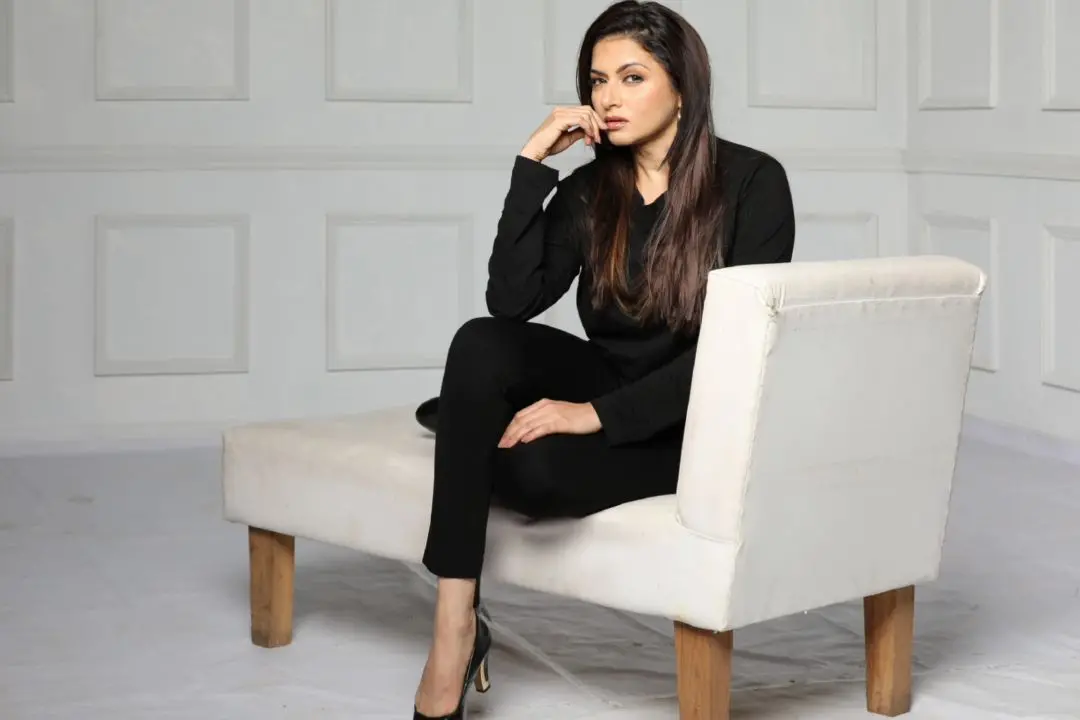
Many of us remember Bhagyashree as the actress who took the box office by storm with her movie, 'Maine Pyaar Kiya'. The iconic Bollywood film was recently re-released in theatres. Mathrubhumi caught up with Bhagyashree in a free-wheeling conversation where she shared her insight on the evolving landscape of Indian cinema.
From the resurgence of cult classics on the big screen to the game-changing impact of OTT platforms, Bhagyashree discussed the shifting dynamics of the industry. She also addressed the often-debated topic of Bollywood's social scene, revealing whether attending high-profile parties was essential for staying relevant in the film fraternity.
With her characteristic candor, Bhagyashree offered a unique perspective on the intersection of art, fame, and networking in Bollywood. Read on...
'Maine Pyaar Kiya' was re-released in cinema halls in August. How do you look at the shifting trend of re-releases in Indian cinema?
The films in the 90s and before... I would say the 70s films were the classics, 90s were total entertainment, and then came a period when we did not know where we were going. So I think most of the writers lost their imagination.
Then, during COVID-19, we were exposed to world cinema which also changed the dynamics because that is when everyone started realizing that there are so many stories to be told and so much more to discover. I would credit the younger generation for opening that vision and bringing those stories back.
Today you want to watch a folk story like a 'Kantara' and that gets received well because you want to know what happened in that little town. People have actually done a lot of research to make a story like that. It's not just off the hook; there's a back story to each character, there's a place from where they come, there's a reasoning to things, which was lost some seven-eight years ago.
Projects were being made rather than films. Get a star, write a story and dish out anything to the audience under the name of a film. But the audience became smart enough to realize that this is not what we want. The change that has happened, is for good.
You see good cinema coming out, better kinds of stories being told, and most importantly, script has become the king.
As an actor, what changes have you seen in acting, then and now?
Back then, actors were asked to show loud emotions in most films, if not all. Today it's more realistic. When I started working again, my kids would take my auditions at home. They would say, "Mummy if you start working again, then you have to learn how to throw your dialogue." I said, "We were not taught to throw the dialogue; we were supposed to say our dialogue." To which, they said that "You should just say your dialogue without any expression -- that is the correct way of it in today's time. You should have a blank face while saying your dialogue."
I think while learning that I have somewhere made a balance between our times of acting and today's time, which I think, has made me a decent actor.
We have seen many veteran actors experience a resurgence in popularity thanks to OTT. What are your thoughts on this phenomenon?
Yes, look at Raveena (Tandon)! OTT is a fantastic medium! If you look at films abroad, especially Hollywood, an actor in his 50s, 60s, and even 70s, for instance Richard Gere who is 75, handsome as hell and still rocking it, are getting good roles. Scripts are written around their roles.
Today, life has changed. At 70, you are no longer one foot in the grave; you’re still working, looking after your health, and doing things. Unfortunately, in India, that growth factor -- what a 50-year-old or a 70-year-old is supposed to be, is still stuck in our minds. So people have to grow out of that and say that a 70-year-old can still do stuff.
Similarly, women can be seen playing all sorts of roles now. Earlier when you would think of a police character, it would have to be a male, slightly bald, and with a mustache. Today, you can have women police officers in films. These changes are going to be a little more gradual in India because there is heartland India and then there is modern India. When we are making films, we have to cater to both the segments. Filmmakers are trying to balance it out.
Also, if you love acting and are passionate about it, then you will definitely get work even if the journey is long. There are many people in our industry who have been working for many years. People did not even know them. But now because of the OTT platforms, they are being recognised.
There are so many character artists who have been in so many films. Today they are names to reckon with -- Pankaj Tripathi is the biggest example, who is ruling the roost right now. Similarly, Vijay Raaz also did so many films that many were not even aware of, but today he is recognized and loved by everyone. It has been hard work, dedication, and consistency that has led to their success, and obviously the fact that they are passionate.
The Hema Committee Report and #MeToo movement has shed light on sexual misconduct in the industry. What are your thoughts on it?
What would have really worked out in women’s favour was that reports were genuine enough of not taking subjects like a woman having an affair for seven years and then accusing her partner of sexual harassment or rape in those seven years. Stupidity! It’s women downgrading the whole issue in the first place. It’s very important that these women should understand by speaking up like this and trying to make their issue larger-than-life, the genuine issues are getting lost in that. When #MeToo was started, it was a very genuine voice that came out for people who were suppressed or where the bosses ruled; may be from any field, not just the film industry. These women who had affairs or sexual barter that was there to provide a higher pay scale or move to a higher place in their office, they used the #MeToo movement to highlights these things. They didn’t realize that they brought their own sisters down in the process.
When a committee is made like this, I think, men have to be more in the forefront today, because all said and done, India is still very patriarchal. So, unless men stand up and vocalize their thoughts for their mothers, sisters, friends, daughters, wives, it’s harder for women to take up the issue, though a lot of women have been speaking about it but then these issues crop up where a woman puts down another woman. But, if men actually realize this and say no, we have to be able to provide a safe working environment for women. India has a large women force, and if their intelligence and workforce join hands, then we will be the super nation of the world. With the kind of population that we have, it is unfortunate that women are not allowed to take part in all this. I can’t say allowed because it also they themselves who get drowned into this. But it is changing gradually, and I’m glad that this awareness is happening. It is on the younger generation to take this forward.
Speaking of the basic amenities available for women at a film set, a lot of things have changed. But it’ll still take time. There is a long way to go and it is not a flick of a wand that it’ll happen overnight. I am very happy to see a lot of women on film sets now, in every given field. It feels wonderful to have so many women on the sets and that they are comfortable in doing their jobs, and very hard working.
Several actors have mentioned that attending Bollywood parties is crucial for getting work. Do you agree?
If you look at the scenario, it is actually called networking. It is not the film industry alone which has this issue. It is there in every field, around the world. Networking and being social are very important factors. Even in our families, you like those relatives who attend your events, and those who don't, become an outsider.
Networking is something that one has to do. How much you do depends on you. And in today's time when there is so much work being done in OTT and films, it has become a thing of out of sight, out of mind. You can't blame anyone for it. You have to be there to get recognized. Be on people's mind for casting. That is how it is.