His inputs come from serving film, not ego: ‘Sitaare Zameen Par’ director on working with Aamir Khan
One of the most emotionally resonant Hindi films in recent times, ‘Sitaare Zameen Par’, has left a lasting impact on audiences with its heartfelt storytelling and nuanced performances. Headlined by Aamir Khan, the film is an official remake of the acclaimed Spanish film ‘Champions’, and also serves as a spiritual successor to Khan’s directorial debut ‘Taare Zameen Par’.
Released in theatres on June 20, the film opened to a warm response from both critics and audiences, with many praising its sensitive handling of neurodivergence and inclusivity. Now, over nine months since its theatrical run, the film is gearing up for its digital premiere on Friday on SonyLIV.
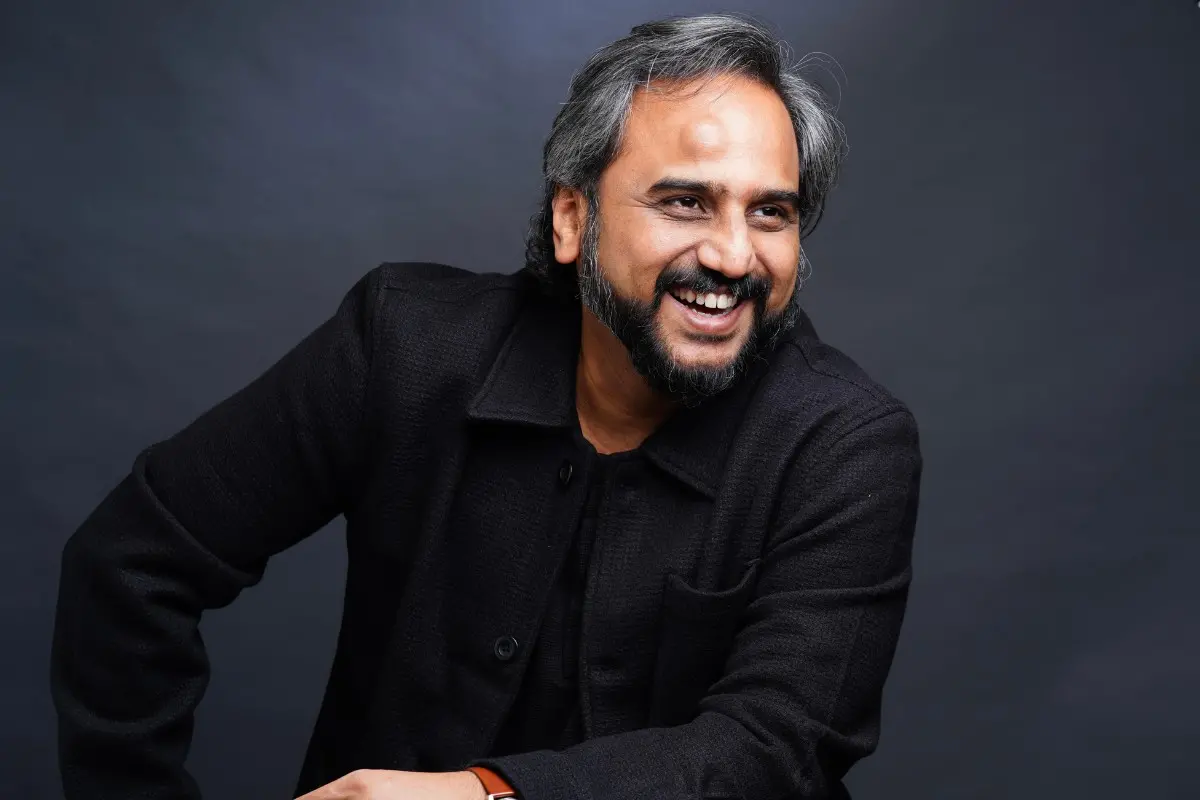
Ahead of its OTT release, Mathrubhumi English caught up with director RS Prasanna for a candid conversation. The filmmaker, who previously helmed the Tamil film ‘Kalyana Samayal Saadham’ and its Hindi adaptation ‘Shubh Mangal Saavdhan’, opens up about the making of ‘Sitaare Zameen Par’, his storytelling choices, and collaborating with Aamir Khan.
This movie sits dangerously close to being labelled as “safe feel-good cinema”. Do you think that tag underestimates what you’re trying to do?
Feel-good cinema is certainly what one aspires for with a film like this. One hopes to make you feel good. "Safe"— I don’t know if you feel safe while watching the film. But I think feel-good cinema is something one aspires to make because it’s high time we all made each other feel good.
There’s a fine line between telling a sensitive story and packaging it for easy consumption. Were you worried about the film becoming too comfortable for the audience?
When you work on a story like erectile dysfunction, you try to make it a comfortable watch because the norm is that people assume it will be uncomfortable or won’t watch it at all.
Similarly, with ‘Sitare Zameen Par’, people have very different understandings of neurodivergence. Some have had the privilege of interacting closely with neurodivergent people; others haven’t. So one hopes more people are given the joy of understanding.
Like Kartar Paaji (Gurpal Singh) takes Gulshan (Khan) on a journey of inclusion, the film also aspires to be like that -- something that doesn’t judge you for your lack of understanding but invites you to open your heart and mind.
There’s a saying: good art comforts the uncomfortable and discomforts the comfortable. With ‘Sitare Zameen Par’, the idea was to shed new light on inclusivity. When dealing with taboo or uncomfortable subjects, you have to reach out with love and inclusion, and that’s what we’ve tried to do.
So far, you’ve stayed away from loud, high-concept Bollywood spectacle. Is that by choice?
I just wanted to tell stories close to my heart. I’ve always loved both kinds of cinema -- spectacles like ‘Baahubali’, ‘Avatar’, and 'Titanic'; and also intimate films such as ‘Children of Heaven’ or ‘Taare Zameen Par’.
Any good film that takes you on a journey excites me. I’ve told stories like ‘Shubh Mangal’ and ‘Sitare’, and I just try to stay true to the story and do justice to it.
Was there a moment during the making of ‘Sitare Zameen Par’ where you had to push back to protect the film’s honesty?
I think we all worked very honestly towards making a good film, right? So I think honesty has to come from all the important stakeholders.
For instance, working with Aamir sir was one of the most pleasurable experiences of my life. So if anything, honesty is expected as far as possible. One tries to make a film from the heart and with utmost sincerity.
The whole process of movie-making is about enjoying the journey and the intention with which it is made – be it ‘Shubh Mangal’ or ‘Sitare’. And as for Aamir sir, he champions cinema that’s intuitive and comes from the heart. With him, Divy Nidhi Sharma, and our neurodivergent actors, everyone was aligned in making the best possible film. It was a beautiful, magical experience.
You’ve worked on both original stories and adaptations. What excites you more today?
I get excited when I disappear into a story -- whether as an audience member or storyteller. It doesn’t matter where ideas come from, as long as they’re acknowledged and credited.
I’m always an audience first—a ‘rasika’. I’m drawn to stories where I lose myself. That’s the magic.
My guru, Balu Mahendra, told me, "Don't show off. As a storyteller, your first job is to disappear -- your story should exist.” That stayed with me.
Whether I’m adapting or creating something new, the goal is the same -- to disappear into the narrative. Coming from theatre, I also see the material as sacred while bringing my own interpretation to it.
While working with Aamir Khan, did you ever rethink or rewrite scenes based on what he brought to the character?
I always want to work with people who bring something to the table. Aamir sir is one of the most brilliant minds I’ve met. Every input he gives comes from a place of serving the film, not ego.
Filmmaking is mysterious. You don’t always know if changes make things better or worse. So intention becomes crucial.
I create a safe space for actors to contribute. Many moments in ‘Sitare’ came from the actors themselves, be it their mannerisms or their lines. Even in costumes, actors had a say in what they wore. It’s a collaborative process, but the script remains sacred.
Has there been a scene that surprised you on set by becoming something very different from what you imagined?
Yes. See, that’s the magic of cinema, right? When the intent is pure, and you’re trying to create something beautiful, you’re constantly mining for good moments.
There’s this otherwise very simple scene where Sunil (Ashish Pendse) is sitting down to wear his shoes. The coach (Khan) has just berated him and is completely frustrated, not knowing how to deal with these guys. Sunil says something, they get into a small argument about the shoes, and then Sunil asks, “Can I sit and wear my shoes?” and the coach says, “Yeah, go ahead.”
On set, I felt like I should shoot it with a little more detail. So I took a shot of him struggling—there’s one moment where he takes time to figure out which is his left foot and which is his right, and where the shoe goes. It’s a very small thing.
And of course, Gulshan (Khan) is observing him and reacting. For me, even on set, this otherwise smart guy taking so much time to figure out left and right felt like a beautiful moment.
But later, in the edit, when we added music and shaped the scene, it suddenly became something much bigger. I had tears in my eyes. It’s the same shot, but in the flow of the film, Sunil’s expression and Gulshan’s reaction transformed it. There are no words—it’s just two actors in sync.
As a director, when I saw that, I felt this is what you yearn for. These moments only come when everyone is in sync, and there’s a certain magical chemistry. You can see it between Sunil and Gulshan.
Aamir sir’s expression—just watching him, then noticing another character making a mistake—slowly shifts something within Gulshan. He starts off frustrated and irritated, but something begins to open up inside him.
It’s a very tough role. That’s why I felt Aamir sir was the only one who could do justice to it. Many actors might play just the outward rudeness, but he brought in vulnerability and likability, which is so important. We are all flawed; all of us are learning, and that touch of vulnerability is what makes the character work.
For me, that one scene is an example of cinematic magic—brought in by the actors, the editor, the music—everything coming together.
What kind of stories are you hungry to tell next? Will you continue exploring human vulnerability?
Absolutely. For me, the biggest spectacle is human emotion.
Even in large-scale films, what matters is the emotional core. Without that, scale means nothing.
I’m drawn to vulnerability—the flawed, human side of characters. Whether it’s ‘Shubh Mangal Saavdhan’ or ‘Sitare’, that’s what excites me.
Even the story I’m working on now, based on Ramanujan, is about a misfit—a man who felt ideas were whispered to him by God. That’s where the magic lies.