Beyond the screen: The man documenting India's forgotten theatres through Theatre Balcony
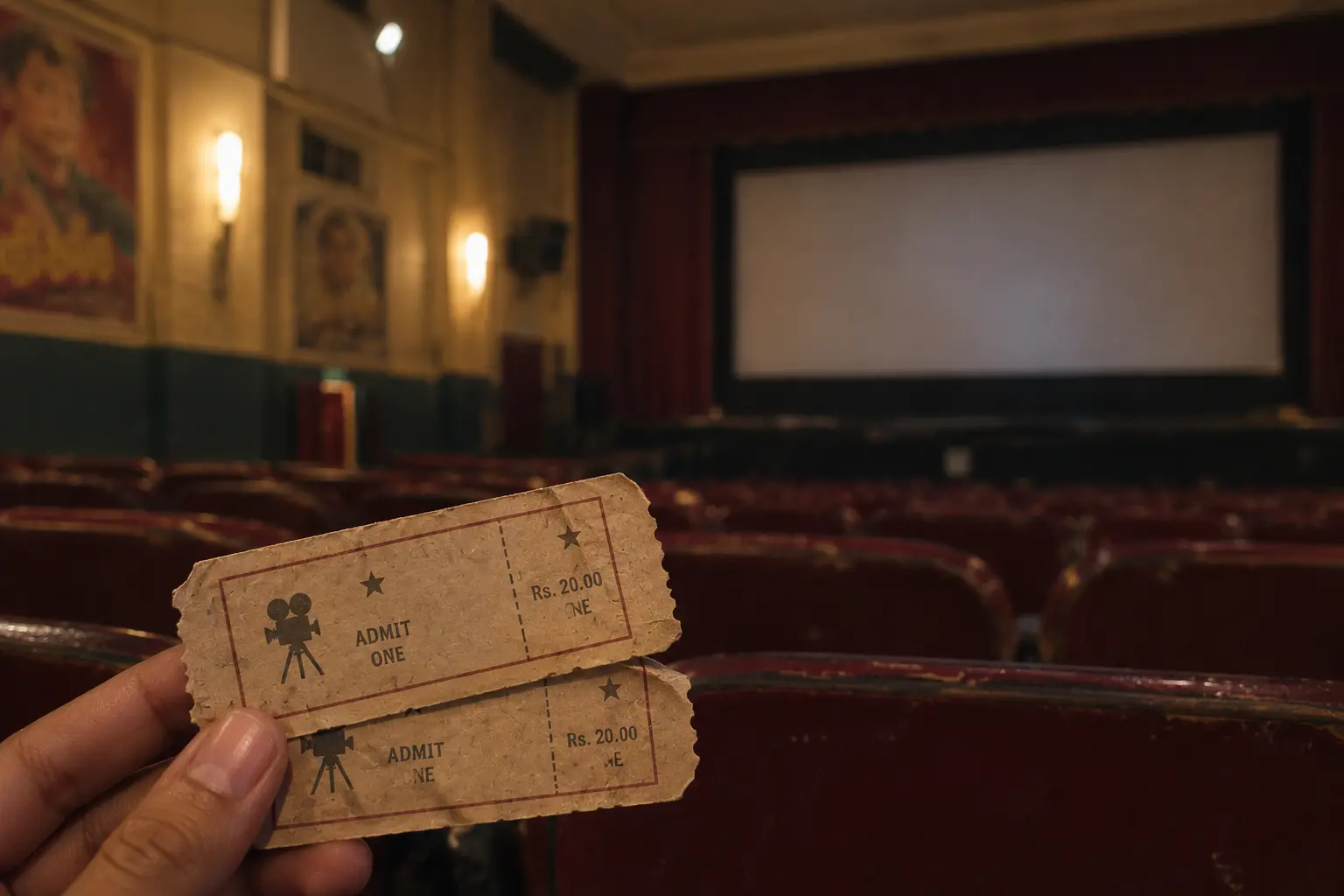
For Geego V Thomas, a cinema theatre is much more than a building. It is a space where strangers come together to laugh, cry and cheer, creating memories that often outlive the structure itself. Through Theatre Balcony, his YouTube channel dedicated to movie theatres and their enthusiasts, Thomas documents vintage cinemas, modern theatres and abandoned halls across India, preserving their stories before they disappear.
His fascination with theatres began during his schooldays, when watching films sometimes meant skipping classes and getting caught by teachers. Latha Theatre in Muvattupuzha and Bindhu Theatre in Koothattukulam were among the venues he visited. However, his interest was never limited to one particular theatre.
“Somehow, during a time when we start going to the movies alone, cutting classes, a fondness for theatres developed. Not for a particular theatre, but a fondness for theatres in general,” he recalls.
As a teenager, he would notice old theatre buildings and roofs while travelling, sometimes even getting off a bus during his free time simply to observe them. What began as a personal fascination eventually grew into an effort to document India's cinema-going heritage.
From a Facebook group to Theatre Balcony
Before starting Theatre Balcony, Thomas created a Facebook group called 'Cinema Theatre Arivum Anubhavangalum' (Cinema Theatre: Knowledge and Experiences). His intention was to collect information about theatres and make it accessible to future generations.
“I only knew one or two friends who were passionate about theatres. The main goal wasn't reach or anything like that. Instead, it was to document information about such theatres and gather those details in one place,” he says.
The group, which he initially expected might attract around 1,000 members in a year, eventually grew to approximately 25,000 to 30,000 members. He later joined hands with two friends to launch Theatre Balcony, which documents theatres through its social media platforms and YouTube channel.
The Covid-19 pandemic played a significant role in shaping the initiative. With theatres shut, Thomas felt the absence of the big-screen experience, even as many viewers welcomed films arriving on streaming platforms. The pandemic also hit smaller cinemas particularly hard, with several non-air-conditioned theatres that did not screen major releases closing down after restrictions eased.
“That Covid gap had severely affected small theatre owners. So, that was also a reason behind coming up with a mission like this, a mission to document these theatres,” he says.
The first full video made for Theatre Balcony featured Lotus Theatre in Ettumanoor, which has since closed. Filming there also gave Thomas access to areas he had never explored as an ordinary moviegoer, including the projection room and the space behind the screen.
“Going from being a person who always sat in the theatre hall watching movies to getting access to the projection room, the area behind the screen, and things like that, that was a moment that gave a small sense of happiness and pride,” he says.
Why every theatre matters
Thomas considers cinema theatres important landmarks that become part of a locality's identity. Even after a theatre closes or its building is demolished, its name can remain attached to nearby roads, bus stops and other public spaces.
He cites Latha Theatre in Muvattupuzha, whose name is still associated with Latha Paalam (Latha Bridge), Latha Padi (the bus stop) and Latha Park.
“I've felt that a theatre has the ability to become such an icon and a landmark for a region and its people,” he says.
For Thomas, the site of a demolished theatre is never merely a plot of land. He often asks fellow passengers whether cinemas once existed in the towns they pass through. When someone points out where an old theatre stood, he looks at the place with a sense of reverence, even if houses or shops have replaced it.
“To me, it feels like a place with so much history, a place where crowds cheered, clapped, sat together, watched movies together, laughed, and cried,” he says.
He believes theatres offer a unique collective experience, allowing people who have never met to share emotions in a way few other public spaces can facilitate.
“A theatre is a place where, surrounded by complete strangers, we can express our emotions together as one,” he says. “To sit together with complete strangers, laughing and crying as one, where else is that possible?”
Exploring abandoned cinemas
Thomas' travels have taken him to old and neglected theatres in different parts of India, including remote locations and areas where filming can be risky. Some of the non-air-conditioned cinemas he has visited are poorly maintained, with people using their premises for drinking, smoking and other activities.
In such places, taking out a phone or camera can attract unwanted attention. Thomas says people sometimes assume he is recording their activities rather than documenting the theatre.
He has also encountered theatre owners who demanded money before allowing him to film. To gather information about unfamiliar venues, he often begins by speaking to people at nearby tea stalls, paan shops or juice shops rather than asking direct questions about the theatre.
“I never ask about the theatre right away; I'll talk about other general things, mention that I'm from Kerala, and after that, I'll very nicely ask, ‘Is this theatre closed now, or is it functioning?’” he says.
He tries to cross-check the information he receives to ensure accuracy.
The sight of abandoned cinemas, however, remains particularly painful. Thomas recalls finding old film reels, slides and tickets scattered around closed theatres, remnants of a time when the arrival of a film print was eagerly anticipated.
“Despite all these difficulties, standing inside leaves you with a sense of emptiness and sadness,” he says, recalling a visit to a theatre in Kozhinjampara in Kerala's Palakkad district. The building had been closed for years and was filled with bats and other creatures.
He also makes a point of visiting theatres whenever he hears that they might shut down. When reports emerged that NS Theatre in Kannur, a non-air-conditioned cinema, could close, Thomas set aside his work and travelled there by bus. After the second show was cancelled due to a lack of viewers, he stayed overnight and returned the following day to watch a film. The theatre remains operational.
Similarly, he visited New Cinema Theatre and Vinayaka Theatre in Nellore, Andhra Pradesh, after hearing that they might close. Despite their minimal facilities and the fact that they were screening films already available on streaming platforms, audiences continued to gather and enjoy the experience.
The challenges of documenting theatres
Documenting old theatres is not always straightforward for Geego V Thomas. While he says the process itself has not been particularly difficult, gaining permission to film and navigating certain locations have presented challenges.
He recalls instances in Kerala where theatre owners demanded payment before allowing him to shoot. Since Theatre Balcony is driven primarily by his passion for cinemas rather than being treated as a source of income, such demands can make the process difficult.
Filming theatres outside Kerala can be even more challenging, particularly in areas where older cinemas operate amid questionable activities. Thomas says people may become suspicious when he takes out his phone or camera, assuming he is recording what is happening inside rather than documenting the building.
“There are no formal restrictions, but people might snatch your phone away,” he says.
To navigate such situations, Thomas tries to blend in with the local surroundings, adopting the appearance and manner of someone familiar with the area.
During his travels outside Kerala, he has visited theatres in remote locations and red-light districts, where he encountered poorly maintained spaces and activities that surprised him.
According to Geego, some older, non-air-conditioned theatres in North India have become places where people drink, smoke and use tobacco products, with little supervision. He has also come across venues where extortion and drug use are part of the surrounding environment.
“Only a few old theatres are still maintained cleanly and beautifully today; the condition of most other theatres feels very poor,” he says.
Documenting these spaces can be challenging, particularly when people inside suspect that he is recording their activities rather than the theatre itself. In some places, he avoids drawing attention to his camera and takes time to understand the surroundings before filming.
Can historic theatres survive the competition?
Thomas believes preserving old cinemas requires more than nostalgia. Theatre owners must upgrade their facilities, improve sound and projection systems, provide adequate parking and meet contemporary audience expectations.
He points to Jos Theatre in Thrissur, which created underground parking after reducing its seating capacity, and Shenoys in Kochi, which introduced a mechanised parking system.
He also cites renovations and technical upgrades at established venues such as Saritha, Padma and Mymoon as examples of historic cinemas adapting to changing demands.
“If a theatre has a rich history, undergoes proper renovation, upgrades to top-notch technical specs, provides adequate parking space, and offers modern amenities like premium cafeteria food options, then naturally, any theatre can survive,” he says.
He believes audiences increasingly prioritise convenience, parking, sound quality and projection over loyalty to a particular theatre. At the same time, he has observed renewed interest in large screens, with audiences seeking a more immersive experience.
However, Thomas also wants affordable, non-air-conditioned cinemas to survive in Kerala's major cities. He argues that not everyone can afford multiplex tickets, particularly street vendors and daily-wage workers who may still want to enjoy films on the big screen.
“Theatres operating on a minimal setup and at a minimal cost — with ticket prices around ₹60, ₹70, or ₹80 — have great scope in such big cities,” he says.
For him, preserving such venues is also about keeping cinema accessible to people across economic backgrounds.
Recording memories for future generations
When he enters an old theatre, Thomas looks beyond its facade. He checks whether it uses traditional film projection or digital technology, observes its balcony seating and studies its architecture, signage and interior designs.
He has a particular affection for traditional film projection, which he believes offers a distinctive visual quality, although he acknowledges the convenience and advantages of digital systems.
“Visuals shot on film tend to feel more vibrant and full of life,” he says.
Thomas also believes that every theatre has a story worth documenting. While some histories are evident in a building's design or interiors, others emerge through conversations with local residents and former moviegoers.
The comment section on Theatre Balcony's social media pages is another important part of this effort. He often asks viewers to share their memories of watching films at the venues featured in his videos.
“When future generations look back 10 or 20 years from now, there might be no one around to tell them about it, but the comment box will be there documenting which movie played where,” he says.
Beyond documenting theatres, the group behind Cinema Theatre Arivum Anubhavangalum has also been organising annual gatherings at different cinemas across Kerala. The initiative includes taking people who may never have experienced watching a film in a theatre, including people with intellectual disabilities and elderly parents abandoned by their children, to watch a movie together.
“It isn't done as charity; rather, it comes from a desire that they shouldn't pass away or live their lives without ever knowing what a movie theatre feels like,” Thomas says.
For him, this is what makes his work meaningful. Whether a theatre is a modern multiplex, a modest single-screen cinema or an abandoned building, it holds a place in the history of the people who experienced it.
Through Theatre Balcony, Thomas hopes to preserve those memories, ensuring that even when the buildings disappear, the stories of the theatres, and the people who filled them, continue to live on.