EXCLUSIVE! 'The Kerala Story' director Sudipto Sen on National Award controversy
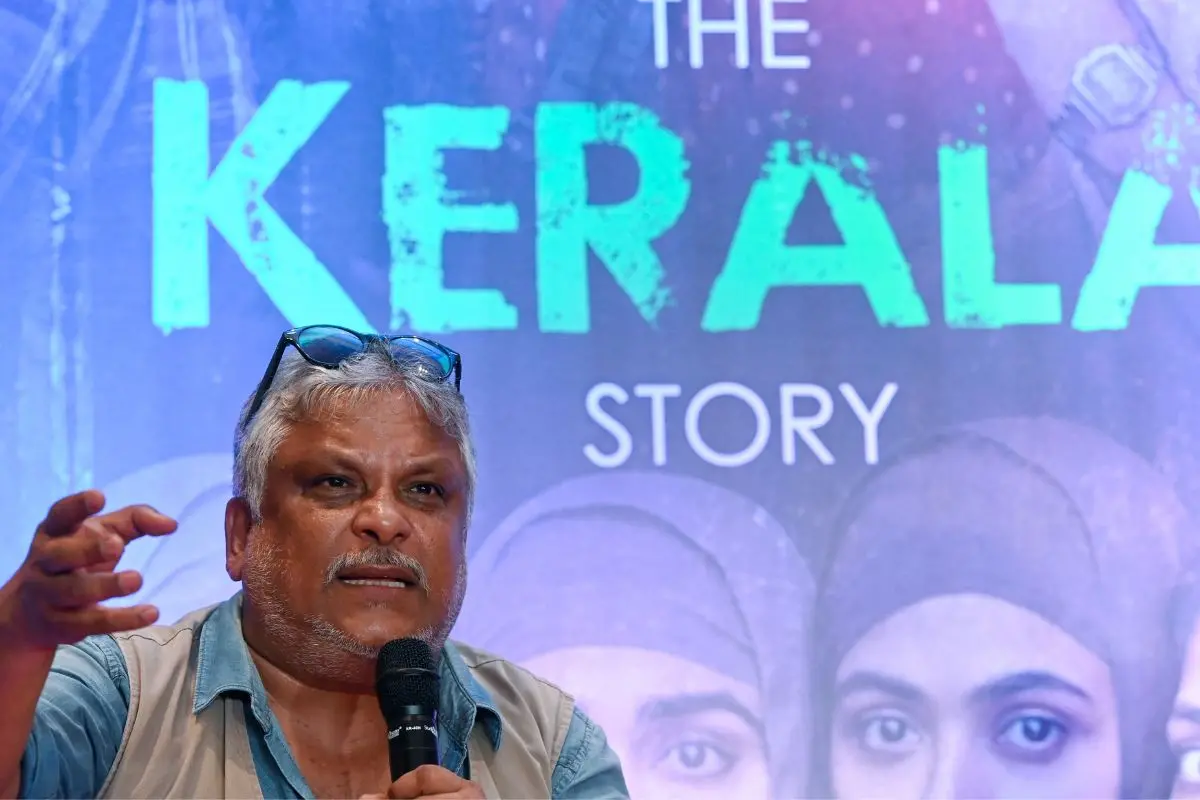
Ever since his name was announced as the winner of the prestigious National Award for Best Director for 'The Kerala Story', filmmaker Sudipto Sen finds himself fending yet another backlash. Criticism came from far and wide. Kerala Chief Minister Pinarayi Vijayan criticised the film for allegedly tarnishing the image of the state and fuelling communal narratives. Brickbats have been hurled even from within the film industry. The latest being Malayalam filmmaker Jeo Baby, known for 'Kaathal -- The Core', who questioned the credibility of the National Awards itself. In an exclusive conversation with Mathrubhumi, Sudipto Sen responds to the backlash and shares his thoughts on the controversy surrounding his win.
Also Read: National Film Awards: Mediocrity took a victory lap in 2025
How does it feel to win the national award for best director?
Thank you. It feels surreal, honestly. For a filmmaker, receiving an award of this kind is quite overwhelming. I am still in awe. That said, we did expect some awards. I anticipated Best Film, an award for Adah Sharma, my lead actress, and also one for my makeup artist -- he did an outstanding job. But I truly didn't expect to win Best Director.
Along with the recognition, there has also been criticism around the award...
Yes, I am aware of it. It has been in discussion for the past few days.
Kerala Chief Minister has said that your film spreads 'blatant misinformation'. Filmmaker Jeo Baby, who directed 'Kathaal', said that 'the movie is full of lies' and that 'such misrepresentation of facts is quite scary'. How do you respond to these allegations?
First of all, the question is: Have they even seen the film? I am quite sure they have not. If someone has actually watched the film, they would not call it misinformation. The story follows four girls -- three victims and one perpetrator. All three girls are real people. One of them is currently imprisoned in Afghanistan -- there is no controversy about that. The second girl died by suicide, and her parents appear on camera at the end of the film to say, "This is our daughter's story". The third girl herself appears on screen and says, "The truth is even worse than what you have seen in the film." So to call it misinformation is actually a misdirection, and quite irresponsible -- especially coming from someone like Mr Pinarayi Vijayan.
Secondly, the film began its journey back in 2010. At the time, the then Kerala Chief Minister VS Achuthanandan held a press conference in Delhi, warning that Kerala was under serious threat from Islamic fundamentalists. He even said that within 20 years, Kerala could become an Islamic state. That statement triggered backlash from various Muslim organizations in Kerala.
Interestingly, Pinarayi Vijayan -- then a junior minister -- had supported Achuthanandan's view. You can find this on Google and YouTube. Vijayan had said that yes, Kerala was facing a threat from radical Islamic elements. Now, 15 years later, he has changed his stance. As a politician, he has the convenience of changing his position -- perhaps because he wants to retain power and the Muslim vote. But I, as a filmmaker, do not have that luxury.
That's why people are calling the film Islamophobic or misinformed -- without even watching it. But this film isn't about Islam; it’s about the threat posed by ISIS.
Have you seen Netflix's 'Caliphate'? It shows how Swedish girls were lured to Syria. Or 'Layla M', which won at the Toronto Film Festival -- it tells a similar story from Britain. These things are happening across Europe and the West. India was no exception. ISIS targeted northern Kerala as a safe haven. This has nothing to do with personal or political bias. These are facts -- facts backed by real victims.
The truth remains: I conducted 10 years of research, submitted over three hours of testimonial footage, and provided more than 200 pages of documentation to the censor board. That’s why the film was passed without a single cut. So the problem is multifaceted - irresponsible politicians, appeasement politics, and a refusal to engage with the actual stories of the victims.
Look at my home state, West Bengal - without even watching the film, the state government banned its screening. Why? No one knows. The usual justification is that "terrorism has no religion." But the moment you say "Islamic terrorism," people assume you are targeting Muslims.
Ironically, the song 'Pagal Parinde' -- a key emotional point in the film -- was written by a devout Muslim who offers prayers five times a day. Most of the positive characters in the film are Muslims. So how can this be Islamophobic?
It is easy to dismiss or discredit something today -- it costs nothing. That is why I have stopped responding to many of these accusations. These are irresponsible remarks from people who haven't seen the film.
I am open to any discussion. I even told the FTII students -- I am ready to sit with you at your convenience, present my evidence, and you can bring yours to prove me wrong.
Jeo Baby also alleged that over the last 10 years, the National Awards have been used to reward films that support certain agendas. Your thoughts?
I don't know who he is. Did I give the award to myself? The decision was made by a jury of 10 senior filmmakers appointed by the government.
Interestingly, Kerala received the highest number of awards this year -- five in total. If someone thinks the jury made a mistake, how am I responsible?
I am actually surprised that I won. These jurors deliberated for over a month. They reviewed many films, had their debates, and then decided. Awards are subjective. One person might love a film, another might not. So to say "this film didn't deserve it" or "the script was bad" is just personal opinion -- it does not hold weight.
Thankfully, we live in a democracy guided by the Constitution -- even down to the jury level. They followed protocol. They awarded it based on their judgment. So how can I be held accountable for that?
But does such criticism affect you personally?
Not at all. Criticism is healthy. But I do feel sorry for people who jump into debates without watching the film. It's irresponsible and, frankly, a sign of intellectual laziness. If you have not watched the film and still criticize it, then it is clear -- you are protecting an agenda, not the truth.
I am sure Mr Vijayan has not seen the film. There is no scope for misinformation in it. It is the story of three real girls, and their presence on-screen at the end affirms that truth. So where exactly is the so-called misinformation?
There have also been reports that you are working on a second part of 'The Kerala Story', this time based on the Hema Committee report. Is that true?
No, not at all. I can assure you I am not making that film.
But there were persistent reports that you would be helming it.
Probably because I have written extensively about the Hema Committee report on Twitter and Instagram. But no -- I am not involved. Please be assured.