Fiercely protected, but flawed: Shardul Bhardwaj on playing Huma Qureshi’s son in ‘Maharani 4’
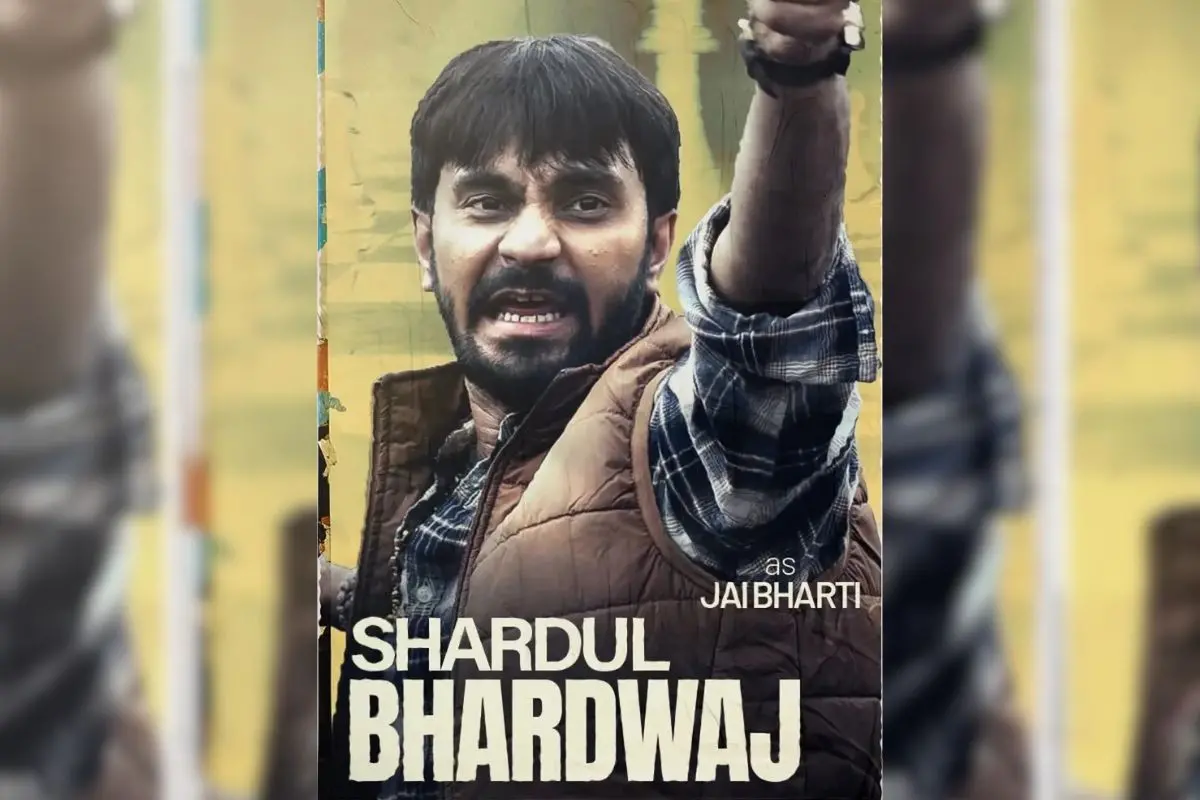
From his theatre days in Kirori Mal College in New Delhi to his Film and Television Institute of India (Pune, Maharashtra) days, and now in ‘Maharani 4’, Shardul Bhardwaj is a young actor who is slowly making space for himself in the film industry with his work in titles such as ‘Eeb Allay Ooo!’, ‘Kuttey’, and ‘Trial by Fire’. The actor is now gearing up for his upcoming release, as he makes a shift from films to a large ensemble web series, with Huma Qureshi-led ‘Maharani 4’.
Set to play Huma’s son, Jay, Shardul got in a candid conversation with Mathrubhumi English, where he talked about the upcoming series slated for release on November 7 on Sony LIV, his character, and many other aspects of the series and acting in general.
Created by Shubhash Kapoor, the series was written by him, Nandan Singh, and Umashankar Singh. The fourth season, which will see many actors joining the series, including Vipin Sharma, Shweta Basu Prasad, and Shardul himself, is directed by Puneet Prakash. Meanwhile, read excerpts from our chat with Shardul:
Could you walk us through your character in ‘Maharani’ and share how you came on board the series?
To answer the second part first — Himanshu, who generally casts for Subhash Sir’s films and web series, approached me. I auditioned, and I think they liked the audition, and I got the role.
Now, to talk briefly about Jai’s character—people have seen him as a child in the last few seasons. Now there’s a time jump between Season 3 and Season 4, so by the time we come to Season 4, he’s grown up. He’s the middle child, as you know.
He’s an interesting character—maybe as flawed as all of us, trying to look for a place in this world like most of us. He has his own ways of operating, and those ways are not meant to hurt anybody or go against anyone in particular. He is fiercely protective of his mother and his family, and what he does, he does with the intent of the welfare of the family — and to some extent, the party.
Yet, his ways sometimes could be seen as questionable, but they are his.
Your character, Jay, is the middle son trying to prove his worth within the family and to others. How did you navigate a character torn between family, ambition, and power games? Which emotion did you connect to the most?
I don’t think it’s hard for you or me—we all have siblings or cousins—to understand that there’s more at play than simple power politics in families. There is love, there is hate, and both exist together.
There is fierce protection and also self-preservation. There is ambition, but also a sense of wanting the best for siblings and cousins. That’s the beauty of the way Nandan, Umashankar, and Subhash Sir have written the show.
We had to look at the nitty-gritty and layers of these interpersonal relationships—brother-sister, mother-son, and other important people in the party close to the family. Multiple worlds exist at once. With Puneet’s direction and Subhash Sir’s showrunning, the good thing is the show gently guides us back to our own lives — and we bring that back to the character.
Ambition and jealousy exist together. They’re not exclusive.
When this character came to you, were you able to imagine what Jai was like five years earlier? Did you pick anything from the younger Jai or add something from your side?
With characters like Jai, the most attractive thing is that they’re deceptively simple. They present themselves simply to the world, while their internal world is full of chaos. Half their life goes into covering up that chaos.
They’re not ready to forgive themselves. They’re not gentle to themselves, and maybe they’re not even aware of it. In retrospect, I can say these things—but while playing him, one shouldn’t judge their character. I didn’t. I empathise with Jai. I understand him.
The way some of us are trained, we don't play characters outside of ourselves — we play various versions of ourselves.
‘Maharani 4’ centres around family. Outside the show, do you also have a family of collaborators or mentors you return to for feedback?
I come from two very strong communities. My theatre society from undergrad—The Players, Kirori Mal College—names like Zeeshan, Divyenndu, Ali Faisal, and Abhishek Banerjee come from there. The other is FTII, where I studied.
There’s a flow — people go out, practise, and come back to share. To move to Mumbai and find those two communities there physically and emotionally is a big thing. They also keep you grounded — they call out what they don’t like.
‘Maharani’ is about power, legacy, and politics. As an actor, do you view your career like that — as ambition or legacy?
No.
Then how do you look at your career — from when you started to now?
I’ve never looked at my work as a “career”. I haven't planned anything. I’m often asked which directors I want to work with or where I see myself in five years—truth is, I don’t, and I don’t want to. I find that really taxing. I don't operate like that.
Whether ‘Maharani’ or other films, I’m happy about it—I never planned any of it. I didn’t plan to be an actor; I’ve been doing it since I was 11 or 12. If I think of it as a career, it becomes about what will be profitable and what increases visibility. That’s not how I function.
Was there a moment where Jai felt vulnerable — and you related to it?
Of course. I lost my father when I was very young. Jai lost his father. And then there’s the sense of wanting to find a place in the world and trying really hard.
He’s vulnerable. We don’t give enough opportunity to people to be vulnerable in the world we live in. He’s a product of circumstance — he can’t afford to be vulnerable in front of the janta. He has to be tough and find money for the party and campaign — and those ways aren’t always legal.
He doesn’t have the space to be vulnerable, and that’s why he’s boxed up. Little snippets you see of him are windows into a chaotic world he's trying to understand.
If you were asked to rewrite Jai, what would you add or subtract?
I’d keep it as it is. It’s already difficult. I don’t want to make my life harder.
What were the challenges you faced while performing him?
The main challenge was not to do the obvious. He looks like a tough guy — you can easily play him as a tough guy. To not do the obvious, especially with vulnerability. Thankfully, I had my director, Puneet, and showrunner, Subhash Sir, to always check me.
What’s next after ‘Maharani 4’?
We just finished shooting a madcap comedy called ‘Maa Behen’ with Madhuri ji and Triptii Dimri. The cast also includes Gitanjali Kulkarni and Paresh Rawal. It will hopefully be released next year.
How was your experience working with Madhuri Dixit? Any fanboy moments?
Working with Madhuri ji and also someone like Tabu ma’am earlier — what inspires me is how interested they still are. They’re 100 percent there. If they wanted, they could walk through things, but they don’t.
Madhuri Ji would rehearse lines and help younger actors like me. She’s graceful and fantastic to work with. If at that age, after being at the top so long, you’re still that invested — that’s something to learn from.