Mammootty or Mohanlal? Darshana Rajendran says ‘I’m a big fan of...’ | EXCLUSIVE Interview
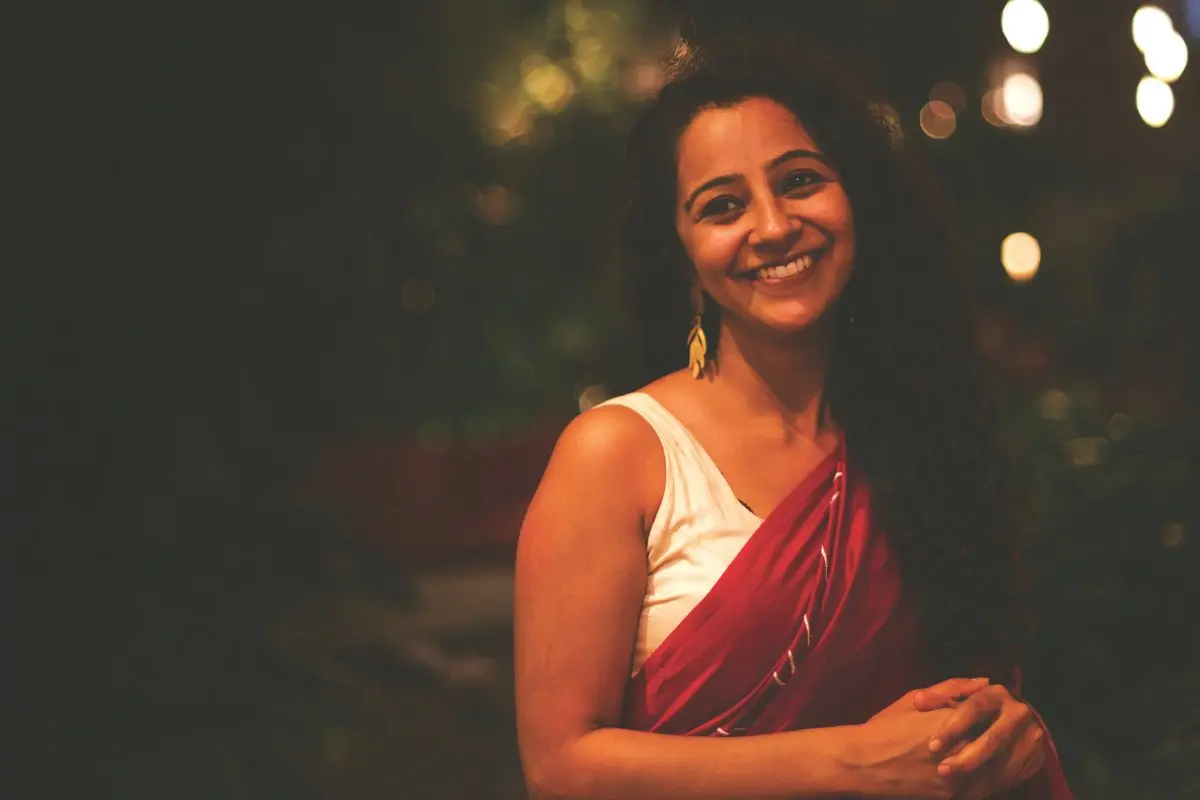
In a candid and wide-ranging conversation with Mathrubhumi English, Darshana Rajendran opened up about her multilingual journey through cinema, from the internationally acclaimed ‘Paradise’, which will stream on MUBI from Friday, to her upcoming Telugu-language release ‘Paradha’, where she drives uphill with two co-stars and cameras mounted on the car, all while speaking a language she didn’t know before.
She also delved into her unique process of picking scripts, why silence can be the loudest tool for an actor, and why she doesn’t believe in being boxed into “women-centric” films.
And yes, she also addresses the ultimate Kerala question: is she Team Mammootty or Team Mohanlal? Read our chat with her.
Your film ‘Paradise’, which was originally released in 2023 and garnered international acclaim, is now set to premiere on the OTT platform MUBI. Looking back, how do you reflect on the journey and the response it has received so far?
It’s actually been fascinating because I don’t think I have had this sort of journey with a film. We had one release with the (film) festivals like the Busan International Film Festival and the MAMI Film Festival, and then it came in theatres all over India, and now it’s coming on MUBI.
It feels like this film is reaching out to different audiences, and I love that more and more people are getting to see our work in Paradise.
‘Paradise’ unfolds in many languages – Malayalam, Tamil, English, Sinhala, and even a bit of Hindi. How did you navigate these shifts so smoothly, and were there any challenges while doing so?
I really enjoy how language is explored in this film. It is very close to how I normally do it in my day-to-day life. I speak in Tamil, Hindi, Malayalam, and English, and I use the language based on the requirement or how I am feeling.
For me, the fact that I had access to all these languages and could switch between them based on the situation in which I wanted to speak was great. You don’t get that liberty in films. For instance, if you’re doing a Malayalam film, you speak in Malayalam, or if you’re doing a Tamil film, you speak in Tamil. Here, it was so vast that it felt like I could flow a little more. As much as it was a challenge because it was new, it was really natural for me.
Just the politics of language itself, getting to explore that and the reason behind why we kept switching languages, was a lot of fun.
Prasanna (Vithanage) Sir, the director, gave us the script in Malayalam, and there were pieces where it was in English. He gave us time to figure it out and get our lines right. It was great, but also there was a lot of onus on all of us to make it feel natural and real.
This is a film that has given me something in terms of language that no other film has given.
The film almost weaponises stillness – quiet looks, long pauses, and silences. As an actor, how did you prepare to ‘do less’ yet say more?
It was one of the best challenges of the film. When I read the script, I realised that Amritha speaks very little. And I also realised that she is going through a lot, and the audience needs to know what she is going through. Everybody (audience) has to be in with what she is going through.
So for me, it felt like such a fun challenge as an actor; I felt very held by the team I was working with, and I knew I just needed to be present and think the thoughts that Amritha has, and they will be communicated in a way that translates on the screen as well. For me, I really enjoyed it.
Before, when I used to work with theatre groups, we used to have these exercises where we were asked to communicate without dialogue. It’ll be a quick improv where you need to communicate with each other and tell the audience what you’re going through, but without using any lines. I feel like it is one of those things that is tricky for an actor but also most fun because it is so difficult.
You’ve often spoken about picking scripts that strike an emotional chord. How do you recognise that deeper connection early in the process, and what was it about ‘Paradise’ that instantly spoke to you?
Sometimes I don’t connect with a character at all. Most often, my question before saying yes to a particular script is, “Do I feel like doing this today? Am I excited to jump into something like this?” Most often, it’s a yes.
I don’t know if it’s about feeling emotionally connected with the character, because sometimes I don’t. The character I played in ‘Purusha Pretham’ kills her husband. I did not know how to find this person or to reach her, but it feels like a challenge that I want to do, and I jump into it.
With ‘Paradise’, it was already a film that I was looking forward to. I had heard about it from Rajeev Ravi and Roshan when they were talking since they were already on board for the film. They were talking about a collaboration with a Sri Lankan director, and we watched some of his films together. I had been into this project for a while, and it sounded very interesting — what they were looking to do.
For me, I was very excited just as a viewer that a film like this is coming. And then when I got pulled into it, it was a very immediate yes from my side. Even before I read the script, I knew I wanted to be a part of this, and I was really excited that I was a part of this gang now and that I got to work with these people.
When I finally read the script, I loved it because there was so much that an actor could do and explore in the film. I don’t know how much I connected with the character, but I felt like I would be able to play Amritha for sure.
For me, I just read a script — if I’m excited, I’ll jump into it.
Reflecting on your 10-year journey – from theatre to cinema, what has been the hardest lesson and the most joyful moment?
The joy is literally never-ending, as much as the sadness is. It’s such a tricky thing. The difficulty never ends; it changes; it becomes different kinds of difficult. But the joy also does.
Every time, it’s tricky — the challenges you face — and then there is this one scene that you do, and you suddenly feel like, ‘This is why I do it!’
One thing that I always think of is when we were working on ‘Jaya Jaya Jaya Jaya Hey’. It was really challenging. When I read the script, I didn’t know how I would be able to step into the character physically and what it demands of me. It felt like I wouldn’t be able to do it, which is why I was really excited. I was scared, and I called the production house immediately and asked them to start Taekwondo classes right away.
I remember the day when the film came out. In Kerala, we do the first day, first show with the audience, and I remember we were sitting in the last row with the crew. Just when the first moment where Jayabharathi kicks back came, I thought to myself that if this moment works, the rest of the film also works.
I remember calling a few friends and some of the directors that I had worked with to watch the film at the premiere. That particular scene became such a moment. My mother was standing, and everyone was clapping and hooting. It was such a big moment and something that I hadn’t experienced before.
That has to be one highlight moment of my career.
Many South actors are making impressive inroads in the Hindi film industry. When do we see your debut, and are you reading any scripts at the moment?
If it’s a language I can speak, I am happy to look at it. I pick a script purely by whether I feel excited upon reading it.
I did a Tamil film, I did a Telugu film, and I've actually done an anthology in Hindi as well. Getting work from anywhere is the work I’m looking forward to doing. Telugu isn’t a language that I speak; I learnt it for the film, and I had a great time being able to explore a language and industry that is so new for me. I got to explore a side of me that is very different.
I’d love to work in different industries.
Is there a particular kind of role or genre that you want to play for your Hindi debut?
I don’t have any sort of rules, or these are the kind of characters that I want to play. I would love to do more comedy.
With the plays I’m doing, I’m getting to explore a lot of comedy, and I don’t get to do that in films for some reason; there is very little that I have gotten to do. I’m seen as a very serious, heavy-lifting sort of actor, with lots of trauma and sadness. But in real life, I’m a very different person.
All my childlike energy I haven’t gotten to explore in films yet. I do that in theatre, and I have a blast. So I do hope I get to do that in films.
Could you tell us a little about your character in the upcoming film ‘Paradha’, and when will it be released?
We will be releasing it very soon; I don’t have a date, but over the next couple of months, for sure, it’ll be released.
My character is Amishta in the film. It was fun to play with her because she is not like me. Her idea of feminism is very different from mine. Her understanding of how she needs to go in the world — she is sort of like, she hates men. She feels like she needs to be a man to be doing things a certain way or getting ahead in life. Her way of fighting is very different.
It was great fun because I had to say these lines that just didn’t feel like me; it really felt like another person. She really goes through a journey in the film. I really had fun.
It was very difficult also because I learnt to drive, and I learnt to speak Telugu — all of this was new. I am driving a car pretty much through the whole film. So, it was a real challenge.
You just mentioned that you learnt to drive. Didn’t you know how to drive earlier?
I have a licence, but I never drove around. I knew how to drive, but I just never drove because I was too scared of the road. But in ‘Paradha’, I was driving uphill, and I had two co-actors’ lives on me, with two big cameras mounted on the car. It was like I went from zero to a 100-level challenge with this film.
And in between all of this, I’m speaking in a language I don’t know. I did a lot of work for this film, and I really hope that people enjoy it.
‘Paradha’ is not an easy film; it’s a film without a hero and has three women leading it, and it’s in an industry that is not used to it. I’m so proud that my team decided to back a film like this — whether it’s my director, co-writers, or the producers.
It felt like I should be supporting a film like this, and I want to be a part of it. It’s a pathbreaking film for me.
Do you feel stories centred around powerful female protagonists, like in ‘Paradha’ and ‘Jaya Jaya Jaya Jaya Hey’, need more space in industries like Malayalam too?
I hope we reach a point where we don’t have to say that this is a women-centric film. Like how you hear stories about men, is how I hope we hear stories about women. I hope it doesn’t have to be such a big deal.
I want to do all kinds of films. Even a film like ‘Purusha Pretham’ — the film is not telling my story; it is about the guy, and I really enjoyed playing that character. I’m not eager to do only women-centric films.
We need stories of all kinds of people, and I’m glad to be a part of it all.
Working with two legends in 'Patriot' must be exciting! With two Malayalam cinema icons on board, which team are you on – Mammootty's or Mohanlal's?
I am not saying anything. Picking them as actors — I can’t, because I am a big fan of both. We’ve grown up watching these two actors and learnt so much of what acting is. There is not one actor in our times who hasn’t been influenced by them. So, you really can’t pick.
I’m just glad that I’m getting to be in a film with both of them. It’s one of those small ticks on my list that makes me happy. I’m doing a small part in the film, and it’s really nice working on the film.