From Tandur to Tollywood; Monika's cinema dreams get wings
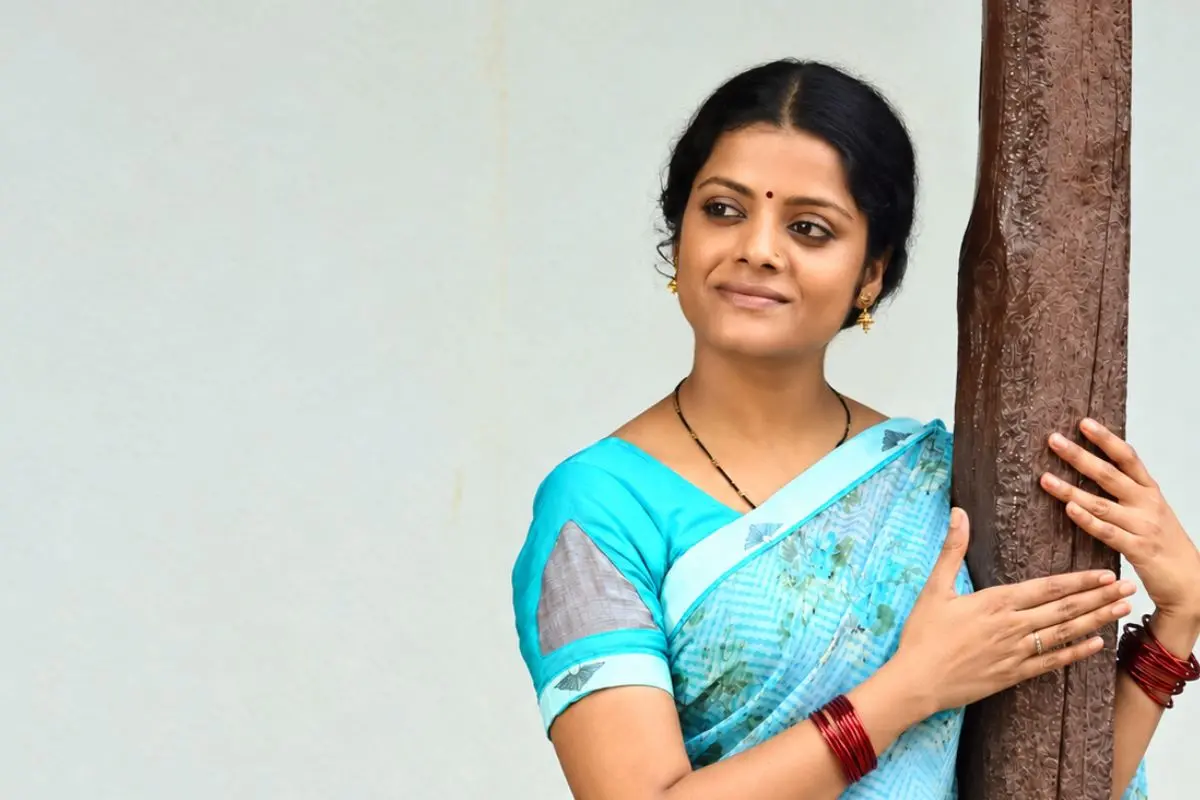
For millions, cinema is a starlit horizon—a distant, shimmering dream that feels almost impossible to touch. To step out of the shadows and truly illuminate the silver screen takes far more than a stroke of luck; it demands a relentless fire, quiet vulnerability, and an unyielding spirit that refuses to be dimmed. In a historically male-dominated industry where women face steep hurdles, figures from Meryl Streep to Nayanthara have defied the odds. Writing her own chapter on this canvas now is Monika Busam, an actor whose journey from Tandur to Tollywood exemplifies determination. Moving from academic excellence to 70mm glory, she offers an inspiring narrative for aspiring artists. She discusses her career, latest work in Crazy Kalyanam, and navigating the film industry in an interview with Mathrubhumi English.
How did your journey from Tandur to acting in Tollywood begin?
I moved to Hyderabad for my studies after the Xth standard. My interest in acting truly took root during my master’s degree at the University of Hyderabad. The university's theatre department staged numerous plays on campus, which I watched constantly. I was mesmerised by how actors transformed—it felt as though their bodies were empty vessels possessed by characters. Although I could not initially name the impulse, I felt a deep desire to experience that transformation.
Eventually, someone on campus who had seen me asked if I would act in a short film. I agreed. The cinematographer on that project subsequently invited me to audition for his directorial debut. I secured the role, and production commenced, though it was halted when the Covid-19 pandemic struck. Following the pandemic, I briefly worked a regular job before gradually returning to performance through independent films and short projects.
When did you realise that acting was your true calling?
It was a gradual realisation rather than a single epiphany. Alongside watching campus plays at HCU, I immersed myself in classic Indian cinema by directors such as K. Balachander, Adoor Gopalakrishnan, K. Vishwanath, Satyajit Ray, and Shyam Benegal. I was drawn to their nuanced, elegant portrayals of women.
I have been a daydreamer since childhood, naturally inclined towards fiction and imaginary worlds. Being an introvert, I spoke very little but possessed a strong desire for expression. Acting provided a conduit to express those internal thoughts through characters. I believe every role an actor inhabits carries a distinct personal mark.
How did you navigate the transition from stage dramas to independent Telugu cinema?
When I resumed acting after the pandemic, I did not choose one path exclusively. I acted in two stage plays while working on independent films, all while maintaining my day job. The process involved waiting for suitable opportunities and testing my capabilities as they arose. Though I was initially hesitant and held back, I gradually began establishing my own space within the field—a process that continues today.
Which projects were closest to your heart prior to entering mainstream Tollywood?
The yet to be released film Erra Mandaaram holds a lot of meaning for me. Playing that role gave me the distinct feeling, for the first time, that I had truly acted. We shot a demanding continuous long take following my character alongside co-actors, and the appreciation I received from the crew meant a great deal.
More importantly, I invited my mother and grandmother to a private preview, marking the first time I had shown my family my work. That moment helped me accept myself as an actor and eased my identity at home, allowing me to discuss my career openly with my family. Self-acceptance is essential before expecting others to believe in your path.
Could you share your experiences working on projects like the Super Subbu series and other independent works?
Prior to Crazy Kalyanam, I worked across various formats. Having followed the independent film collective Avanti Cinema on YouTube, I was thrilled to be cast in Gopi Galla Goa Trip, which is currently streaming on Aha.
As an admirer of director Venkatesh Maha since C/o Kancharapalem, working on Rao Bahadur was a notable experience. I also starred in Deewana, Super Subbu, and a vertical series titled May I Love Fatima. Additionally, I am fond of the YouTube short film Nithyam Gautham, as well as my roles in Erra Mandaaram and Mango.
Cinema has traditionally been viewed as a male-dominated industry. How challenging is it for a woman to navigate this space today?
The industry is undergoing a visible shift. A new generation of filmmakers is altering how stories are constructed, casting actors with intention rather than out of convenience. There is greater sensibility and professional respect toward actors now.
Furthermore, this evolution extends behind the camera. An increasing number of women are entering technical and creative departments, including sound design, art direction, assistant directing, and feature direction. This broader participation reflects a positive trajectory for the industry.
What can the audience expect from your upcoming film, Crazy Kalyanam?
Crazy Kalyanam is a family entertainer, distinguished by the director Badrappa Gajula’s deep connection to Telangana village life. This background lends the world of the film an authentic, lived-in quality, where every character is distinct. The narrative balances humour with genuine emotional depth, allowing the audience to experience both laughter and poignant moments. The teaser and the song "Kaka Dhoom Damaka" have already generated considerable interest ahead of the theatrical release.
You share the screen with Anupama Parameswaran in this project. How was the experience of working alongside her?
She is a remarkably sharp, energetic actor with immense presence of mind on set. She can transition seamlessly from off-camera tasks to deep, focused script discussions with the director. Crucially, she does not attempt to overshadow her fellow performers. Instead, she actively engages her co-actors, drawing them into the scene while remaining entirely attuned to the physical space and elements around her. Observing her technique was a valuable learning experience.
Looking ahead, what are your ambitions for the next decade?
I feel immense gratitude for the progression of my career thus far. Sometimes we spend so much time thinking about what is next that we forget to look back at how far we have actually come. I did not initially anticipate appearing on the big screen, yet I progressively secured substantial roles, handled intense characters, and eventually shared screen space with established stars. These milestones occurred through steady, incremental steps. Looking forward, my goal is simply to remain an active actor, collaborating with creative teams on compelling projects.
What does it take for young women to build their own space in the film industry?
Trust the process, particularly when progress feels slow. Success in cinema relies on a combination of developed skill and circumstance, such as timing, luck, and being seen by the right person at the right moment. Because those factors remain outside one's direct control, the primary focus should be on carving out one's own space and enjoying the creative journey.
Monika Busam’s journey demonstrates that talent paired with persistent effort can carve a path in the cinematic landscape. As cinema continues to connect deeply with audiences, actors who approach the craft with authenticity stand to leave a lasting mark on the silver screen.