Mukesh Khanna questions 'feminist' take on Sita in ‘Ramayana’: ‘Don’t use her character to appease women…’
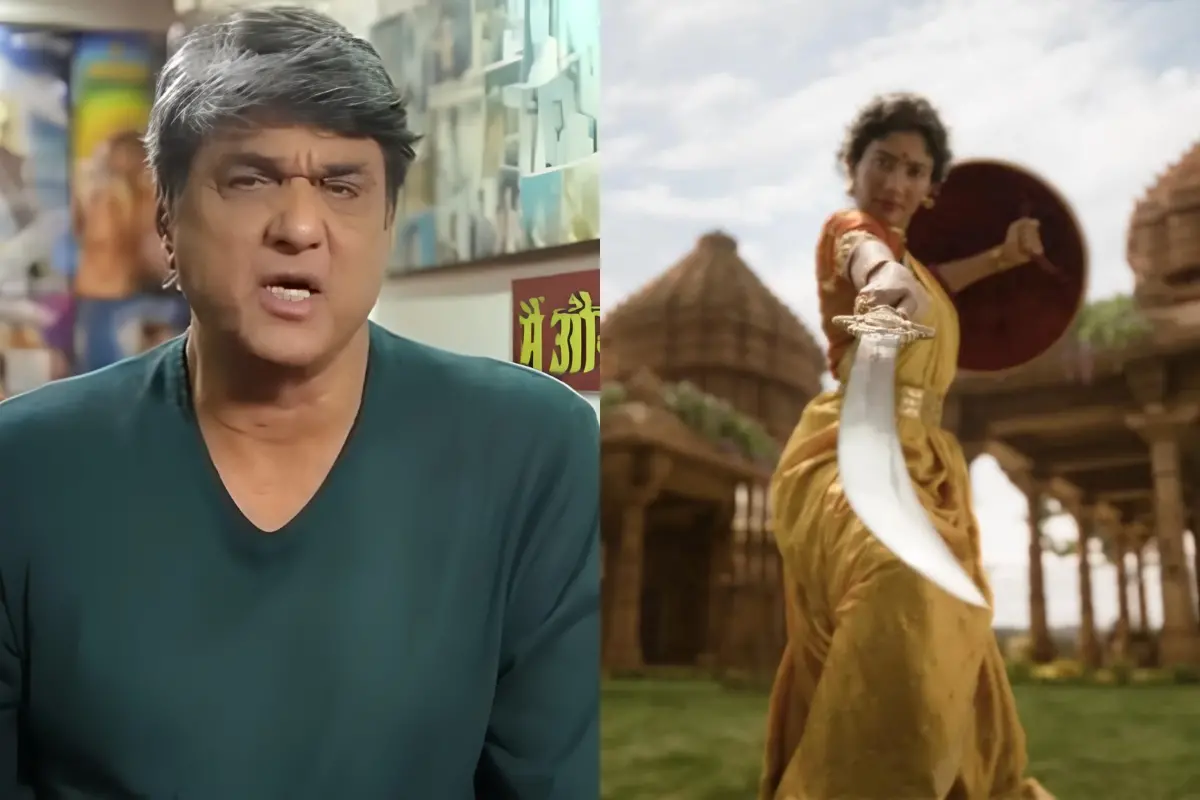
Veteran actor Mukesh Khanna has criticised the portrayal of Sita, played by Sai Pallavi, in Nitesh Tiwari's 'Ramayana', questioning the decision to depict the mythological character engaging in physical combat. He argued that such creative changes deviate from the traditional understanding of the epic and should not be introduced to accommodate contemporary ideologies.
Khanna shared his objections in a vlog, drawing attention to reviews and discussions circulating on social media. Although he admitted that he had not watched the film, the actor said the reactions he came across had prompted him to examine the reported changes to Sita's character.
Mukesh Khanna questions Sita's action sequences
Explaining what had particularly surprised him, Khanna referred to a viewer's objection to scenes in which Sita is reportedly shown fighting demons, comparing her actions to those of Rani Lakshmibai and modern-day female action heroes.
He said, "Sabse badi baat to ye hai ki ek-ek karke agar main logon ke comments batana shuru karun, kisi ek ne to bahut bada objection uthaya hai. Aur kaha hai ki kya aap kalpana laga sakte hain ki Ramayana mein Sita fight kar rahi hai, Jhansi ki Rani ki tarah ya aajkal ki heroines ki tarah jo macho bankar ladai karti hui dikhayi jaati hain."
(The biggest issue is that if I start recounting people's comments one by one, one person raised a very serious objection. He asked whether one could imagine Sita fighting in the Ramayana like Rani Lakshmibai of Jhansi or like modern-day heroines who are shown as macho fighters.)
He further alleged that the film depicts Sita physically attacking several demons rather than maintaining the character's conventional representation.
"Sita do rakshason, teen rakshason ke saath ladti hai, combat karti hai, maarti hai, laat chalati hai. Ye sab Sita ji kar rahi hain."
(Sita is shown fighting two or three demons, engaging in combat, striking them and kicking them. All of this is being done by Sita.)
Khanna said he was equally taken aback after looking into the claim and seeing the scenes being discussed.
"Main bhi is baat se achambhit hua. Mujhse zyada wo vyakti hairan tha jisne ye likha tha. Maine uski baat dekhi aur ye bhi dekha ki Sita ji aakar unse ladti hui dikhayi gayi hain."
(I was also astonished by this. The person who wrote about it seemed even more shocked than I was. I looked into what he said and saw that Sita was indeed shown fighting them.)
'Sita never fought anyone': Actor cites Valmiki Ramayana
The actor also questioned whether the reported action sequences were consistent with Valmiki's Ramayana. Referring to his understanding of the original epic, he maintained that Sita was never depicted as someone who physically fought her adversaries.
"Maine check kiya. Valmiki Ramayan mein kahin bhi aisa nahi hai. Aur main bhi jahan tak jaanta hun, maine jitna padha hai, Sita ji ne kabhi kisi se ladai nahi ki. Woh Maryada Purushottam Ram ki patni thi, jinhone seva bhav dikhaya, jinhone apne pati ke saath 14 saal vanvas mein rehna sweekar kiya."
(I checked. Nothing like this exists in Valmiki's Ramayana. As far as I know and from everything I have read, Sita never fought anyone. She was the wife of Maryada Purushottam Ram, who exemplified devotion and willingly accompanied her husband into exile for 14 years.)
He went on to recall how Sita chose to accompany Ram during his 14-year exile, despite having the option of remaining in the royal palace. According to Khanna, her decision reflected her devotion to her husband and the values associated with the epic's central characters.
"Apni kisi galti ki wajah se nahi, balki isliye kyunki putra Ram apne pita ke diye hue vachan ko poora karna chahte the, jo Kaikeyi ko diya gaya tha. Ye Maryada Purushottam Ram ki kahani hai aur Sita ji ne kaha ki main bhi wahin rahungi. Unhone kabhi rajdarbar ya rajsukh nahi manga."
(Not because of any fault of her own, but because Ram wished to fulfil the promise his father had made to Kaikeyi. This is the story of Maryada Purushottam Ram, and Sita chose to stay by his side. She never asked for royal comforts or privileges.)
Khanna also brought up the episode of Sita's abduction by Ravana, questioning why she would be portrayed as a fighter if the intention was to remain faithful to the traditional narrative.
"Aap Sita ji ke baare mein ye badlav karke dikha rahe hain ki woh fighter hain? Sir, woh fighter nahi thi. Aur jab Ravana unka haran karke le gaya, agar woh fighter hoti, to us samay bhi Ravana se lad sakti thi na? Phir woh chupchaap pakad kar kaise le jaayi gayin?"
(You are changing Sita's character and portraying her as a fighter? Sir, she was not a fighter. And when Ravana abducted her, if she had been a fighter, she could have fought him then as well. How would she have been taken away so easily?)
Mukesh Khanna accuses makers of introducing modern interpretations
Khanna further argued that changing an established character in an epic could affect the sentiments of audiences who have grown up watching and listening to these stories. Recalling a recent visit to a Ramlila performance, he said the audience's devotion to the traditional presentation made the reported changes particularly difficult for him to accept.
He expressed his displeasure over the possibility of introducing scenes that show Sita practising martial arts and wielding weapons.
"Hum bachpan se in kathao ko dekhte aur sunte hue bade hue hain. Aaj bhi karib dedh mahine pehle maine Ramlila dekhi thi. Poora hall haath jodkar baitha hua tha. Unki aastha ke beech aap achanak ek naya scene daal dete ho ki Sita ji lad rahi hain, karate kar rahi hain, talwar chala rahi hain aur pata nahi kya-kya kar rahi hain."
(We grew up listening to and watching these stories. Even recently, about one and a half months ago, I attended a Ramlila where people sat with folded hands. Then suddenly, amid their faith, you insert a new scene showing Sita fighting, doing karate, wielding a sword and much more.)
He then issued a sharp rebuke to the filmmakers, saying, "Sharm aani chahiye aapko."
(You should be ashamed of doing this.)
The actor also connected what he described as the altered portrayal to attempts to appeal to contemporary feminist perspectives. While acknowledging that women today are strong, he maintained that Sita's character should not be reshaped to represent modern-day expectations.
"Sita ko fighter banakar aap aaj ki naariyo ko tusht karne ki koshish kar rahe hain. Kisi ne ye bhi likha sir, feminism! Sir, ye feminist hai. Mujhe nahi malum feminist kya hota hai par jahan tak main suna hai ki aap aajkal ki aurto ko bata rahe ho ki kitni strong hai. Sab hogi strong, hum kisi ka galat nahi kehte. Ramayan me Sita ji Sita ji thi sir, wo aaj ki naari ko represent nahi kar rahi hai ki jab unke bal par aaj ki naariyo ka tushtikaran karo. Galat baat hai."
(By portraying Sita as a fighter, you are trying to appease modern women. Someone also wrote this, sir: feminism! Sir, this is feminist. I do not know much about feminism, but from what I have heard, you are telling modern women how strong they are. They may all be strong; we are not saying anything against anyone. In the Ramayana, Sita was Sita, sir. She was not representing modern women, and you should not use her character to appease today's women. That is wrong.)
About ‘Ramayana’
Directed by Nitesh Tiwari, 'Ramayana' features Sai Pallavi as Sita. The film was released in theatres on November 5.