Fifty years on, ‘Kabhi Kabhie’ still makes hearts skip a beat
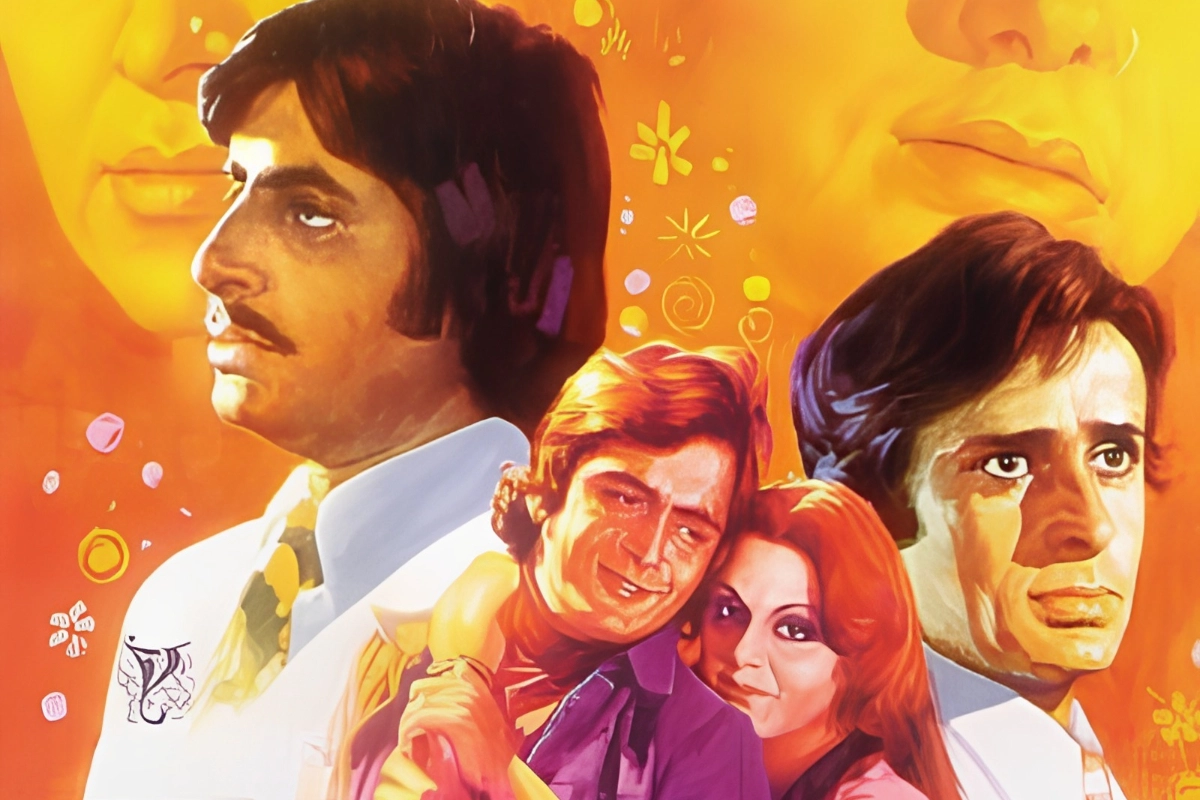
Yash Chopra's poetic love story, ‘Kabhi Kabhie’ released on 27 February 1976. At IFFI, surrounded by the sea breeze of Goa, the half-century-old love story is again finding its audience. Time may have changed how we dress, speak and love. But the line between poetry and romance in ‘Kabhi Kabhie’ remains as soft, and as sharp, as ever.
Imagine the mid-1970s. Amitabh Bachchan is the "angry young man" of Hindi cinema. In ‘Zanjeer’, ‘Deewaar’ and ‘Sholay’, he was all clenched fists and burning stares. Then, in 1976, he turned up in a soft sweater, with a notebook of poems, in the valleys of Kashmir.
That surprise is the first reason ‘Kabhi Kabhie’ was such a talking point. Fifty years later, the film is back in the spotlight. It was part of the classic cinema line-up at IFFI 2026, alongside Raj Khosla's CID (1956), and it has also been celebrated with anniversary screenings abroad.
A hero who wrote poems instead of throwing punches
Bachchan plays Amit Malhotra, a young poet who falls in love with a fellow student, Pooja, played by Raakhee. For an actor who had just become a national star through anger and action, this was a bold change of tone. It showed audiences a gentler, more vulnerable Bachchan, and he carried it off with ease.
The idea came to director Yash Chopra while he was reading a poem by his old friend, the lyricist Sahir Ludhianvi. So the film was built around poetry from the very first spark.
The plot
Amit and Pooja fall in love on a college campus in Kashmir. But Pooja's parents arrange her marriage to an architect, Vijay Khanna, played by Shashi Kapoor. Before they part, Pooja asks Amit to marry and keep writing poetry. Heartbroken, Amit does neither at first. He gives up poetry and takes over his father's quarry business.
Twenty years later, the story moves to the next generation. Pooja's son Vicky (Rishi Kapoor) loves his college friend Pinky (Neetu Singh). Then Pinky learns she was adopted, and sets out to find her real mother. Her search leads her to Kashmir, where she discovers that her mother is Anjali (Waheeda Rehman), who is now Amit's wife.
Anjali is afraid of losing her marriage, so she introduces Pinky as a distant niece. Things get tangled very quickly. Amit's young daughter Sweetie falls for Vicky, and Amit's old wound reopens. When he finally learns the truth about Pinky's birth, he reacts harshly. The old love, the new love and the question of who deserves forgiveness all collide in a dramatic finale involving a horse, a blast at the quarry and a forest fire. In the end, the characters make peace with the past, and the young couple get their happy ending.
The cast that made it special
This was a true ensemble. Besides the leads, Simi Garewal and Parikshit Sahni played Pinky's adoptive parents, Iftekhar played Amit's father and Deven Verma added comedy as the quarry manager, Rambhajan.
There is a lovely bit of film trivia behind Raakhee's casting. The role was written with her in mind. But she married the lyricist Gulzar before shooting began, and he wanted her to give up acting. After some gentle persuasion from Chopra, he agreed to let her do the film. Chopra later described the Kashmir shoot as a kind of honeymoon, with the whole cast working like one family. That warmth shows on screen.
The story was by Pamela Chopra, and the screenplay by Sagar Sarhadi, who also won the Filmfare Award for Best Dialogue. The film ran for about 178 minutes and was produced by Chopra under the Yash Raj Films banner.
The music that never left
If one thing keeps ‘Kabhi Kabhie’ alive, it is the music. Composer Khayyam, in his first film with Chopra, created one of the most loved albums in Hindi film history. Sahir's words gave it a literary depth rarely heard in a film soundtrack.
The title song, "Kabhi Kabhie Mere Dil Mein", comes in two versions. The solo is by Mukesh, and the duet is by Mukesh and Lata Mangeshkar. The duet topped the 1976 year-end list of Binaca Geetmala, the hugely popular radio countdown show. Sahir's lyrics for it came from a poem in his collection Talkhiyan.
Mukesh, who sang for Bachchan, won his final Filmfare Award for this song, which was awarded after his death. Kishore Kumar sang for Rishi Kapoor, and gave the film its lighter, more playful moments with songs like "Pyaar Kar Liya To Kya". The soundtrack also includes "Main Pal Do Pal Ka Shayar Hoon", "Tera Phoolon Jaisa Rang" and "Mere Ghar Aaye Ek Nanhi Pari".
Why it was celebrated then
In 1976, the film was a hit with both audiences and awards juries. It earned an estimated ₹4 crore and became the eighth highest earning Hindi film of that year. At the 24th Filmfare Awards, it led the field with 13 nominations. These included Best Film, Best Director, Best Actor, Best Actress, Best Supporting Actor and Best Supporting Actress. It won four awards: Best Music Director (Khayyam), Best Lyricist (Sahir), Best Male Playback Singer (Mukesh) and Best Dialogue (Sagar Sarhadi).
Audiences also loved seeing Bachchan, Shashi Kapoor and Waheeda Rehman together. Rishi Kapoor and Neetu Singh brought youthful charm as the next generation of lovers. Bachchan, Kapoor and Rehman would reunite with Raakhee in Chopra's ‘Trishul’ two years later.
Why it is still celebrated
First, the film asks a question that never gets old. What do we do with the past? Amit cannot let go of an old love, yet he struggles to forgive his wife for her own past. Some of his reactions feel dated today, but the film does not leave him unchallenged. It is Vijay, the "other man", who points out how unfair Amit is being. That makes the story richer than a simple love triangle.
Second, the film remains a deeply human story about second chances, across two generations.
Third, the music has been passed down through families like an heirloom. Many viewers today know the songs before they ever see the film.
Finally, there is the pull of a good big-screen revival. Chopra himself once called ‘Kabhi Kabhie’ the most enjoyable film he ever made.
New viewers can also find it on Netflix, where it began streaming on 14 November 2025.