Revisiting 1984 from a new decade
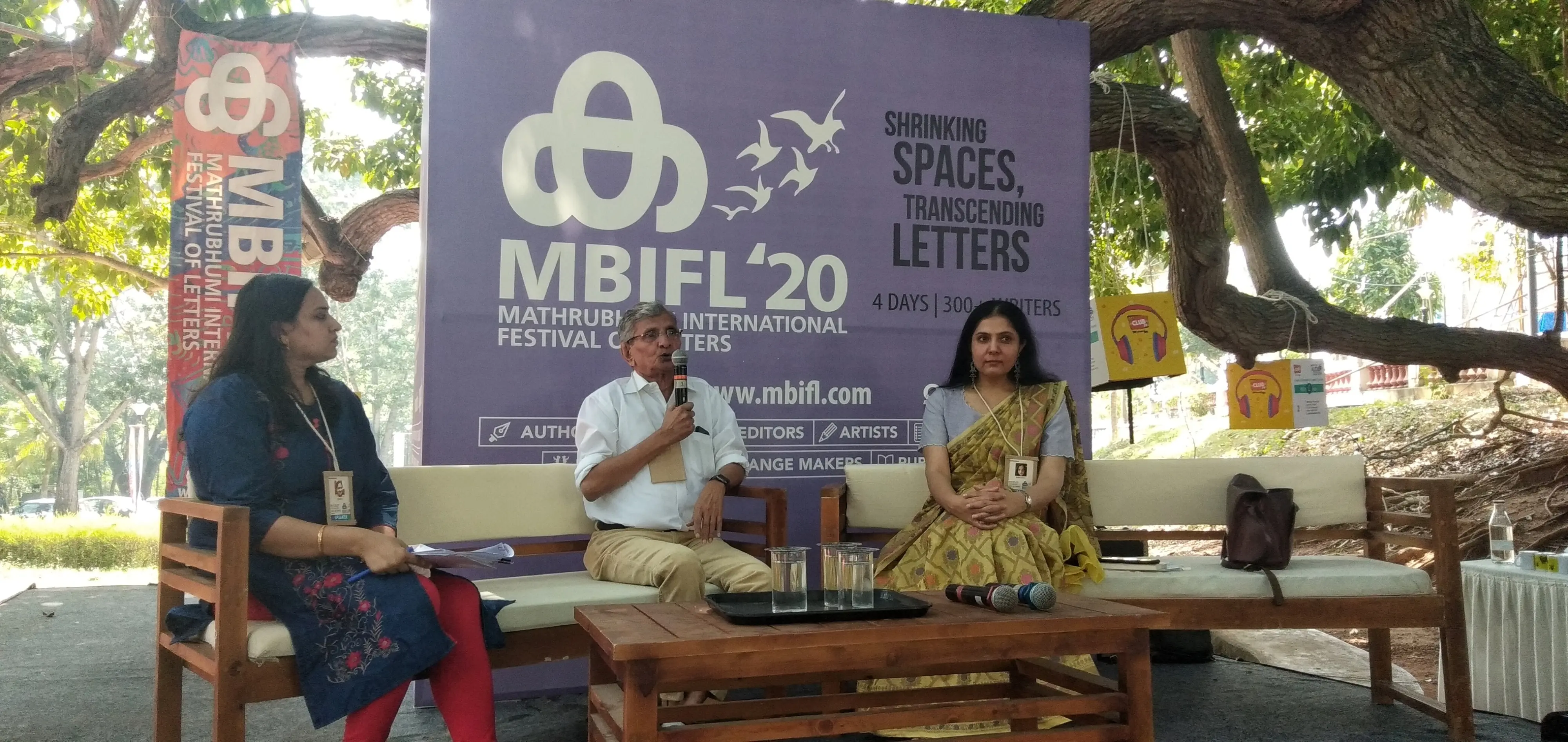
Audience gathered at Under the Tree of Mathrubhumi International Festival of letters on its second day were revisiting the 1984 anti-Sikh riots when writer NS Madhavan and journalist-turned-writer Radhika Oberoi recalled the facts of the tragedy. VS Kaikasi, an Assistant Professor, moderated the session that examined two literary works around the anti-Sikh mayhem that took place in one of the darkest years of the nation.
NS Madhavan who was in Delhi when the riots took place said that the days were very tiring and emotional back then. "I could not write Vann Marangal Veezhumbol (When Big Trees Fall) immediately after the incident; could do it only when I started writing after a long gap of seven years". He recommended Radhika's novel 'Stillborn Season" as both a literary and political work in relation to the mayhem. Her novel addresses the issue from a child's point of view. Her book comes out at a crucial time- 35 years after the anti-Sikh riots.
Radhika addresses anti-sikh riots in a subtle manner, with interlinked narratives, memoirs, first person accounts and so on.
Further, Malayali's beloved writer spoke about how riots were used as political weapons. "It is unfortunate and rare trend in world politics to use riots as a political strategy, which later happened in 2013 at Muzaffarnagar", he added.
Kaikasi mentioned the riots as matter which is still alive as the cases are still going on and the wounds are not healed yet. Radhika said what excited her to write about a book is not the matter's lack of closure; it is a combination of many factors. She said she was a child who was raised in a protected environment when the riots happened. As she grew older, she heard stories about the riots from her grandfather when he lost friends in different parts of the city. "I wrote an article about the widows of Tilak vihar who lost their husbands in the anti-Sikh riots and were relocated to the area known as widows' colony". Radhika read an excerpt from her book's prologue which talks about a situation set beneath the tree (coincidentally, complemented the venue- Under the tree- where the session was held).
For NS Madhavan, 1984 was a gruesome year with the anti-Sikh violence and the sequence of tragedies associated it and the gas tragedy. "Violence per se was not the monopoly of the writing people. It was always politically used". He said "whenever politicians were cynical in pursuit of power, such incidents happened and it still happens in our nation", he said. He pointed out it never happens in developed countries". Even the colour of the flag changed back then", he added. He recollected the immense sorrow he saw in writer Khushwant Singh, who had tremendous humour sense and great stoicism back in the 1980s.
According to Madhavan, violence was used to suppress any dissent and referred to the recent inidents post the Citizenship Amendment Act, which "intended to be a Hindu-Muslim conflict but now it became a conflict between constitutionalists and anti-constitutionalist."
We are one of the few countries in the world who won independence through non-violence struggle. That is the glorious past. Now the state missionary is using power to put down dissent or any other opinion, he added.
"If I was asked to write about a contemporary topic, I would pick the Me Too movement which created a row in Hollywood", Radhika said.