IUI vs IVF: Which Treatment Should You Start With?
Trying to conceive can be one of life’s most hopeful yet emotionally challenging journeys.
Each month brings anticipation, excitement, and sometimes disappointment.
When fertility challenges arise, couples often find themselves asking: “What’s the best first step? Should we try IUI or go straight to IVF?”
Making this decision can feel overwhelming, especially with so much conflicting information online. Understanding the differences between these treatments, their success rates, costs, and suitability can help couples make informed, confident choices for their fertility journey.
Understanding IUI and IVF
Intrauterine Insemination (IUI)
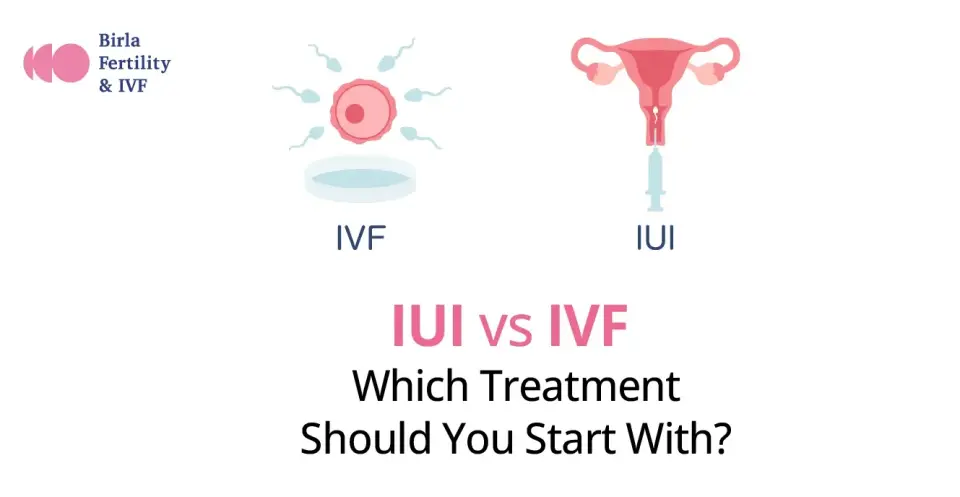
It is often considered a first-line treatment for fertility challenges. It is a simple, minimally invasive procedure where sperm is placed directly into the uterus during ovulation. The goal is to increase the number of sperm reaching the egg, improving the chances of fertilization.
IUI is commonly recommended for couples facing unexplained infertility, mild male factor infertility, or issues with cervical mucus. It’s also often suggested for women who have irregular ovulation cycles, as fertility medications can be used alongside the procedure to improve egg release.
In Vitro Fertilization (IVF)
It is a more advanced fertility treatment. It involves stimulating the ovaries to produce multiple eggs, retrieving them from the ovaries, fertilizing them in a laboratory, and then transferring the resulting embryos into the uterus.
IVF is generally considered when less invasive treatments, such as IUI, have not been successful or when there are more complex fertility issues, such as blocked fallopian tubes, severe male factor infertility, or advanced maternal age. IVF also allows for additional procedures like preimplantation genetic testing (PGT), which can help identify healthy embryos before transfer.
Success Rates: IUI vs IVF
Success rates for both IUI and IVF depend on multiple factors, including age, underlying fertility issues, and the number of cycles attempted. Younger women typically have higher success rates, while factors such as sperm quality and ovarian reserve play a crucial role.
| Age Group | IUI Success Rate (%) | IVF Success Rate (%) |
| Under 35 | 10–20 | 50–60 |
| 35–37 | 10–15 | 40–50 |
| 38–40 | 5–10 | 25–35 |
| Over 40 | 2–5 | 5–15 |
Note: These are approximate success rates and can vary depending on individual circumstances, clinic expertise, and treatment protocols.
From the table, it’s clear that IVF generally provides higher success rates, especially for women over 35 or in cases of more complex infertility. However, IUI can still be a valuable first step for younger couples or those with mild fertility issues, as it is less invasive and more affordable.
Cost Considerations
Financial factors often influence the decision between IUI and IVF. While both treatments involve medical expenses, IUI is typically more affordable and may serve as a good starting point before committing to the higher costs of IVF.
These costs may vary depending on the clinic, location, and whether additional medications, monitoring, or procedures are required. Couples are encouraged to discuss costs upfront and consider potential cumulative expenses if multiple cycles are needed.
When to Consider IUI
IUI may be suitable for couples in the following situations:
- Mild male factor infertility, such as low sperm count or reduced motility
- Irregular or absent ovulation
- Cervical issues that may hinder sperm movement
- Unexplained infertility after basic fertility evaluation
- Women under 35 with no major fertility complications
Doctors often recommend attempting 3–4 cycles of IUI before moving on to IVF. If pregnancy does not occur after these cycles, IVF may be the next logical step, as it offers higher success rates and more control over the fertilization process.
When IVF Might Be the Right Choice
IVF is typically recommended under more complex circumstances, such as:
- Unsuccessful IUI cycles
- Blocked or damaged fallopian tubes
- Severe male factor infertility, including low sperm count or motility
- Advanced maternal age, where egg quality and quantity may be lower
- Need for genetic screening or embryo freezing
IVF gives doctors the ability to directly observe fertilization and select the best-quality embryos for transfer. While more invasive, IVF’s controlled laboratory process can improve the chances of conception when other methods are less likely to succeed.
Emotional and Psychological Considerations
Fertility treatments can be physically demanding and emotionally intense. Couples often experience stress, anxiety, and feelings of disappointment after unsuccessful attempts. Having a strong support system — including a partner, family, friends, or a professional counselor — can be crucial. Many fertility clinics offer psychological support and counseling to help couples cope with the emotional challenges of treatment, which is just as important as the medical procedures themselves.
Choosing the Right Fertility Clinic
The expertise of the clinic and medical team can significantly impact treatment outcomes. Clinics that combine experienced specialists, advanced laboratory facilities, and personalized care often provide the best chance of success. In India, several fertility centres are known for offering comprehensive services, including diagnostic testing, counseling, IUI, IVF, and other advanced reproductive technologies. Fertility experts like Birla Fertility & IVF focus on combining modern technology with individualized patient care, helping couples navigate every step of their fertility journey with clarity and confidence.
Key Takeaways
Deciding between IUI and IVF is not about choosing which is universally “better” — it’s about selecting the treatment most suitable for your unique situation. Consider these points:
- IUI is less invasive, more affordable, and suitable for mild fertility issues or younger women.
- IVF offers higher success rates, especially in older women, cases of severe infertility, or when genetic screening is needed.
- Success rates vary significantly by age, fertility diagnosis, and clinic expertise.
- Emotional support and guidance are critical for managing the stress of treatment.
The journey to parenthood may not be linear, but with modern reproductive technologies, many couples are achieving their dreams of starting a family. Consulting with a qualified fertility specialist can help determine the best treatment plan tailored to your needs and circumstances.
Remember, every couple’s fertility journey is unique. Whether starting with IUI or moving directly to IVF, informed decisions, emotional support, and expert guidance can make the path smoother and more hopeful.