Why do cinema halls have grand entrances but gloomy exits?
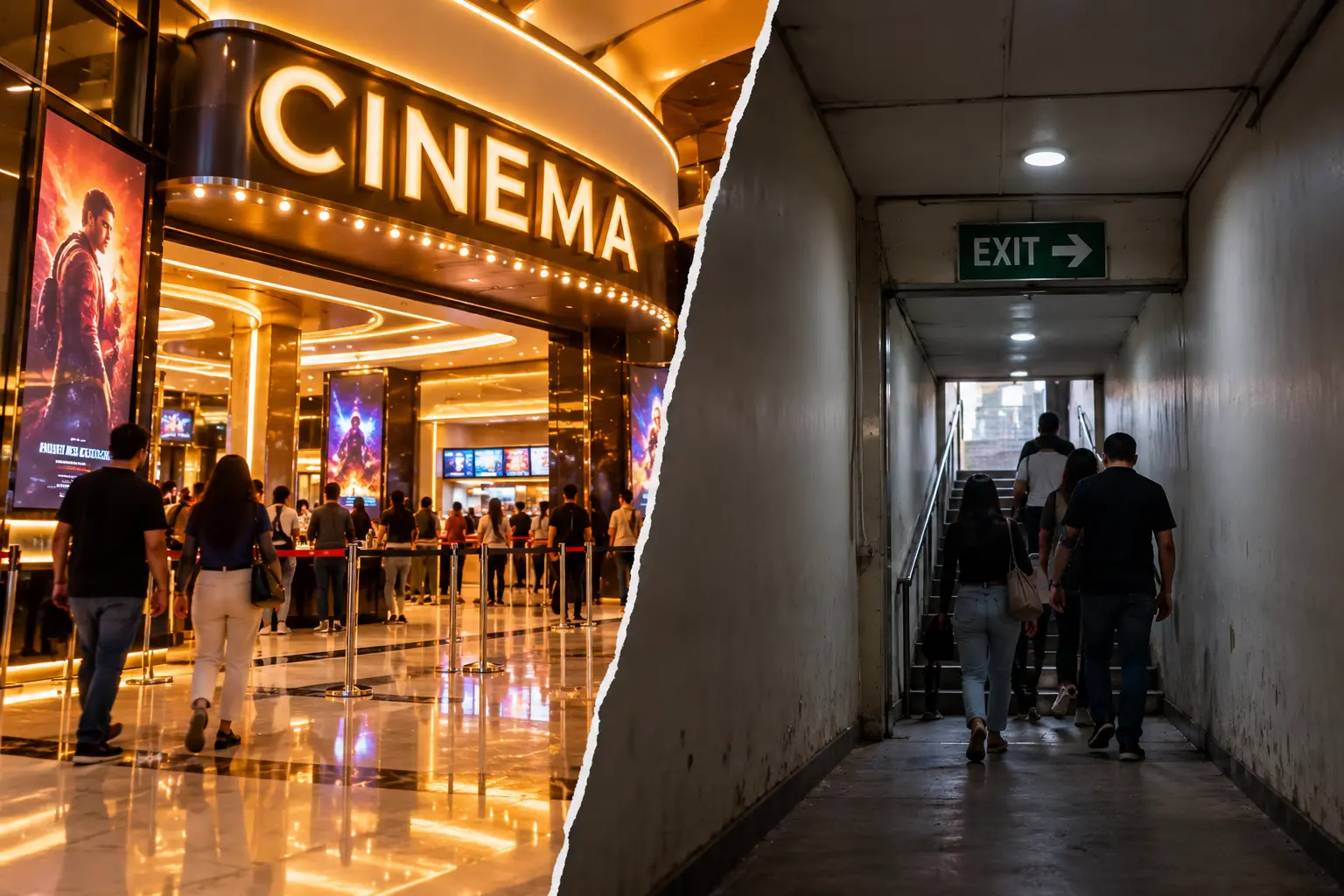
You walk into a cinema hall and everything feels special. Gleaming floors, dramatic lighting, plush interiors, oversized movie posters and the irresistible aroma of freshly popped popcorn set the mood for an evening of entertainment.
The entrance feels almost theatrical, as if the movie experience begins long before the opening credits roll. Then the film ends.
Suddenly, you find yourself walking through a dull corridor, down a bare staircase or through an unremarkable passage that leads to a parking lot or the street.
The carefully curated glamour disappears, leaving you with one question: Why do cinema halls invest so much in beautiful entrances but often neglect their exits?
The answer lies in a combination of consumer psychology, commercial priorities and architectural design.
The entrance sells an experience, not just a movie
A cinema's entrance is often the first physical interaction customers have with the brand. It sets expectations, builds anticipation and creates an impression of luxury, even before the audience enters the screening room.
The lighting, colours, décor and display of upcoming films all contribute to this experience.
As moviegoers increasingly expect more than just a large screen, the lobby becomes an important part of the entertainment package.
Research on the Indian multiplex experience has explored how architecture shapes the relationship between cinema spaces and audiences.
The physical environment can influence how people perceive and experience moviegoing.
There is also a commercial incentive. The entrance and lobby are prime spaces for food counters, promotional displays and branding.
Customers waiting for their shows may browse posters, buy refreshments, or take photos against visually appealing backdrops.
In other words, the entrance does more than welcome people. It helps create an atmosphere that encourages spending and makes the outing feel worth the ticket price.
Once the movie ends, efficiency takes priority
The exit serves a different purpose. While the entrance builds excitement, the exit needs to move people out efficiently, especially when several hundred moviegoers leave a screening at once.
A simpler passage can be easier to maintain, clean and manage. It may also help prevent crowds from gathering in narrow areas, especially when one show ends just as another audience begins arriving.
Cinema design must account for the movement of large numbers of people, including safe evacuation during emergencies. Regulations governing cinema halls in India require adequate, clearly indicated exits that allow audiences to leave safely.
However, an exit can be functional and still be neglected. Emergency exits must meet safety requirements, regardless of how attractive they look. Aesthetic considerations can never take precedence over unobstructed escape routes, adequate lighting and clear signage.
Not every cinema deliberately designs an ugly exit. In some buildings, the exit route may simply lead through a service corridor or an area where decorative treatment was never a priority.
The psychology of leaving is different
Another subtle factor is at play: The customer's emotional journey. When people enter a cinema, they are anticipating something.
They are excited about the film, meeting friends, buying snacks and escaping their daily routine for a few hours. A visually rich entrance reinforces that feeling.
After the credits roll, the emotional focus shifts. Moviegoers may be discussing the climax, checking their phones, searching for their vehicles or rushing to catch public transport.
The immediate priority is getting home, not admiring the architecture. This makes the entrance more valuable as a space for creating an impression, while the exit is often treated as a route to be navigated rather than an experience to be enjoyed.
Yet that approach overlooks a key part of the customer experience: the final impression can be as memorable as the first.
A cinema does not need chandeliers in every corridor to make leaving pleasant. Better lighting, clean walls, clear directions, accessible pathways and thoughtful design can make a significant difference.
Ultimately, the question is not whether cinema halls should make their exits as extravagant as their entrances. It is whether a place that invests so heavily in welcoming customers should also care about how they leave.
After all, the movie may end when the screen goes dark, but the audience's experience of the cinema continues until they step outside.