Why 27 feels old but 30 feels like a fresh start
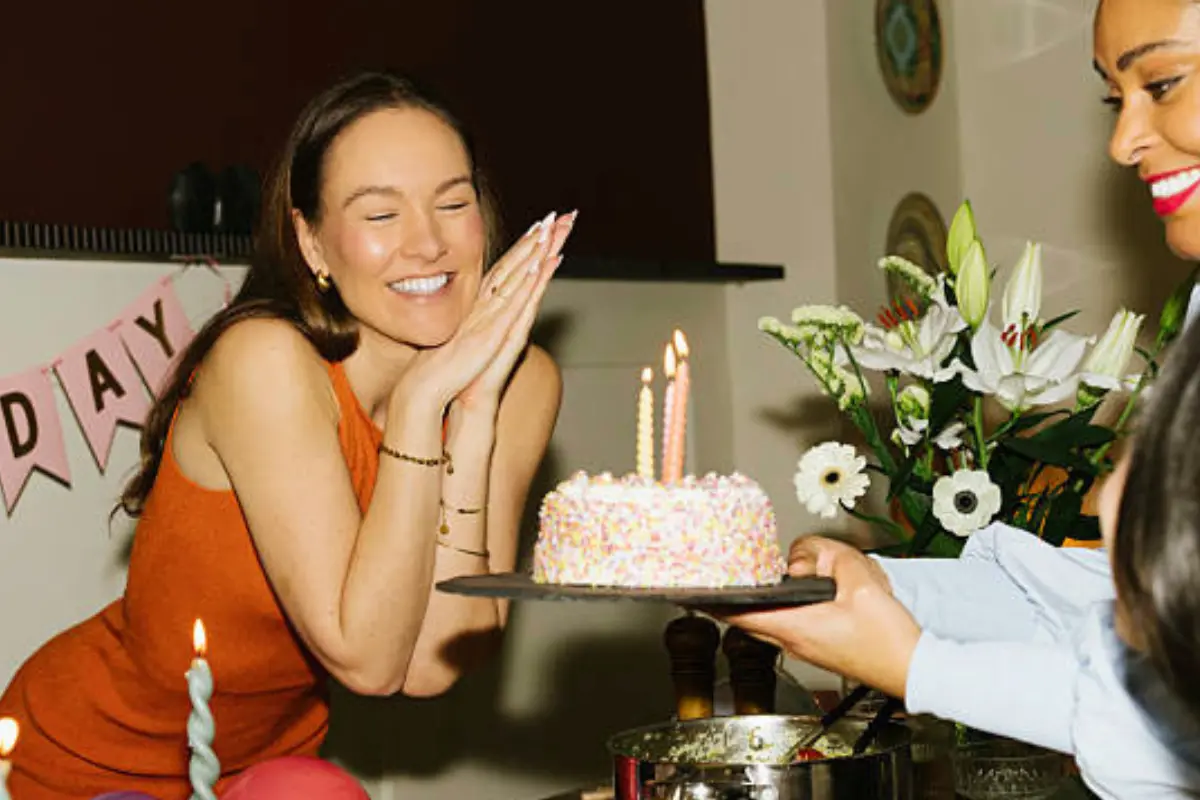
There is something deeply irrational about the way we think about birthdays.
Twenty-three can feel terrifying. Twenty-four suddenly feels full of possibility. Twenty-seven is treated like the edge of a cliff, while 30 despite everything we're told to fear about it often arrives with unexpected relief.
None of this makes mathematical sense.
If aging were something we experienced objectively, every birthday would feel like one small, predictable step forward. Instead, certain numbers seem emotionally charged while others barely register. We don't experience age as a straight line. We experience it as a story.
Taylor Swift adds this perfectly in ‘Nothing New’ when she asks, "How can a person know everything at 18 but nothing at 22?"
The years between those numbers are short but the emotional distance is enormous.
Why some birthdays feel heavier than others
The idea first clicked after watching a TikTok arguing that age is fundamentally non-linear. According to the creator, 26 feels old while 30 feels young again because anything magical happens in between, but because each age carries a different cultural meaning.
It sounded ridiculous at first.
Then almost everyone instinctively understands what they're talking about.
Developmental psychologist Jeffrey Arnett has spent years studying this period of life, describing the twenties as a stage of "emerging adulthood", a prolonged transition between adolescence and settled adulthood.
According to his work, what makes certain birthdays emotionally heavy is the distance between where we are and where we believe we should be.
The anxiety isn't about turning 29. It's about turning 29 without the life that 29 is supposed to represent.
Every age carries its own script
The exact ages differ depending on where you grow up.
Someone graduating university at 22 will experience their twenties differently from someone entering the workforce at 24 or 25. But despite those differences, a surprisingly familiar script gets written.
Twenty-three often feels older than expected because education is ending. Life suddenly acquires a sense of permanence. Then 24 arrives, and you're the youngest employee in the office. Overnight, you feel inexperienced again.
The emotional pendulum swings constantly.
Many people describe 25 as the beginning of the infamous quarter-life crisis. Others say it doesn't arrive until 26 or 27. Either way, the late twenties often become the years of comparison.
Friends are getting promoted, some are buying homes, getting married, and others seem to have discovered exactly who they are.
Whether or not those impressions are accurate almost doesn't matter. They become the backdrop against which we judge ourselves.
Why 27 became such a loaded number
No birthday carries quite the mythology of 27.
Part of that comes from the so-called "27 Club" artists like Jean-Michel Basquiat, Kurt Cobain, Amy Winehouse, Jimi Hendrix and Janis Joplin, whose deaths changed the number into something larger than statistics.
But even outside that cultural myth, 27 seems to occupy an unusual emotional position. You're close enough to 30 for the countdown to begin. Far enough from 21 that youth no longer feels endless.
Old enough to think you should have figured things out and young enough to realise you haven't. It's an age where unfinished ambitions become louder.
Then 30 changes everything
What's fascinating is that 30 often doesn't feel like the ending people expect. It feels strangely liberating. The countdown is over and the deadline everyone warned you about has already arrived and life continues.
Instead of obsessing over whether you've "made it" by 30, many people describe their early thirties as a period of experimentation, careers change, relationships begin or end, people move cities, return to university, leave jobs they hated or discover entirely new versions of themselves.
Thirty stops being a finish line and becomes permission to begin again.
The collapse of the traditional timeline
Part of this emotional whiplash belongs to our generation. For previous generations, adulthood followed a relatively predictable sequence of education, work, marriage, children, home ownership.
That sequence no longer exists. People marry later or not at all, careers restart multiple times, divorces happen before forty and some become parents at 23, others at 43, many do neither.
Adulthood today is less like climbing a staircase and more like wandering through interconnected rooms.
That's why it's entirely possible for a 31-year-old to feel younger than an exhausted 23-year-old, 27 to feel expansive, 29 to feel catastrophic, and 32 to feel playful again.
The stories attached to them have changed.
Most of the time, we forget our age entirely
Perhaps that's the strangest part. For all the anxiety birthdays create, most days we aren't consciously aware of our age at all.
A few days ago, an actress stopped mid-conversation over coffee and asked, "Wait... am I fifty-four or fifty-five?" That tiny moment reminded me of something Milan Kundera once wrote, "Perhaps we become aware of our age only at exceptional moments and most of the time we are ageless."
It's true. We don't wake up every morning thinking about how old we are. We become aware of age only when something forces us to notice, a birthday, an old photograph, a reunion, seeing someone younger achieve something we thought we'd have done by now.
If we constantly experienced the passage of time, we'd struggle to function at all.
As Kundera also observed, "To be mortal is the most basic human experience and yet man has never been able to accept it, grasp it, and behave accordingly."
Living several ages at once
Virginia Woolf understood this long before psychologists gave it names. In Mrs Dalloway, Clarissa Dalloway, at fifty-two, feels simultaneously "very young; at the same time unspeakably aged."
It's one of the most accurate descriptions of growing older I've ever read. Because age rarely arrives alone. We carry younger versions of ourselves everywhere.
The confident teenager, uncertain graduate, child who thought 30 sounded impossibly grown-up and they don't disappear. They learn to coexist.
Maybe age was never meant to feel linear
This isn't an attempt to build a scientific theory of birthdays. It's simply an observation that many of us seem to experience the same emotional geography.
The same years frighten us, same numbers reassure us and same milestones feel impossibly important until we've crossed them.
Perhaps that's why learning that other people also experience the "twenty-seven blues" feels comforting.
Age isn't just a number recorded on a birth certificate. It's a narrative continuously rewritten by culture, memory, expectation and comparison.
The comforting part is that none of us are writing that story alone. We're all haunted and eventually liberated by many of the same numbers.