Are your dreams trying to tell you something? Experts explain
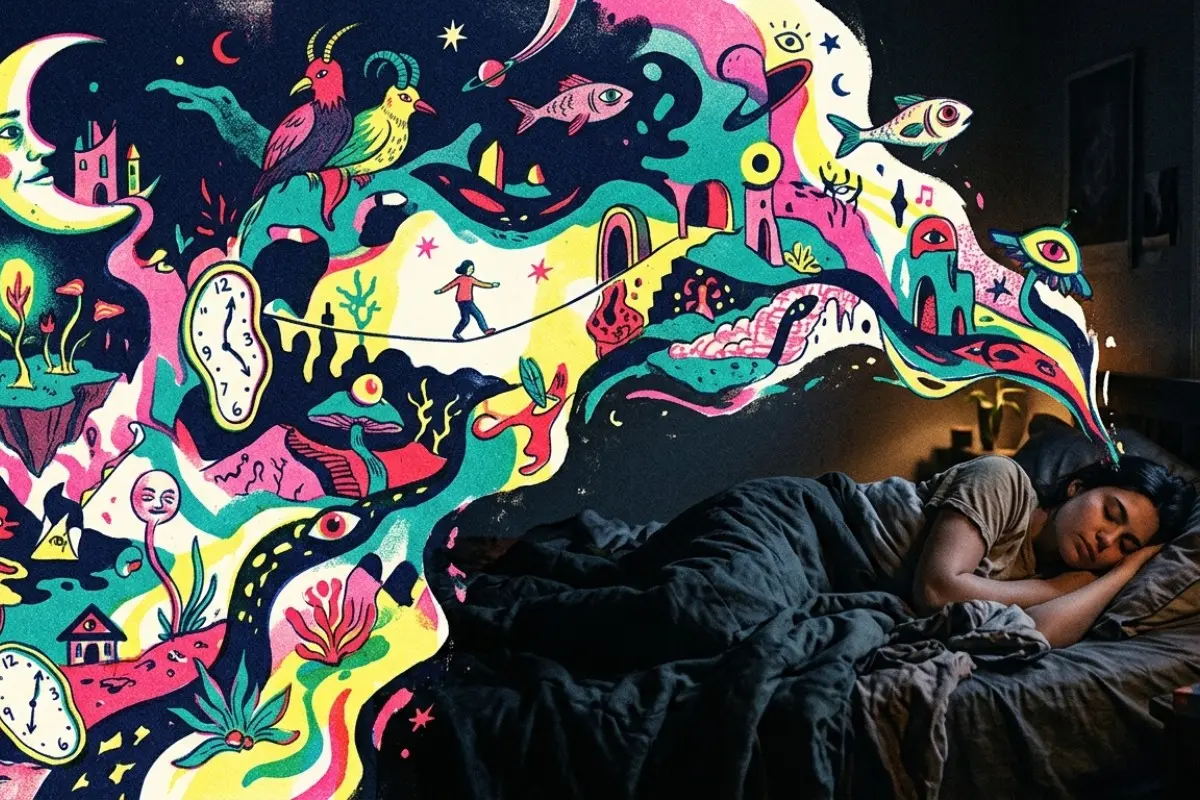
Dreams are one of those universal experiences we all share, yet they remain deeply personal and often puzzling. One moment you are walking through a familiar street, the next you are flying, falling, or trying to catch a train that never arrives.
For years, scientists brushed dreams aside as random “brain noise” with no real purpose. But the more we learn, the harder it becomes to believe they are meaningless.
After all, why would the brain go to the trouble of paralysing the body during REM sleep or burning through energy to create these vivid inner worlds? Even more intriguing, REM sleep begins before birth, long before we have memories to process.
Also read: Clove water for skin: Does this viral trend really work for acne and glow?
Clearly, something deeper is happening. Research now suggests that dreaming follows certain patterns, unfolding in levels that become more complex and surreal as we move deeper into sleep.
What happens before a dream actually begins?
Before we fully slip into a dream, we pass through a strange in-between phase called hypnogogia. This is the moment when you are not quite awake but not properly asleep either. You might notice flashes of imagery or odd sensations that feel disjointed and fleeting.
During this stage, the brain often produces simple geometric visuals. Back in the 1920s, researcher Heinrich Klüver identified recurring shapes people tend to see, including lattices, cobweb-like forms, tunnels, and spirals. Think of these as the doorway into the dream world.
Scientists believe these patterns originate in the visual cortex. One interesting theory suggests that dreaming may actually protect the brain. Because of neuroplasticity, if certain areas such as the visual cortex stay inactive for too long, nearby regions could take over.
Also read: Late motherhood trend: Deepika, Katrina, Sonam and truth about pregnancy risks after 35
By generating imagery, the brain keeps this area active. While this might explain why dreams begin, it does not yet explain the rich and complex stories that follow.
Why do dreams feel empty or oddly designed at first?
Once you move past those geometric visuals, the dream starts to take shape. This is where the setting begins to form, though it often feels incomplete or slightly off. You might recognise a place, but something about it feels exaggerated, distorted, or strangely empty. This is what people often call a “dreamscape”.
At this stage, the brain plays with something known as negative space. In simple terms, this is the empty space around objects. Too little detail can make you feel isolated, while too much can feel overwhelming. The balance creates an emotional tone rather than a realistic environment.
Interestingly, the brain begins to rely more on emotional memory here. Instead of drawing from the hippocampus, which stores factual memories, it leans on the amygdala, which processes emotions. The result is a landscape built from feelings rather than logic. It can feel raw, intense, and slightly chaotic, laying the groundwork for everything that comes next.
Why do we keep having those stressful “running late” dreams?
As dreams progress, they start to develop structure and storylines. One common example many people relate to is the so-called “airport dream”.
You are trying to catch a flight, but something always goes wrong. The gate disappears, the crowd ignores you, or you simply cannot reach your destination in time.
Variations of this appear in different settings such as hotels or ships, but the outcome is often the same. You do not get where you are trying to go.
Also read: What is that line on your towel? Turns out it actually has a job
These dreams are widely seen as metaphors for stress or unfinished business in waking life. Since the brain cannot communicate clearly through language while asleep, it amplifies emotions instead. It reduces complex thoughts into core themes like identity, desire, fear, loss, or conflict.
Instead of following logical rules, these dreams operate on emotional logic. Events unfold in a way that strengthens a feeling rather than making rational sense. That is why they can feel so intense and memorable.
Why do some dreams feel like they have a mind of their own?
At a deeper level, dreams begin to feel less like something you are controlling and more like something you are observing. This is where “independent agents” appear. These are characters or places that seem to exist separately from you.
Some people report seeing the same unknown person repeatedly over many years. Others describe detailed locations such as shops or cities that later turn out to exist in real life.
One of the most common experiences at this stage is being chased. It is one of the most frequently reported nightmares worldwide.
Researchers believe this happens because the brain is trying to make sense of earlier emotional patterns. It blends personal experiences with instinctive fears using what are called emergent attractor networks.
These networks allow certain themes to repeat while still adapting over time. For example, the person chasing you might symbolise someone you are having issues with, but the act of being chased reflects a deeper, instinctive fear such as avoidance or confrontation. The lack of control in these dreams is actually what makes them meaningful.
What happens when you realise you are dreaming?
The final and rarest stage is lucid dreaming, where you become aware that you are inside a dream. For some, this opens the door to exciting possibilities like flying or shaping the dream environment. For others, it can turn unsettling.
Some people say that when they tell dream characters they are not real, those characters react negatively or even aggressively. Another strange experience is the “false awakening” or nesting dream. You might believe you have woken up and started your day, only to notice something slightly off, such as a distorted reflection in the mirror.
Also read: Is sleep divorce the new relationship trend in India?
Then you wake up again, and again, each time the dream feels more realistic. This loop can continue, making it difficult to tell what is real.
Experts suggest this may happen when the brain struggles to align its internal signals with the external world. It creates layers of reality that overlap and blur together.
Dreams might still hold many mysteries, but looking at them through these levels offers a fascinating glimpse into how the mind works when we are asleep.
Far from being random or meaningless, they seem to follow patterns and reflect parts of ourselves we might not always notice when we are awake.