Surrounded by millions, feeling alone: Why urban loneliness is rising
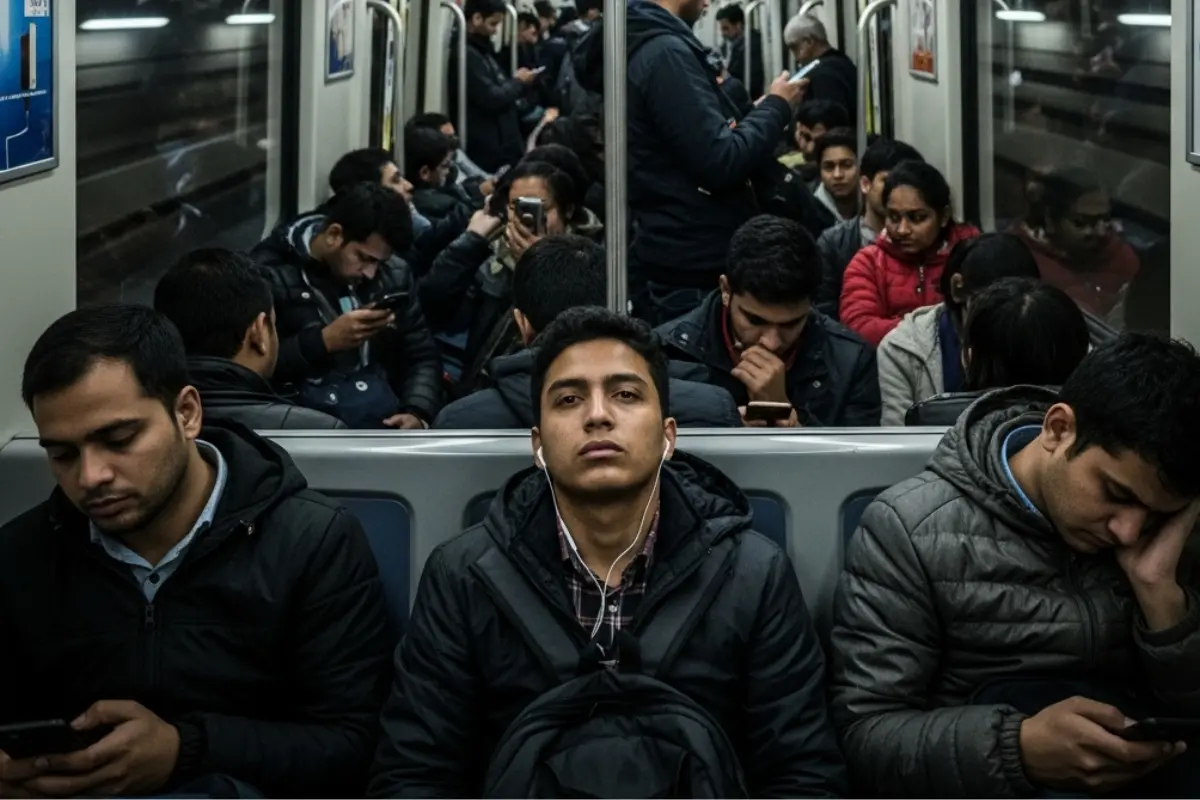
Ever stood in a packed lift, stared very seriously at the floor numbers, and pretended your phone had just delivered the most important message of your life? Or walked through a crowded café, headphones on, avoiding eye contact like it’s a competitive sport?
Welcome to city life — where you can be surrounded by thousands of people and still feel like you’re the only human in the room. This oddly familiar feeling isn’t just social awkwardness; experts now call it the urban loneliness paradox, and it’s becoming one of the most relatable side effects of modern city living.
Living among millions, feeling alone
Standing on a packed metro platform or walking through a crowded street, many city residents experience a sense of isolation that feels contradictory to their surroundings. This phenomenon, often described as the urban loneliness paradox, highlights how physical proximity does not necessarily translate into emotional or social connection. In fact, recent studies in 2025 suggest that higher population density can sometimes intensify feelings of loneliness rather than reduce them.
Why crowded spaces trigger social withdrawal
Behavioural researchers explain that constant exposure to noise, movement and unfamiliar faces places the brain in a state of overstimulation. To conserve mental energy and avoid burnout, people subconsciously withdraw — avoiding eye contact, limiting conversation and mentally disengaging in public spaces. While this response is protective, it also builds invisible social barriers between individuals sharing the same environment.
The decline of the ‘third place’
For decades, social life revolved around three spaces: home, work and the “third place” — informal community hubs such as cafés, libraries, parks and local eateries. These spaces allowed low-effort, spontaneous interaction. In many modern cities, however, third places have steadily disappeared, replaced by high-density housing, commercial complexes and efficiency-driven retail that prioritise speed over social exchange.
Transaction culture and architectural isolation
Urban life has become increasingly transactional. Coffee is ordered through apps, groceries are delivered without conversation, and services are designed to minimise human contact. At the same time, modern residential architecture often discourages interaction. Large apartment blocks treat corridors, lifts and lobbies as transit zones rather than shared social spaces, allowing residents to live among hundreds of neighbours without ever speaking to one another.
Why digital connection falls short
While smartphones and social media offer constant connectivity, experts argue they cannot replace real-world interaction. A 2025 OECD report on social deficit found that digital communication provides momentary stimulation but lacks the emotional grounding of physical presence. Psychologists stress the importance of micro-interactions — brief chats, shared smiles or casual exchanges — which trigger neurological responses linked to safety, belonging and emotional stability.
Designing cities for connection
Urban planners are increasingly turning to the concept of “sticky spaces” — environments designed to encourage people to pause, linger and interact. These include benches arranged to face each other, shared courtyards, community gardens and neighbourhood libraries. The growing interest in the 15-minute city model, where daily needs are accessible within a short walk, aims to create human-scale neighbourhoods that foster repeated, familiar encounters.
Small acts that counter isolation
Experts suggest that individuals can also push back against urban loneliness through intentional habits. Walking without headphones, initiating brief non-transactional conversations, and spending time alone in public spaces rather than retreating indoors can gradually rebuild a sense of connection. Research indicates that learning to enjoy solitude in shared environments often reduces feelings of isolation more effectively than digital distraction.
A growing urban challenge
As cities continue to expand, loneliness is increasingly viewed as both a public health issue and an urban planning concern. Specialists argue that solving it requires more than digital solutions or individual resilience — it demands thoughtful design, community-oriented spaces and everyday social habits that allow connection to form naturally. In the end, the challenge of urban loneliness is not a lack of people, but a lack of opportunities to truly connect.