Less partnership, more burden: How ‘mankeeping’ is straining modern relationships
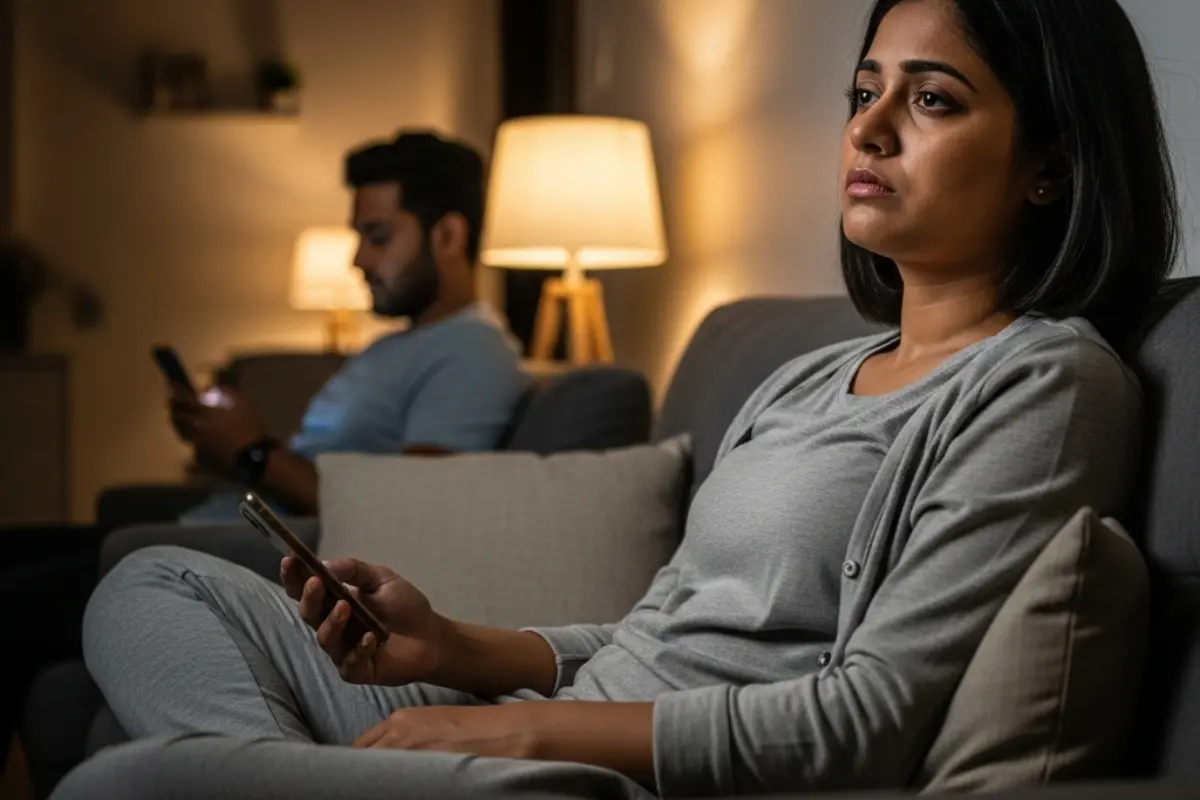
Below is a fact-based, science-backed article body expanding on mankeeping, written in UK English, with factual framing, research references (no fabricated quotes), and clear sub-headings. No sensationalism, no emojis, and no unnecessary capitalisation.
What is Mankeeping and why it matters
Mankeeping refers to the unpaid, often invisible labour women perform to maintain men’s social, emotional and relational lives. This includes reminding partners to call family members, organising social gatherings, mediating conflicts, sustaining friendships, managing emotional wellbeing, and often compensating for men’s lack of emotional outreach or accountability.
The term builds on earlier feminist concepts such as emotional labour (coined by sociologist Arlie Hochschild) and kin-keeping, but focuses specifically on how women are expected to maintain men’s social connections — frequently at the cost of their own time, energy and wellbeing.
Recent sociological research suggests that many women are now actively rejecting this role.
What research says about emotional labour imbalance
Multiple studies across psychology and sociology show that women consistently perform more emotional and relational labour in heterosexual relationships.
A 2022 study published in the Journal of Family Psychology found that women were significantly more likely than men to:
- Track important dates and social obligations
- Initiate contact with extended family
- Manage emotional tensions within relationships
- Anticipate others’ emotional needs
Meanwhile, men were more likely to benefit from this labour without recognising it as work.
Another large-scale study from the American Sociological Association found that men in long-term heterosexual relationships had stronger social support networks than single men, while women’s social networks often shrank after entering relationships — suggesting that women absorb the burden of relational maintenance.
Why men are more socially isolated — and how women fill the gap
Men, particularly in adulthood, tend to have fewer close friendships and lower emotional intimacy outside romantic relationships. According to a 2023 Pew Research Center report:
- Nearly 1 in 5 men report having no close friends
- Men are less likely to seek emotional support from peers
- Men are more likely to rely exclusively on romantic partners for emotional connection
Psychologists note that traditional masculinity discourages vulnerability, emotional expression, and help-seeking. As a result, women often become men’s primary — sometimes sole — emotional outlet.
This dynamic places a disproportionate emotional burden on women, especially in long-term partnerships.
The mental health cost for women
Carrying sustained emotional responsibility has measurable psychological consequences.
Clinical psychologists link chronic emotional labour to:
- Emotional exhaustion
- Resentment and relationship dissatisfaction
- Anxiety and burnout
- Reduced sense of personal autonomy
A 2024 study in Social Psychological and Personality Science found that women who reported unequal emotional labour in relationships also reported significantly lower relationship satisfaction and higher stress levels, even when other aspects of the relationship appeared stable.
Importantly, many women in these studies did not describe dramatic conflicts — but rather a slow erosion caused by constant, unacknowledged effort.
Why more women are opting out
Sociologists observe that women today are increasingly unwilling to perform unpaid emotional labour without reciprocity.
Several social shifts contribute to this:
- Greater financial independence
- Increased awareness of emotional labour through online discourse
- Declining social pressure to remain in unsatisfying relationships
- Shifting expectations around equality and partnership
Research from the University of Michigan shows that women now place higher value on emotional equity than previous generations and are more likely to leave relationships they perceive as emotionally one-sided.
This does not necessarily reflect declining commitment — but rather rising standards for mutual responsibility.
Is this about blame or structural conditioning?
Experts stress that mankeeping is not solely about individual behaviour but about social conditioning.
Men are often not taught emotional maintenance skills, while women are socialised from childhood to anticipate others’ needs. Without conscious effort, these patterns reproduce themselves in adult relationships.
Relationship researchers emphasise that change requires:
- Active emotional participation from men
- Recognition of emotional labour as real work
- Shared responsibility for social and relational upkeep
Without this shift, imbalance tends to persist — and increasingly, women choose to disengage rather than compensate.
The bigger cultural shift underway
Mankeeping has become a focal point in broader conversations about gender, care work and emotional equity. As women articulate these experiences more openly, researchers note a growing refusal to normalise emotional self-sacrifice as a prerequisite for partnership.
Rather than asking women to “communicate better” or “be more patient”, experts increasingly point to the need for structural and behavioural change — where emotional responsibility is shared, visible and valued.
For many women, walking away is no longer seen as failure — but as self-preservation.
(Disclaimer: This article is intended for informational and explanatory purposes only. It discusses based on sociological research, expert opinions, and lived experiences shared by individuals. The views expressed do not generalise or stereotype all men or relationships and are meant to highlight structural and behavioural patterns observed in certain social contexts. Individual experiences may vary.)