China’s 350 km/h sleeper bullet train goes viral in India; internet asks, ‘When will we get this?’
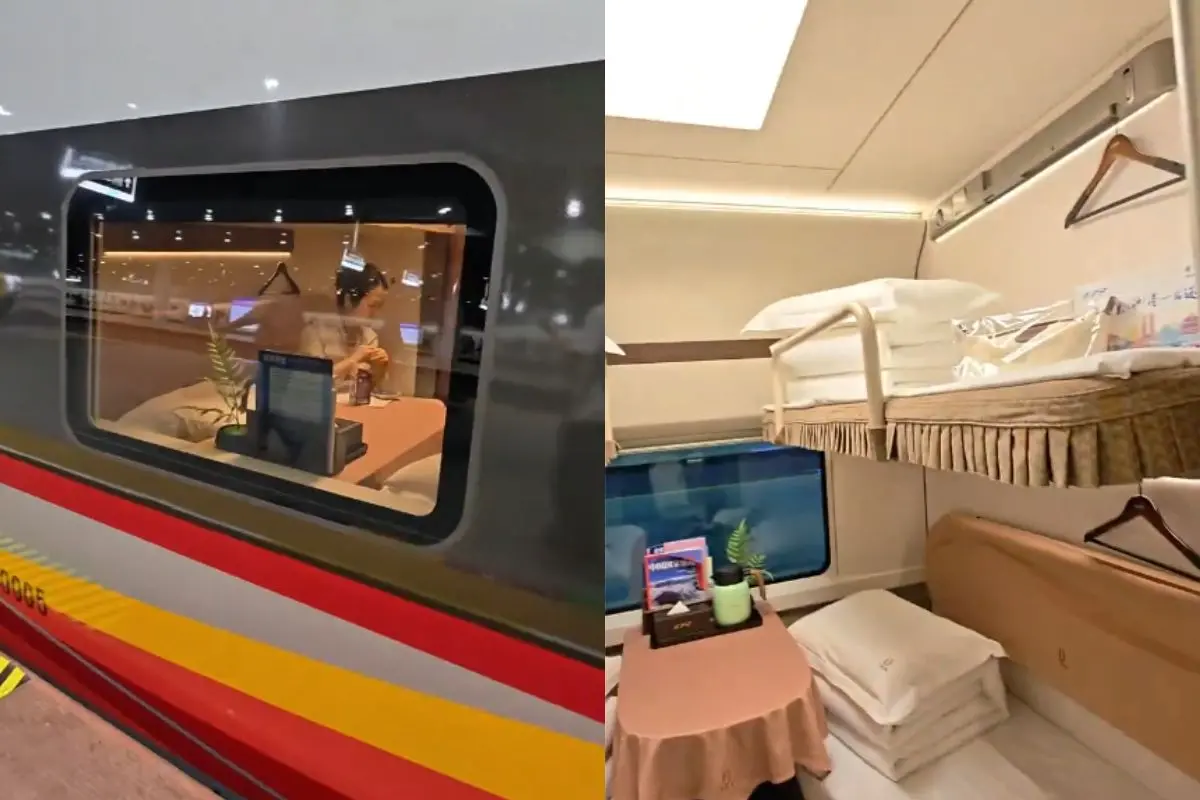
A video showing passengers sleeping flat inside a high-speed train travelling at 350 km/h has gone viral on social media, leaving Indian users impressed and prompting a bigger conversation about how quickly people could travel across the country if India had similar railway technology.
The video was shared by a Chinese journalist, who pointed out the sleeper version of China’s 350 km/h bullet trains.
“Fun fact: China's 350 km/h bullet trains has a sleeper version, in which you can lie flat and sleep while racing across the country,” the journalist wrote.
The footage soon caught the attention of Indian users, with one post turning the discussion towards a familiar question: what would happen if India could travel thousands of kilometres by train in just a few hours?
‘Jammu to Kanyakumari in 12-13 hours?’
One X user compared the Chinese train’s reported speed with the 3,790-km journey between Jammu and Kanyakumari, which the user said currently takes around 70 to 71 hours by train.
At 350 km/h, the user calculated that the same distance could theoretically be covered in roughly 12 to 13 hours.
That would mean saving more than 57 hours on the journey, according to the post.
The comparison quickly became one of the talking points around the viral video, with the user arguing that India could benefit from investing more in railway technology rather than relying heavily on large expressway projects.
The user later added another argument: if trains could complete long-distance journeys much faster, the same train could potentially be used for more trips, increasing railway utilisation and passenger-carrying capacity.
‘Sleeper bullet trains at 350 km/h?’
Indian social media users had plenty to say about the footage.
Some were simply amazed by the idea of lying down, sleeping and waking up hundreds or thousands of kilometres away.
“Sleeper bullet trains at 350 km/h? Lie flat and wake up across the country—pure travel flex!” one user wrote.
Others used the video to compare the Chinese railway experience with Indian trains, while some praised the infrastructure and scenery visible in the footage.
But not everyone was convinced that bringing similar technology to India would be straightforward.
A section of users pointed towards the potential ticket prices of high-speed rail.
One commenter argued that such trains could be expensive and questioned whether the economics would work if fares were significantly higher than conventional Indian train tickets.
Another user compared the cost of train travel in India with what passengers might have to pay for a much faster Chinese-style service, arguing that the huge difference in fares would also need to be considered.
The discussion also brought up concerns over whether investment in high-speed rail would make financial sense, with users debating the cost of building and operating such services.
What began as a video showing an unusual sleeper arrangement on a 350 km/h train has therefore turned into something much bigger on Indian social media.
For some, the footage is a glimpse of what long-distance train travel could eventually look like in India — fast enough to cross the country in hours while passengers sleep comfortably on board.
For others, the bigger question is affordability and whether India can develop such infrastructure without making tickets inaccessible to ordinary passengers.