10 things you probably didn’t know about breasts and breastfeeding
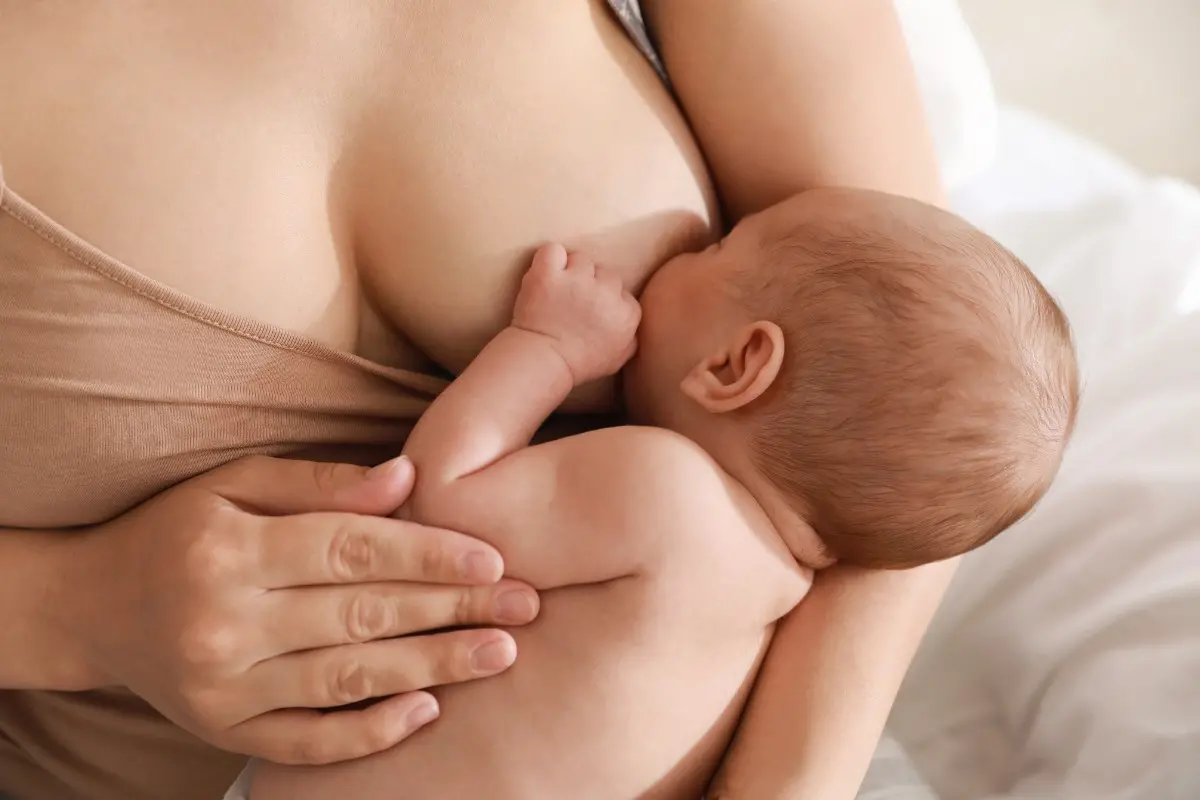
We don't talk about breasts as organs very often. We talk about them as body parts, as fashion problems, as things to be self-conscious about. But strip away all of that and what's left is one of the strangest, most quietly brilliant bits of engineering in the human body.
They finish building themselves after you're born
Most organs are basically done by the time you arrive. Not this one. The breast is barely more than a bud at birth, and it doesn't reach full functional maturity until pregnancy, when a fresh wave of hormones tells it to properly get to work. So you spend your entire childhood, adolescence and into adulthood carrying around an organ that's essentially still under construction, waiting for a signal that might never come, or might come decades later. Then when it does, it builds active milk making tissue almost from scratch, runs at full output for months or years, and quietly dismantles itself again afterwards. Not many parts of the body get rebuilt and renovated like that more than once in a lifetime.
Size has nothing to do with how much milk you'll make
This one's backed up repeatedly and it still surprises people. Breast size is determined mostly by fatty tissue, and fat doesn't make milk. Milk is made by glandular tissue, and how much of that you've got isn't reflected in bra size at all. Research comparing breast size to actual milk output has found no meaningful link between the two.
Also Read: IVF vs IUI: What’s the difference and what women should know
A far better sign of how things are shaping up is whether the breasts grew noticeably during pregnancy itself, since that reflects glandular tissue developing, not the size someone started with. There genuinely is an entire industry of products and marketing built around a myth that has no basis in the physiology.
There's no reservoir. It's made on demand
A lot of us grow up picturing breasts as something like a jug, filled up between feeds and poured out when the baby's hungry. That's not really how it works. Milk is produced continuously and is mostly made in response to demand, not stored up in some tank waiting to be drained.
The more effectively and frequently milk is removed, the more the body makes. Supply chases demand in something close to real time. It's less a container and more a live production line.
The milk itself keeps changing, automatically
Breast milk isn't one fixed recipe. It shifts within a single feed, changes across the day (with more melatonin and sleep promoting compounds showing up at night), and adjusts as the baby grows older, all without any conscious input from the mother. If a baby arrives early, the milk produced is measurably different too.
Studies on mothers of premature infants have found higher protein levels and higher concentrations of several infection fighting compounds, tailored to what a smaller, more vulnerable baby needs. Nobody is dialling this in. The body is reading signals and adjusting the formula on its own.
Newborns can find the breast entirely on their own
Lay a newborn on its mother's chest right after birth and, left alone, it will make its own way there. This has been studied properly since the late 1980s and has a name, “the breast crawl”. Babies go through a recognisable sequence, from crying and settling to activity and rooting, and research has clocked babies beginning to move towards the breast around half an hour after birth, with proper suckling starting roughly fifty minutes in. Nobody teaches this.
Scent seems to play a big part too, since a newborn's palms carry amniotic fluid with a smell similar to the mother's nipple area, which is thought to help guide it in. Watching an hour old human do this unprompted is one of those things that looks like it shouldn't be possible until you see it happen.
Newborns can only focus at almost exactly one distance
A brand new baby's eyesight is blurry and short range, sharp only within about 20 to 30 cm. That happens to be almost precisely the distance between a baby's face and its mother's when it's feeding. It's not a coincidence dressed up as one, it's a genuinely tight match between visual development and where the baby most needs to see clearly.
Also Read: What if everything you've heard about breastfeeding isn't true?
On top of that, the areola darkens during pregnancy, giving a high contrast target that's easier for underdeveloped newborn vision to pick out against paler skin. The one thing the baby most needs to find is also the one thing it's actually equipped to see.
With twins, each breast can regulate temperature independently
Skin to skin contact between a mother and newborn does more than offer comfort, it actively helps regulate the baby's body temperature, and research using thermal imaging has shown breastfeeding mothers' chests respond distinctly to changes in ambient temperature compared to non-lactating women.
Even more striking, a case study looking at mothers holding premature twins in skin to skin contact found each breast appeared to respond separately to the temperature needs of the individual infant lying against it, effectively running as two independent thermal systems on the same body, at the same time, while also producing milk. It's a genuinely remarkable bit of physiology that gets almost no attention outside specialist journals.
It contains living white blood cells, and the count changes with illness
Breast milk carries live white blood cells, and colostrum in the very first days after birth is especially packed with them, since a newborn hasn't built up much immunity of its own yet. What's more striking is that the level rises again later on if the mother or baby comes down with something.
Also Read: How to burp a baby correctly: Different positions every new parent should know
Several studies have found white blood cell counts in the milk climbing noticeably during active infection in either party, then dropping back once things settle down. It looks like the mammary gland is picking up on infection signals, possibly through contact with the baby's saliva during feeding, and responding by upping the immune content of the milk almost immediately.
About 200 of its sugars aren't even for the baby
Human milk contains a whole family of complex sugars called human milk oligosaccharides, with roughly 200 distinct types identified. Here's the strange part: babies can't digest most of them. They pass through undigested and end up in the large intestine, where they act as food for specific beneficial bacteria, particularly a group called bifidobacteria that dominate a breastfed baby's gut.
So a good portion of what's in the milk isn't nourishing the baby directly at all, it's nourishing the community of microbes that will go on to shape the baby's gut and immune development for years. The mother isn't just feeding one small person, she's stocking a whole internal ecosystem before it's even properly established.
Her chest can respond to any baby crying, not just her own
The let down reflex, which pushes milk from the glands towards the nipple, is driven by oxytocin and normally triggered by a baby suckling. But it can also be set off by far less direct cues, including simply hearing a baby cry, and lactation consultants note this isn't limited to a mother's own child.
Also Read: Samantha’s pregnancy puts myositis in focus: Is healthy pregnancy with autoimmune disease possible?
Thinking about the baby, or even strong emotion, can do it too. It's a reminder of how tightly this whole system is wired into instinct and hormone rather than conscious control.