10 parenting lessons from Jorge, the father behind Lionel Messi's legendary career
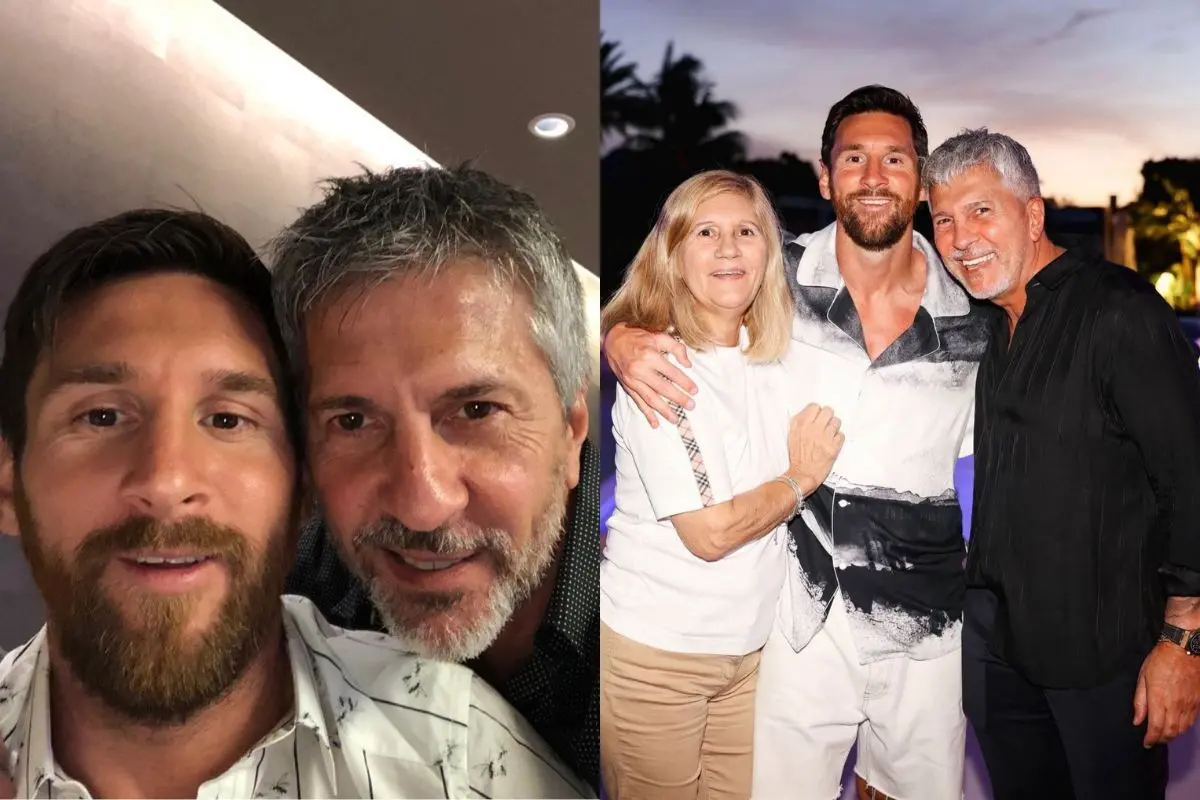
For much of Lionel Messi's extraordinary football career, the spotlight has remained firmly on the player. But behind the trophies, record-breaking performances and historic goals was a father who played a significant role long before the world knew his son's name.
Jorge Messi, Lionel Messi's father and longtime agent, died at 68 in Rosario, Argentina, on August 8 after a prolonged illness, according to reports. He was not only involved in his son's professional career but had been part of Messi's journey from his earliest days in football.
Jorge's story has particular resonance for parents because Lionel Messi's path to becoming one of football's greatest players was far from straightforward. From dealing with a growth hormone deficiency as a child to moving across continents as a young teenager, Messi's journey required sustained support from his family.
For Indian parents raising children in a highly competitive environment, his story offers several lessons about encouragement, sacrifice and allowing children to find their own path.
1. Believe in your child's potential
Before Messi became a global football icon, his talent existed alongside a significant medical challenge.
Messi was diagnosed with growth hormone deficiency during childhood and required treatment. The cost of that treatment placed pressure on his family, while his football ambitions also presented difficult decisions about his future.
Jorge continued to support his son's footballing ambitions rather than allowing the obstacles surrounding him to define what was possible.
For parents, the lesson is not to assume that a child's difficulties automatically determine their future. A child's interests and abilities may take them down an unconventional path, and parental belief can give them the confidence to pursue it.
2. Support should not depend on success
Parents can sometimes become heavily invested in results, exam marks, sporting medals, rankings or competition results. Jorge's relationship with Messi offers a different model of support.
His involvement began when Messi was still a young footballer in Rosario. Jorge coached him at Grandoli in his early years and remained closely involved as his career developed.
The important lesson is that support needs to exist before achievement.
A child should not have to become the best in the classroom or the strongest player on the team to feel that their parents believe in them.
3. Make sacrifices without turning them into pressure
When Messi moved to Spain at 13 to pursue an opportunity with Barcelona, the transition was a major change for the family. Jorge accompanied his son during the early period in Spain while the rest of the family remained in Argentina.
For a young teenager entering an unfamiliar country and environment, having a familiar parent nearby could provide an important source of stability.
Parents often make sacrifices for their children, whether it involves changing work schedules, travelling long distances for competitions or investing time and resources in a child's interests.
But support becomes more meaningful when children do not feel that every sacrifice has created a debt they must repay through achievement.
4. Know when to guide and when to let go
Jorge's role in Messi's life changed as his son grew older.
He was involved in Messi's earliest football experiences, later becoming his agent and adviser as the player's professional career developed. His involvement therefore evolved rather than remaining the same throughout Messi's life.
That is an important parenting distinction. Young children may need close supervision and direction. Teenagers and adults need increasing independence. Parents who remain involved while gradually giving children greater control can help them develop decision-making skills without feeling abandoned.
5. Take your child's interests seriously
Messi's passion for football emerged when he was very young. His family recognised that football was not merely a passing childhood hobby.
Jorge's involvement in his son's early football journey showed a willingness to take that interest seriously.
For parents, this can mean paying attention when a child repeatedly shows enthusiasm for a particular activity. Not every childhood interest will become a career, nor should it. But taking a child's passions seriously can help them discover their strengths.
6. Do not confuse ambition with pressure
There is a difference between encouraging a child to pursue their potential and demanding that they become successful.
Jorge's involvement in Messi's development can be viewed as an example of sustained support rather than simply pushing for results. Messi's career eventually reached extraordinary heights, but the foundations of that journey were laid when he was still a child dealing with uncertainty.
Indian parents, particularly in education and competitive activities, can take a useful lesson from this distinction: encouragement can open doors, while excessive pressure can make children afraid of failure.
7. Give children room to become independent
A parent's involvement should change as the child grows. Jorge remained an important figure in Messi's professional affairs, but Messi ultimately developed into an independent athlete capable of making decisions about his career and life.
Parents can similarly move from being decision-makers to advisers. Instead of answering every question or solving every problem, parents can gradually encourage children to assess situations, consider alternatives and make age-appropriate choices.
8. Protect family boundaries
Jorge's illness also highlighted the importance of privacy. Before his death, reports about his health had circulated publicly, while the family sought privacy around his medical condition. The exact cause of death was not publicly disclosed.
For parents today, particularly in an era when children's lives can easily be documented online, privacy is an increasingly important part of parenting.
A child's achievements, struggles, photographs and personal experiences do not always need to become public content. Giving children private spaces can teach them that personal boundaries deserve respect.
9. Be present during difficult periods
Children do not only need parents when everything is going well.
Messi's move from Argentina to Spain as a teenager was a major transition, and Jorge's presence during that period meant his son had a familiar support system while adapting to a new environment.
Being present does not always mean having the perfect answer. Sometimes it means listening, accompanying a child through an uncomfortable experience or simply making sure they know they are not facing it alone.
That can be particularly important during academic setbacks, friendship problems, failures and major transitions.
10. Let your child's identity belong to them
Perhaps the most important lesson is that a child's achievements should not become a parent's identity.
Jorge Messi became known around the world because of his connection to Lionel, but his role was largely centred on helping his son navigate his own career.
For parents, the challenge is to support children without trying to live through them.
A child does not need to fulfil a parent's unfinished ambitions. They need the freedom to discover what matters to them, develop their abilities and decide what success means in their own lives.