Why Neha Bora’s One Piece T-shirt at Delhi protest has gone viral: What Luffy’s pirate flag symbolises
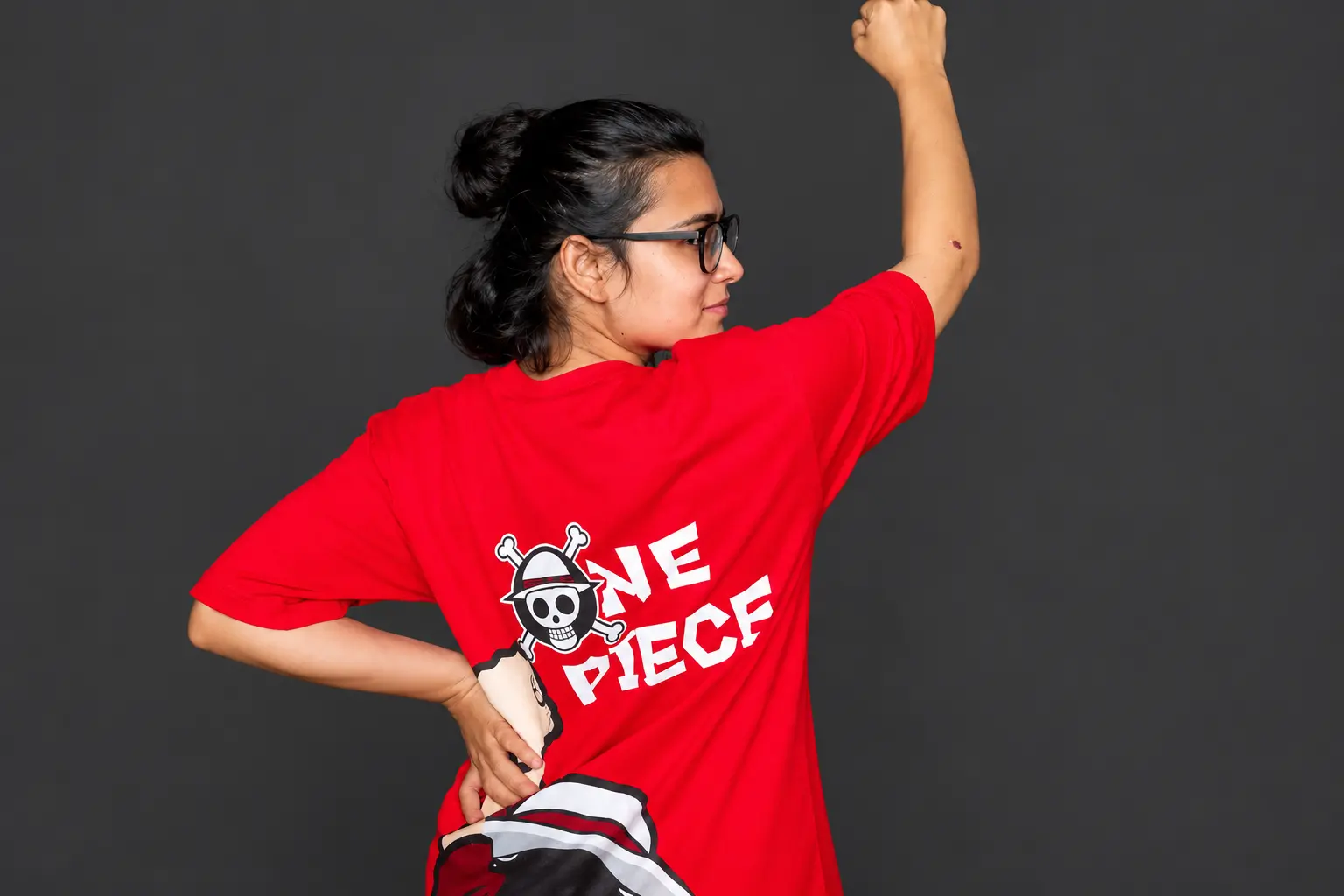
A red T-shirt featuring a skull wearing a straw hat has become a talking point from the October 10 protest at Jantar Mantar in New Delhi, where young protesters, student activists, and opposition leaders demanded accountability from Chief Election Commissioner (CEC) Gyanesh Kumar over the Special Intensive Revision (SIR) of electoral rolls.
Neha Bora, national president of the All India Students’ Association (AISA), wore a T-shirt featuring the iconic pirate emblem from One Piece, the Japanese manga and anime series that has become a worldwide cultural phenomenon.
However, the symbol is no longer confined to the fictional universe of Monkey D Luffy and his crew.
From Indonesia and Nepal to the Philippines, the Straw Hat Pirates’ flag has appeared at youth-led demonstrations, becoming an increasingly recognisable emblem of resistance, freedom and defiance of authority.
Its appearance at the Delhi protest has renewed attention to the symbol's significance, its association with Gen Z movements, and why young protesters are increasingly turning to popular culture to express political dissent.
For Bora, the T-shirt also appeared amid a wider debate over democratic rights, electoral accountability and the freedom to question those in power.
What does the One Piece pirate flag symbolise?
Created by Japanese manga artist Eiichiro Oda, One Piece was first serialised in 1997.
The story follows Monkey D Luffy and his crew, the Straw Hat Pirates, on their quest to find the legendary treasure known as the One Piece.
The crew's Jolly Roger, a skull wearing Luffy's signature straw hat with crossed bones behind it, is one of the series' most recognisable images. Traditionally, a Jolly Roger refers to a pirate flag featuring a skull or another distinctive emblem.
Within the series, however, the flag represents more than a pirate crew's identity. Luffy's journey repeatedly brings him into conflict with powerful figures who exploit, intimidate, or oppress ordinary people.
Across different story arcs, he and his companions challenge tyrannical rulers, confront injustice and help communities reclaim their freedom.
Freedom, loyalty, solidarity, and resistance to arbitrary authority recur throughout the narrative. Luffy's ambition is to become the freest person on the seas, not to rule others.
These themes have given the pirate emblem meaning beyond anime fandom. For young people facing political restrictions, allegations of corruption, or perceived abuses of power, the flag offers a recognizable visual language for expressing dissent.
Its appearance at the Delhi protest also places the symbol within a wider conversation about the right to education, freedom of expression and the role of universities as spaces for critical thinking.
At the protest, a speaker argued that universities in Bengal had faced sustained attacks because those in power did not believe people had the right to learn, think, and question authority.
The speaker cited institutions such as Jadavpur University and the Satyajit Ray Film and Television Institute (SRFTI), arguing that attacks on educational spaces were part of an attempt to dismantle environments that encourage discussion, independent thought, and the exercise of citizenship.
The remarks reflect a broader concern among sections of student activists that democratic participation depends on the ability to question authority without fear.
While the One Piece emblem does not represent a single political ideology, its association with freedom and resistance has made it adaptable to different movements.
From Nepal to Indonesia: How Gen Z turned anime into a protest symbol
The adoption of the Straw Hat Pirates' flag at demonstrations is not an isolated development.
During 2025, the emblem appeared at youth-led protests across several Asian countries, where demonstrators used it to communicate frustration with political establishments and demand greater accountability.
In Indonesia, the flag was displayed ahead of the country's Independence Day celebrations on August 17, 2025, amid protests over government policies and political grievances.
Its appearance drew criticism from some officials, who raised concerns about the implications of displaying the pirate emblem alongside the national flag.
In Nepal, the symbol appeared during Gen Z-led demonstrations in September 2025 against Prime Minister KP Sharma Oli's government.
The protests intensified after the government restricted social media platforms, sparking widespread anger among young people over freedom of expression.
The flag also appeared at demonstrations in the Philippines in September 2025, where protesters mobilized against alleged corruption involving officials and contractors accused of siphoning funds meant for flood-control and relief projects.
These movements unfolded in different political contexts, but a shared pop-culture symbol gave young protesters a way to communicate across national and linguistic boundaries.
One Piece's popularity has helped the emblem travel easily between countries. The franchise has attracted a massive international audience through its manga, anime adaptations, animated films and Netflix's live-action series.
By September 2025, The Guardian reported that more than 500 million copies of the manga had been printed worldwide.
The flag's appeal also lies in its simplicity. Fans can recognize it without lengthy explanations, and it can convey a message of resistance through a single image.
Social media further amplifies its reach, allowing photographs and videos of the emblem at one demonstration to inspire its adoption elsewhere.
For younger generations, references to anime, films, music and internet culture have increasingly become part of the vocabulary of political expression.
Memes, fictional characters and familiar symbols can help articulate frustration in ways that resonate with audiences who may not connect with conventional political messaging.
Yet the flag's presence does not necessarily mean everyone displaying it subscribes to the same beliefs. Its meaning can shift according to the demands, experiences and political circumstances of each movement.
At Jantar Mantar, Bora's T-shirt has therefore drawn attention to more than an anime character.
It highlights how a fictional pirate crew's pursuit of freedom has entered real-world conversations about authority, accountability and the right to question those who govern.
As student activists continue to raise concerns about electoral processes and educational institutions, the One Piece emblem offers a striking reminder that political dissent can find expression in unexpected cultural symbols.