Navratri 2026: Dates, significance, nine forms of Maa Durga and colours of each day
Sharad Navratri, one of the most significant festivals dedicated to Goddess Durga and the divine feminine power of Shakti, will be observed across India from October 11 to October 20, 2026.
Celebrated over nine nights and ten days, the festival culminates in Vijayadashami or Dussehra, marking the victory of good over evil.
The word Navratri comes from two Sanskrit words, ‘nava’, meaning nine, and ‘ratri’, meaning night.
The festival therefore literally refers to nine nights of worship and devotion. While several forms of Navratri are observed during the year, Sharad Navratri, also known as Maha Navratri, is regarded as the most prominent.
Why is Sharad Navratri celebrated?
The festival is closely associated with the legend of Goddess Durga's battle against the buffalo demon Mahishasura. According to Hindu tradition, the Goddess fought the demon and ultimately defeated him, symbolising the triumph of divine power over evil.
The central message of Navratri is therefore the victory of good over evil, although the stories and traditions associated with the festival differ across regions.
In eastern and northeastern India, the period is observed as Durga Puja, with elaborate idols of Goddess Durga installed in beautifully decorated pandals.
In many parts of northern and western India, Navratri is closely linked with the story of Lord Rama's victory over Ravana, with the celebrations culminating in Dussehra.
When does Navratri 2026 begin?
Sharad Navratri 2026 begins on October 11 and concludes on October 20. The first day is observed as Pratipada and is dedicated to Goddess Shailputri, the first form of Maa Durga.
The festival progresses through nine forms of the Goddess, collectively known as Navadurga. Each day has its own religious significance and is associated with a particular form of Shakti.
The ninth day, Navami, is dedicated to Goddess Siddhidatri. The tenth and final day is Vijayadashami or Dussehra, when celebrations associated with the festival reach their conclusion.
Mahalaya and the beginning of Durga Puja
For devotees in Bengal and several eastern parts of India, the period surrounding Navratri is particularly significant because of Durga Puja.
The festivities traditionally begin with Mahalaya, which marks the end of Pitru Paksha and the ceremonial invocation of Goddess Durga.
From Shashthi, the sixth day of the festival, Goddess Durga is formally welcomed into homes and public pandals. The following days are marked by prayers, cultural programmes, devotional rituals, pandal visits and community feasts.
Durga Puja concludes on Vijayadashami, when idols of the Goddess are carried in processions and immersed in water.
How is Navratri celebrated across India?
Navratri takes different forms across the country. In Bengal, Assam and other eastern regions, Durga Puja dominates the celebrations. Elaborate pandals, artistic idols, devotional music and community bhog are among the defining features.
In northern India, Ramlila performances narrating episodes from the Ramayana are staged during the nine nights.
On Dussehra, large effigies of Ravana, Meghnad and Kumbhakaran are traditionally burnt to symbolise the destruction of evil.
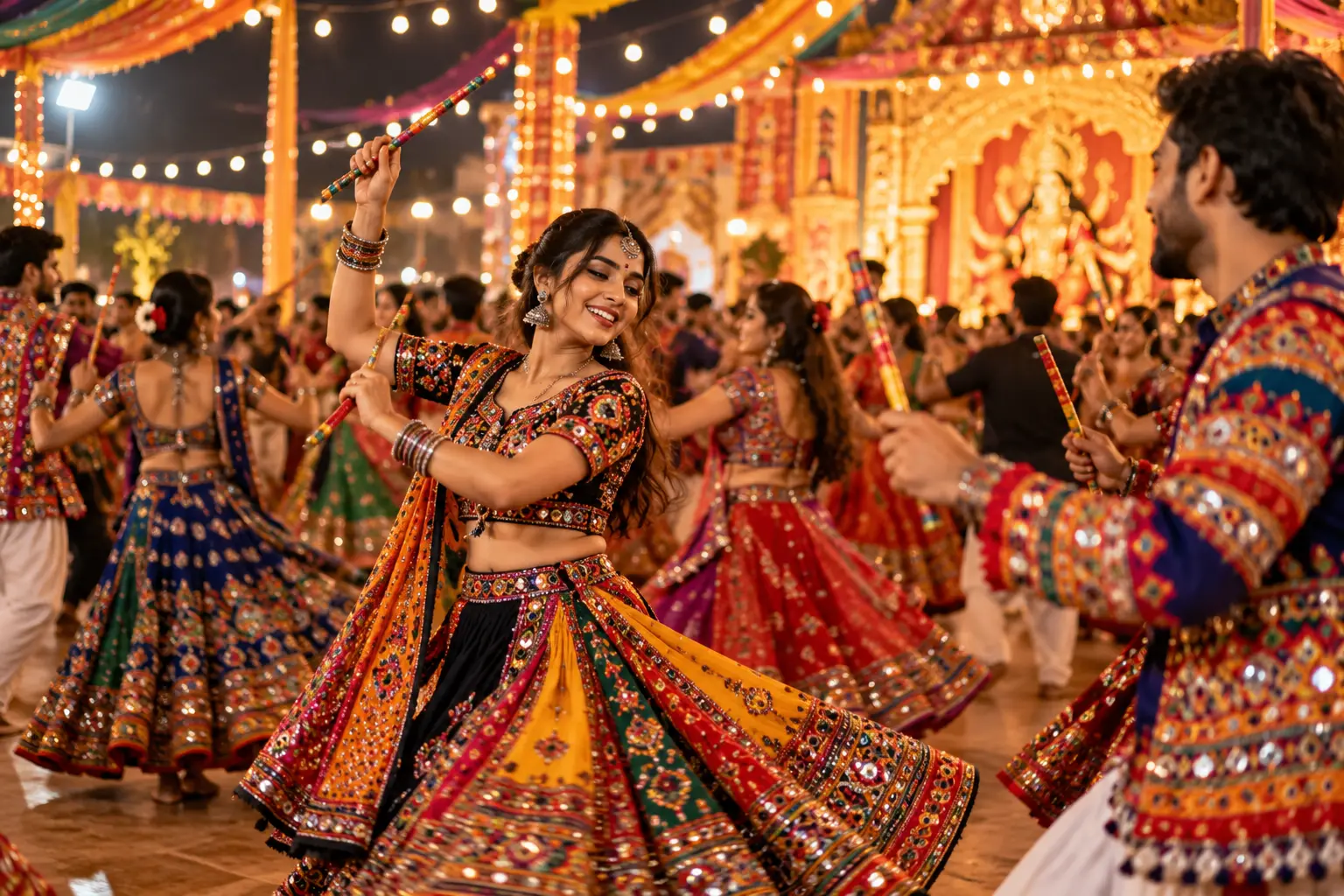
Gujarat and several western regions are known for vibrant Garba and Dandiya celebrations. Devotees and participants gather in traditional attire for evening dances, music and community celebrations.
Fasting is also an important part of Navratri for many devotees. Depending on individual traditions, people may observe different forms of fasting and consume specially prepared foods during the festival.
Navratri 2026 colours and goddess-wise calendar
Each day of Navratri is traditionally associated with a particular colour. Many devotees choose to wear the colour assigned to that day as part of the festivities.
The 2026 sequence begins with orange on October 11 and moves through white, red, royal blue, yellow, green, grey, purple and peacock green over the following days. Vijayadashami, observed on October 20, marks the culmination of the celebrations.
See the separate day-wise Navratri 2026 colour chart below for the complete calendar.
Sharad Navratri is ultimately a celebration of faith, devotion and the triumph of righteousness.
Whether observed through Durga Puja, fasting, prayers, Garba, Ramlila or family rituals, the festival brings communities together while celebrating the many manifestations of Shakti.