Can ants predict rain? Before modern forecasts, Kerala turned to nature for answers
As Kerala waits each year for the arrival of the southwest monsoon, weather forecasts today come from satellites, Doppler radars, and sophisticated climate models. But long before meteorological departments and smartphone weather alerts, Malayalis had their own methods of predicting rain by observing nature itself.
Across villages, paddy fields, forests and riverbanks, generations relied on the behaviour of insects, birds, animals and plants to anticipate the arrival of rain. These traditional forecasting practices, passed down orally through centuries, were deeply woven into Kerala's agricultural culture and way of life.
Reading nature's signs
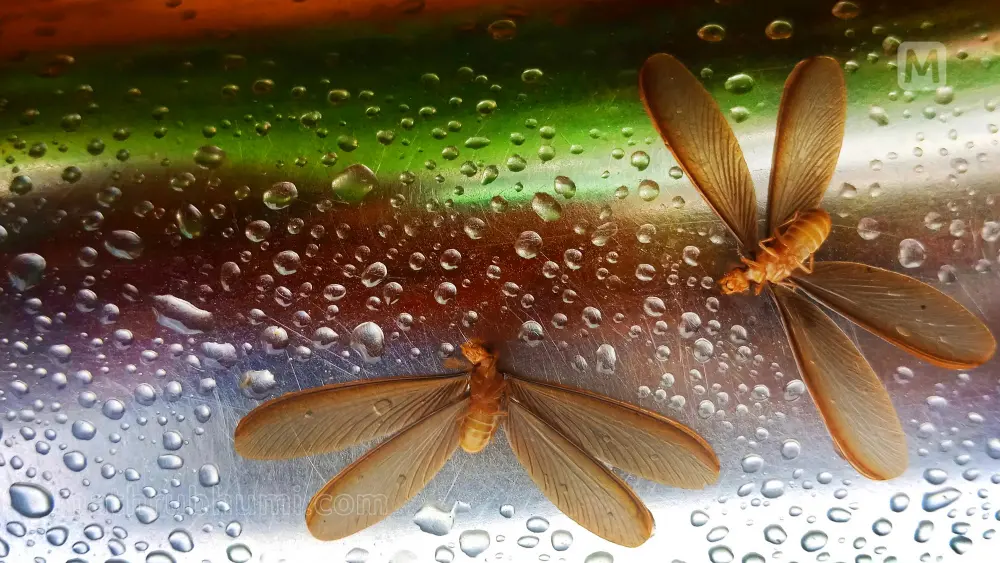
One of the most widely recognised signs of approaching rain involved the appearance of winged termites, locally known as eeyam patta (termite alates). Elders believed that when dark-coloured termites emerged from the soil and flew in large numbers, rain was imminent. Conversely, if white termites took flight, it was considered a sign that the rains were receding.
Dragonflies, or thumbi, served as another natural weather indicator. When large groups of dragonflies hovered at a particular height above the ground, farmers interpreted it as a reliable sign of rainfall.
Ants too played an important role in traditional weather wisdom. If ants were seen hurriedly carrying their eggs to safer locations, villagers believed heavy rain would arrive within a day or two. The behaviour was often viewed as one of nature's most dependable warnings.
Birds and waterfowl also featured in Kerala's folk meteorology. The cries of pond birds and unusual movements among local bird populations were often taken as signs that the weather was about to change.
Trees, flowers and the coming monsoon
Traditional farmers paid close attention to plants and trees.
The flowering of certain wild plants, including cactus varieties, was believed to signal the approach of the monsoon season. Farmers also watched the blooming patterns of the golden shower tree (Konna), whose flowers are closely associated with Vishu celebrations.
In some parts of Kerala, people would cut the aerial roots of banyan trees. If moisture was visible inside, it was taken as evidence that rain was close at hand.
The science of Njattuvela
Perhaps the most sophisticated traditional forecasting system was the Njattuvela calendar, which continues to influence farming practices in Kerala even today.
Based on the sun's movement through 27 star constellations, the Njattuvela calendar divides the year into specific agricultural periods. Farmers traditionally used these cycles to determine the best times for sowing, transplanting and harvesting crops.
The Thiruvathira Njattuvela, which usually falls in June around the summer solstice, is especially significant. The fourteen days following this period are traditionally associated with strong, sustained rainfall considered essential for crop growth.
Many farmers still refer to Njattuvela observations alongside modern weather forecasts when making agricultural decisions.
A heritage worth preserving
Today, climate change is making weather patterns increasingly unpredictable, and many traditional forecasting practices are fading from memory. Yet researchers, environmentalists and cultural historians argue that these observations remain valuable as part of Kerala's ecological heritage.
Though satellite imagery has replaced dragonflies and weather apps have replaced ants carrying eggs, the traditional wisdom of Kerala's farmers stands as a testament to a time when people lived in close rhythm with the natural world.