A disorder hidden behind ‘common symptoms’: Why thyroid disease is often diagnosed late
At 17, Krishna Prasad was told she would need surgery to remove her thyroid gland.
For the Delhi-based teenager, the diagnosis itself was frightening. But what terrified her more was the possibility that the surgery could affect her singing voice.
“I was very scared because singing is my passion,” she recalled. “Before surgery, I kept asking my doctor whether it would affect my voice or sound.”
Years later, Krishna has returned to singing normally. But the experience left her with a deeper understanding of a condition doctors say millions continue to misunderstand- thyroid disorder.
On World Thyroid Day, medical experts are drawing attention to thyroid disorders, warning that symptoms are often ignored until they begin seriously affecting a person’s health, fertility, metabolism or mental well-being.
According to physician Dr Jiju Jacob of Medical Trust Hospital, Ernakulam, one of the biggest challenges surrounding thyroid disorders is that the symptoms appear deceptively ordinary in the beginning.
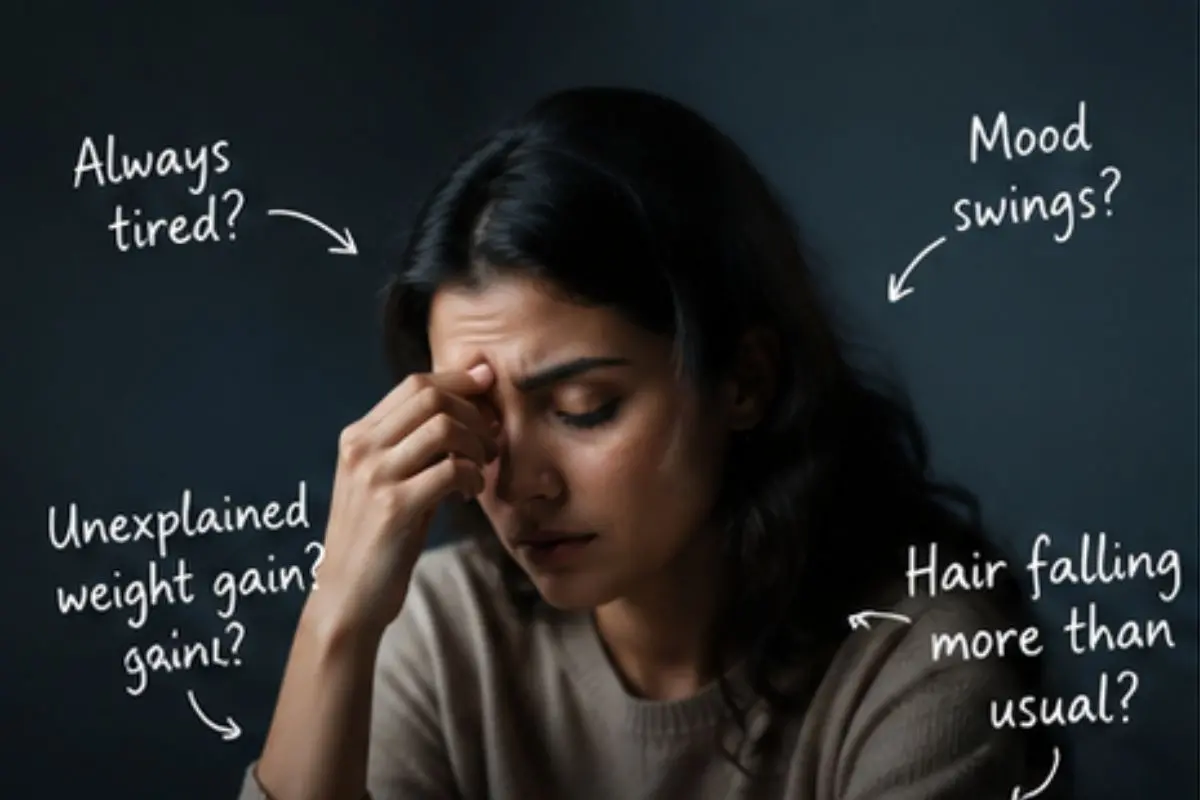
“People usually ignore the symptoms because they seem common,” Dr Jacob told Mathrubhumi English. “Weight changes, fatigue, weakness, hair loss or anxiety are often dismissed as stress or lifestyle problems.”
The thyroid gland, located in the front of the neck, produces hormones that regulate metabolism, body temperature, energy levels and several essential body functions. When the gland produces too little hormone, the condition is called hypothyroidism. Excess hormone production leads to hyperthyroidism.
According to doctors, the symptoms vary depending on whether hormone levels are too low or too high.
“In hypothyroidism, patients can develop weight gain, puffiness of the face, weakness and intolerance to cold,” Dr Jacob explained. “When thyroid hormone production becomes excessive, there can be weight loss, tremors, palpitations, anxiety and shivering.”
Doctors say many patients fail to identify the condition early because the symptoms overlap with everyday health complaints.
That overlap is also one reason thyroid screening has become increasingly common in India.
“Even one TSH test costs very little,” Dr Jacob said. “It is better to check and not miss the disease.”
Can thyroid be cured permanently with medicines?
According to Dr Jacob, one of the most common misconceptions patients have is that thyroid disease can always be cured permanently.
“It can be controlled with medicines, but in many cases it cannot be cured completely, similar to diabetes,” he said.
However, he clarified that not every patient requires lifelong medication.
“There are situations where initially thyroid hormone levels become low and later become normal,” he explained. “Some patients may even shift from hypothyroidism to hyperthyroidism.”
Because of this, doctors stress the importance of regular follow-up and repeated blood investigations.
“We usually repeat tests every three months,” Dr Jacob said. “Sometimes the dosage has to be increased, sometimes reduced.”
Doctors usually evaluate thyroid function through TSH, T3 and T4 blood tests.
TSH, or thyroid stimulating hormone, is produced by the pituitary gland in the brain and helps regulate thyroid hormone production. T3 and T4 are the hormones produced directly by the thyroid gland itself.
According to Dr Jacob, TSH levels below 5 are generally considered acceptable in adults, though levels below 2.5 are often preferred.
He also pointed out that thyroid disease is not always limited to hormonal imbalance alone.
“Thyroid swelling or thyroid cancer can occur even when blood hormone levels are normal,” he said.
Because of this, doctors often advise thyroid ultrasound scans along with blood investigations to identify swelling, nodules or abnormal gland enlargement.
Fertility, pregnancy and thyroid disorders
Doctors say thyroid disease can become particularly important during pregnancy because hormone imbalance may affect fertility and pregnancy outcomes.
For Sheetal, a Kerala-based woman who recently delivered a healthy baby, thyroid management became an essential part of her pregnancy journey.
“My doctor advised me to keep my thyroid level low because if it became high there were chances of miscarriage,” she said.
According to her, doctors increased her thyroid medication dosage from 100 mg to 175 mg during pregnancy before reducing it again after delivery.
Medical experts say such dosage changes are common because pregnancy significantly alters hormone requirements.
Dr Jacob explained that women diagnosed with hypothyroidism should continue prescribed thyroid medicines during pregnancy and breastfeeding under medical supervision.
“If the thyroid hormone becomes less, fertility itself can get affected,” he said. “There is no problem in continuing thyroid medicines during pregnancy.”
Doctors generally aim for tighter TSH control during conception and pregnancy, often trying to maintain levels between 1 and 2.5 mIU/L.
Surgery, goitre and fear around voice changes
While many thyroid disorders are managed medically, surgery becomes necessary in certain situations such as thyroid cancer or major enlargement of the thyroid gland.
According to Dr Jacob, surgery may also be advised when swelling in the neck becomes cosmetically noticeable.
“Sometimes there can be a large swelling in front of the neck,” he explained. “That is also one reason surgery may be advised.”
Doctors say one of the most common fears surrounding thyroid surgery involves the possibility of voice damage.
Dr Jacob explained that the recurrent laryngeal nerve, located near the thyroid gland, plays an important role in sound production.
“If that nerve is damaged during surgery, patients can develop speech problems,” he said.
However, he clarified that surgeons today are extremely careful about preserving the nerve during thyroid procedures.
For Krishna, the fear lingered long after surgery.
“Initially after surgery there was strain while singing,” she said. “It took almost one year for me to get comfortable singing again.”
Still, she says the surgery and recovery eventually went smoothly and her voice returned to normal over time.
Why doctors are concerned about delayed diagnosis
Doctors say thyroid disorders are becoming increasingly common, partly because screening has become more accessible and awareness has improved.
Some patients often wonder whether thyroid disease is being “overdiagnosed” because thyroid tests are now frequently prescribed even for common symptoms.
But according to Dr Jacob, early testing is important because thyroid disorders can easily go unnoticed.
“The treatment is simple and we should not miss the disease,” he said.
He also cautioned patients against relying entirely on unverified alternative remedies without proper medical diagnosis.
“Even now many patients first seek Ayurvedic or homeopathic treatment,” Dr Jacob said. “But unless we screen for thyroid disease properly, it cannot be diagnosed.”
Doctors also addressed common food myths associated with thyroid disorders.
Vegetables such as cabbage and cauliflower contain goitrogens, compounds that may interfere with thyroid function when consumed excessively in raw form. However, moderate cooked consumption is generally considered safe.
Dr Jacob also noted that iodine deficiency-related goitre, once very common in India, has reduced significantly because of iodised salt and improved nutritional awareness.
As World Thyroid Day shines a spotlight on one of the world’s fastest-growing endocrine disorders, doctors say awareness remains the most powerful tool.
Because for many patients, the earliest warning signs of thyroid disease are often the easiest to ignore.