Who is Louise Brown? Everything to know about the world's first IVF baby
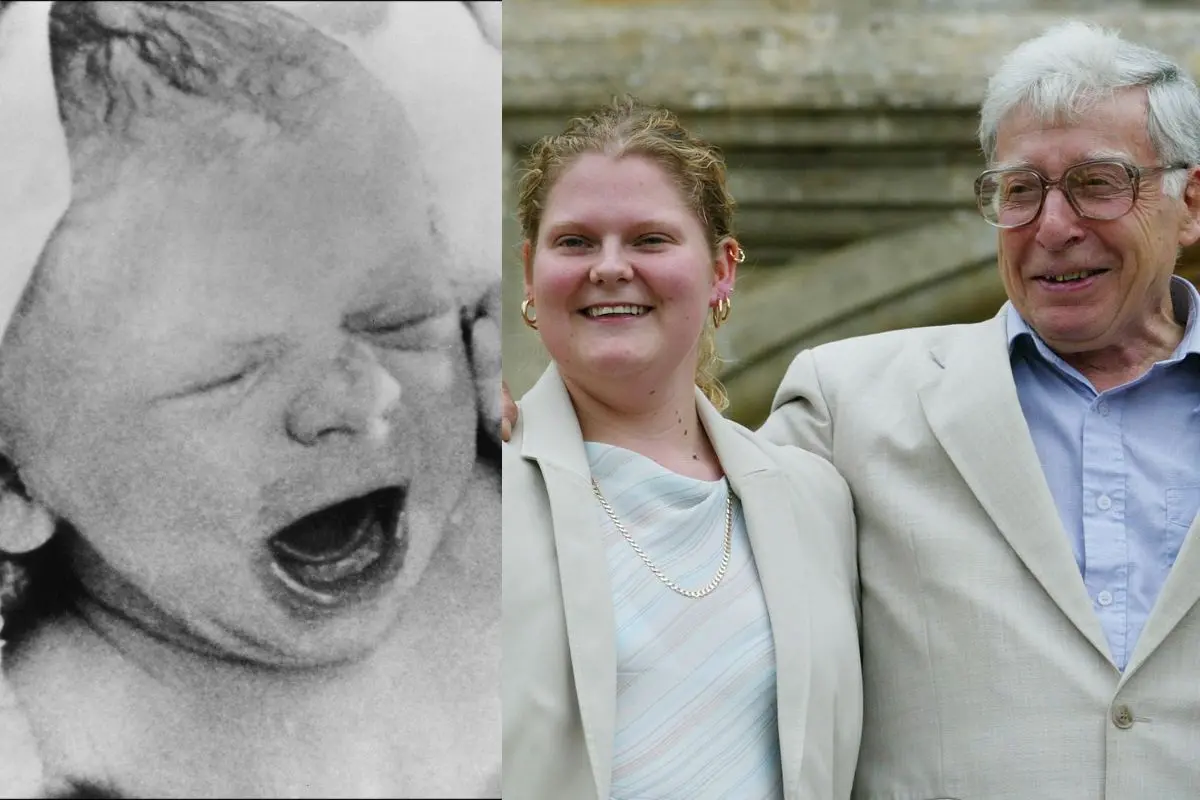
Every year, millions of babies are born around the world. But one birth in 1978 changed medicine forever. Louise Joy Brown was not just another newborn. She was the first child conceived through IVF, a procedure that was once dismissed by many as impossible.
Her arrival was unlike any other birth. It was closely followed by doctors, scientists and journalists across the world, who saw it as either a remarkable medical breakthrough or a controversial experiment. Nearly five decades later, Louise Brown's birth is widely recognised as one of the defining moments in modern reproductive medicine. Millions of babies have since been born through IVF, turning what was once considered extraordinary into a widely used fertility treatment.
The couple who made medical history
Louise's parents, Lesley and John Brown, had spent years trying to have a child. Lesley was unable to conceive naturally because both of her fallopian tubes were blocked, preventing the egg and sperm from meeting.
At a time when fertility treatments were extremely limited, the couple placed their trust in British physiologist Robert Edwards and gynaecologist Patrick Steptoe, who had spent years developing a technique to fertilise a human egg outside the body before transferring the embryo into the uterus.
After retrieving one of Lesley's eggs, the doctors fertilised it with John's sperm in a laboratory. The embryo was then implanted into her womb, resulting in a successful pregnancy.
Louise Joy Brown was delivered by Caesarean section at Oldham General Hospital on July 25, 1978, weighing around 2.6 kilograms. Her birth immediately drew worldwide attention, with photographers and television crews gathering outside the hospital to witness what many believed was the beginning of a new era in medicine.
For the medical team, however, the biggest concern was far simpler than the headlines: whether the baby was healthy. She was, and that single moment reshaped the future of fertility treatment.
From scientific breakthrough to ordinary life
Although Louise entered the world under an unprecedented media spotlight, her parents wanted her childhood to be as normal as possible.
Public fascination continued for years. Her birthdays attracted media attention, researchers monitored her development and interview requests rarely disappeared completely. Despite the curiosity surrounding her, Louise grew up attending school, making friends and eventually taking up regular jobs, largely staying away from public life.
She has often said in interviews that her parents never treated her differently because she was conceived through IVF. Instead, they focused on ensuring she experienced the same upbringing as any other child.
Answering another important question
As IVF gradually became more common around the world, another concern emerged: would children conceived through IVF face fertility problems themselves?
Louise unknowingly helped answer that question.
She later married and naturally conceived two sons, Cameron and Aiden, without requiring fertility treatment herself. Her pregnancies reassured many families that being born through IVF does not automatically affect a person's ability to have children later in life.
Medical experts caution that fertility depends on numerous biological and health factors, meaning each individual's circumstances are different. Nevertheless, Louise's experience became an important source of confidence for people considering assisted reproduction.
How IVF changed reproductive medicine
The success of Louise Brown's birth transformed IVF from an experimental procedure into one of the most significant advances in reproductive healthcare.
The treatment involves retrieving mature eggs from the ovaries, fertilising them with sperm in a laboratory and transferring one or more embryos into the uterus. Over the decades, the procedure has been refined considerably, improving both safety and success rates.
Today, IVF is used to help people facing a wide range of fertility challenges, including blocked fallopian tubes, ovulation disorders, reduced sperm production and unexplained infertility. It has also expanded opportunities for single parents and same-sex couples wishing to have biological children. Advances such as egg freezing and embryo cryopreservation have further widened reproductive choices by allowing people to delay parenthood.
According to reproductive medicine experts and the International Committee for Monitoring Assisted Reproductive Technologies (ICMART), more than 12 million babies worldwide are estimated to have been born through IVF and related assisted reproductive technologies.
The pioneers behind the breakthrough
The success of IVF was built on years of research led by Robert Edwards and Patrick Steptoe, who overcame repeated setbacks before achieving the first successful birth.
Edwards was later awarded the 2010 Nobel Prize in Physiology or Medicine for developing IVF. In recent years, greater recognition has also been given to embryologist and nurse Jean Purdy, whose contribution to the pioneering work was long overlooked despite her central role in the project.
Together, their efforts laid the foundation for a treatment that has since helped millions of families around the world.
India's place in IVF history
Every year, IVF World Day is marked on July 25 to commemorate Louise Brown's birth and celebrate one of medicine's most influential breakthroughs.
But the IVF story did not end in England.
Just 67 days after Louise Brown's birth, India welcomed its first IVF baby on October 3, 1978. Born in Kolkata, Kanupriya Agarwal was affectionately known as "Durga" because she was born on the first day of Durga Puja.
The achievement was led by physician Dr Subhash Mukhopadhyay, alongside cryobiologist Sunit Mukherji and gynaecologist Saroj Kanti Bhattacharya. Their work incorporated advanced techniques, including ovarian stimulation and embryo freezing, which were considered well ahead of their time. Despite the scientific significance of the accomplishment, Dr Mukhopadhyay's contribution received widespread recognition only years later.