Is healthy living stopping us from ‘living’?
A few years ago, someone asked Fran Lebowitz what her guilty pleasure was. Without missing a beat, she replied, "I never feel guilty about pleasure."
It's one of those answers that seems effortless only because it comes from someone who has already earned it.
We might have borrowed that line countless times, but every time we say it, it feels like a goal. Because guilt has become strangely difficult to escape. Not necessarily religious guilt or even moral guilt, but productivity guilt.
Today, pleasure rarely has to justify itself against virtue. It has to justify itself against efficiency.
Fran Lebowitz grew up in a time when neighbourhoods were close-knit, bookshops were cultural hubs, parties often lasted until dawn, and every city had its own unique character that influenced the people who lived there.
Ours feels different. A comment on a reddit thread, once described modern culture by saying, "Culture is now airdropped."
The same trends arrive everywhere at once. Someone in Thane starts wearing an Oura Ring around the same time someone in Kormangala, Shanti Nagar or a tiny village in Chennai does. Different languages, different cuisines, different histories but increasingly, the same morning rituals.
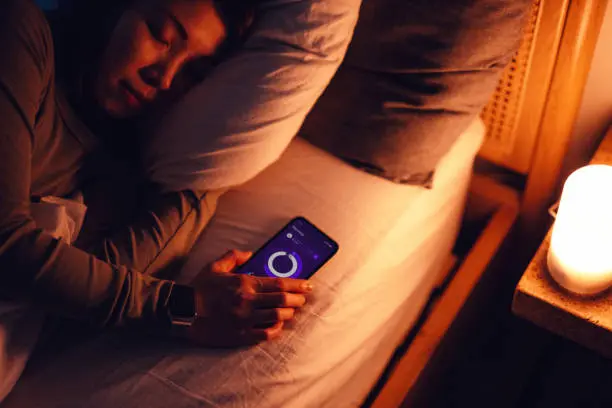
How well did we sleep? Did we hit protein target? Was recovery score good enough? Could we be functioning... slightly better? Technology has made self-improvement wonderfully accessible.
It has also made self-surveillance almost impossible to avoid. We have surrounded ourselves with machines for so long that we've quietly begun treating ourselves like one.
Every day becomes another dashboard to monitor, meal becomes data, walk becomes steps, night becomes a sleep score, body becomes a project under constant revision. Pleasure used to answer to religion. Now it answers to optimisation.
This isn't an argument against discipline. We like discipline. We love watching small habits reshape a life over months and years. We wear sunscreen even when the sky is grey. We exercise because we enjoy feeling capable. Few take magnesium, Omega-3s. Some of that comes from vanity. We would like to stay beautiful for as long as we can.
Most of it comes from gratitude. We like our body enough to look after it. The difference, is remembering what the body is actually for. It's the means and maybe not the destination.
Somewhere along the way, health became less about enabling experience and more about becoming the experience itself. Measurement slowly became surveillance. Optimisation became mechanisation. Health became the sanitisation of life.
But our legs aren't valuable because they help close fitness rings. They're valuable because they can carry us up a mountain. Our eyes aren't for reducing screen time. They're for watching the sky change colour during golden hour. Our hands exist to write, to cook, to hold someone else's, not simply because they produce impressive biometrics.
We've always loved contrast. The happiest versions of our life have never been perfectly balanced. They've been beautifully uneven. There are mornings of discipline and evenings of indulgence.
Weeks of consistency followed by spontaneous detours. Hard workouts and lazy Sundays. Long stretches of routine interrupted by stories worth telling.
Oscar Wilde probably said it best: "Everything in moderation, including moderation." Perfection has never interested us nearly as much as aliveness.
Maneesha Mohandas, Clinical Psychologist & Psychotherapist says, “Whenever I face a decision, she asks one question: What's the trade-off?"
It's astonishing how often that question reveals the truth. Every choice costs something. Choosing ambition might cost rest, comfort cost growth, security cost adventure and there are no free decisions.
The problem isn't optimisation itself, it is when optimisation becomes so dominant, every other value quietly loses. The trade-off starts becoming invisible.
Biologists estimate the odds of any one person existing are somewhere around one in 400 trillion.
Oscar Wilde captured the same miracle far more elegantly,"To live is the rarest thing in the world. Most people exist, that is all." If life is that improbable, of course we should take care of it. But only if taking care of life doesn't slowly replace living it.
Sometimes dinner with friends ends with too much wine and laughter that leaves your face aching. Sometimes you stay awake until four in the morning because you're making something you genuinely care about. Sometimes someone texts, "What are you doing tonight?" and you abandon the workout you planned because love arrived disguised as inconvenience.
Every one of those moments involves a trade-off. And sometimes the better choice isn't the optimal one. It's the human one.
Health matters. It matters enormously. Not because the absence of illness is life's highest achievement, but because health gives us access.
Access to travel, dancing, climbing mountains, falling in love, saying yes when opportunity knocks unexpectedly.
The purpose of looking after ourselves isn't simply to extend our years. It's to fill those years with enough curiosity, beauty, laughter and connection that they feel worth extending in the first place.
The body deserves our care. But it was never meant to become the purpose of our existence. It's simply the extraordinary vehicle that allows us to experience one.