How to avoid snake bites: Precautions to follow
Kannur: Thirumangalath Madhavi, 69, a MGNREGA worker from Chengalayi, Kannur, died on Wednesday after being bitten by a viper while clearing forest areas as part of her work.
Snakebite risks are highest during the rainy season, which runs from June to October. Experts say workers clearing forests should use long sticks to check the ground and the surrounding areas before stepping in.
Snakes often hide near homes in plant pots, coconut shells, coconut husk, or firewood. Authorities and health officials have advised residents to take precautions to avoid snake encounters.
Safety measures
- Keep homes and surroundings clean; remove weeds and garbage from yards and walkways.
- Dispose of food waste properly, as it attracts rats, which in turn attract snakes.
- Trim tree branches and creepers that reach windows or vents.
- Cover and protect drainage pipes; snakes can enter through open pipes or gaps under doors.
- Avoid walking at night without light, and always check shoes, sandals, or helmets left outside for snakes.
About venomous snakes in India
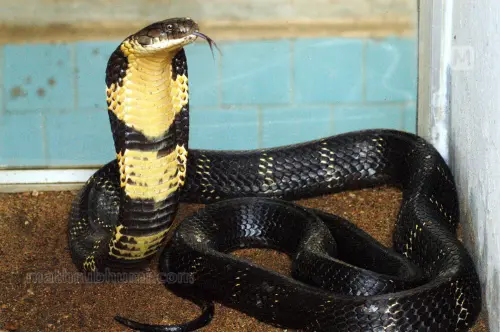
India has hundreds of snake species, but only a few are venomous. The most common are cobra, silver-banded krait, Russell’s viper, and saw-scaled viper. Venom can affect the blood (hemotoxins), nervous system (neurotoxins), muscles (myotoxins) or heart (cardiotoxins). Venom is produced in a gland behind the snake’s eyes.
If bitten
- Ask for help. (If the bite site is below the heart, it will delay the venom from reaching the vital organs.)
- Do not panic or run. This will speed up the blood circulation in the body, and the venom will quickly reach the heart, kidneys, and brain.
- Under no circumstances should you tie a tight bandage to cut off blood flow to the area. If there is bleeding from the wound, you can tie a clean cloth around the wound.
- Do not drink alcohol, smoke, or eat. This will cause the venom to mix with the blood very quickly.
- Do not try to suck blood from the wound with your mouth and spit it out. The person sucking the venom may be poisoned.
- Do not use ice on the wound. It will only cause harm.
- Do not apply or ingest any kind of medicine or leaves without consultation.
- The most important thing is to provide the necessary treatment immediately. Get to the hospital as soon as possible. The only treatment for a venomous snake bite is anti-venom.
Polyvalent ASV
Polyvalent ASV is produced by injecting venom from snakes into horses and extracting antibodies, which are then purified for medical use.