When is Hariyali Teej 2026? Date, story and traditions explained
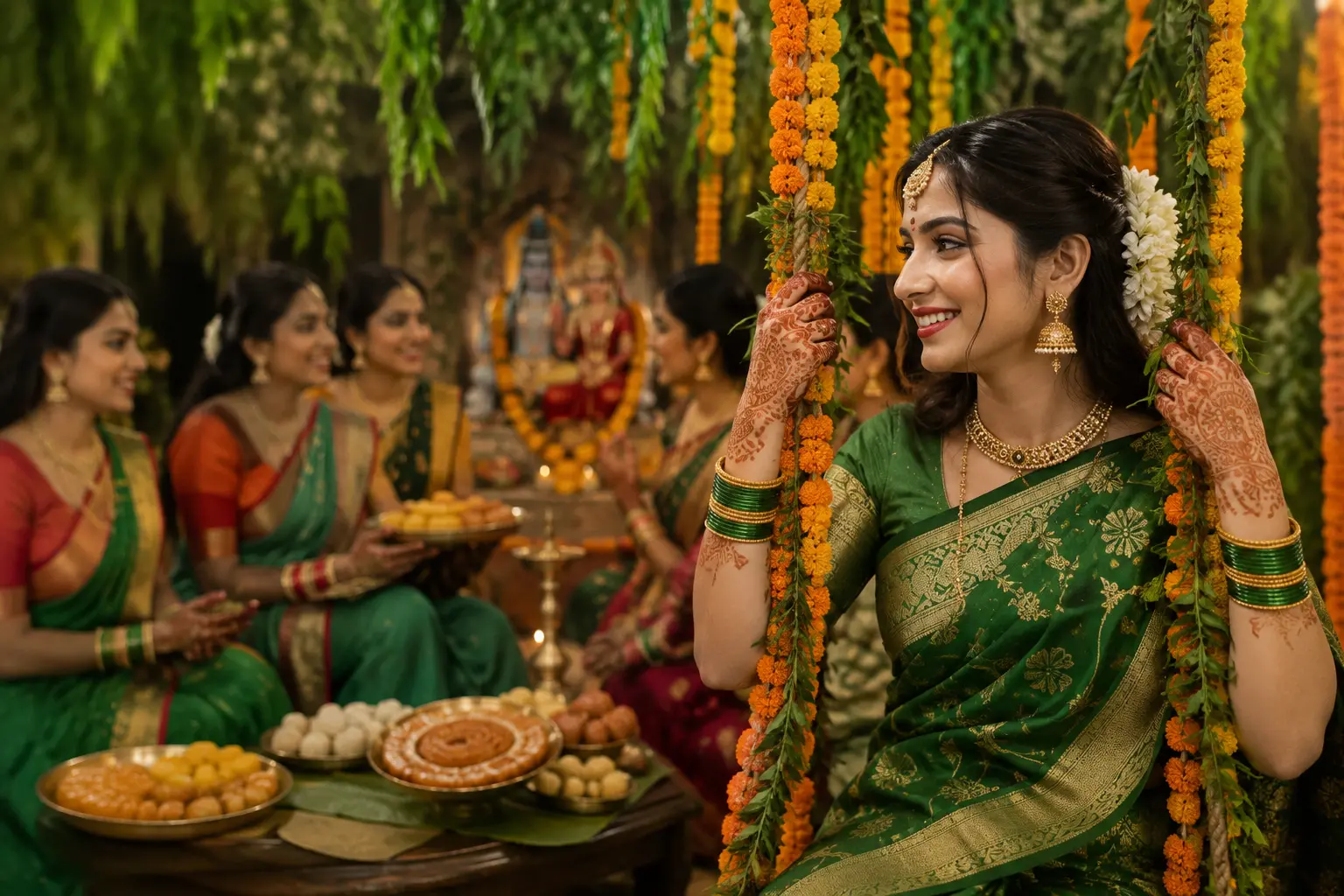
Celebrated during the monsoon, hariyali Teej has a long-standing connection with Lord Shiva and Goddess Parvati. But what is the story behind it, and why do people celebrate it?
Hariyali Teej is observed on the third day of the Shukla Paksha in the month of Shravan (Sawan), which usually falls in July or August. In 2026, it will be celebrated on Saturday, August 15.
What is Hariyali Teej?
Hariyali Teej, also known as Shravani Teej, is a Hindu festival associated with the monsoon and the union of Lord Shiva and Goddess Parvati. The name itself gives a clue to one of its most recognisable features. "Hariyali" refers to greenery, fitting the time of year when the rains bring fresh growth across much of the country.
The festival is especially popular in parts of Rajasthan, Uttar Pradesh, Madhya Pradesh, Bihar and Jharkhand, although Teej celebrations can be found in several other parts of India too.
For many women, the day includes fasting, prayers, dressing up, mehendi, music and gatherings with family and friends. Swings are another familiar part of Teej celebrations, particularly during the monsoon.
The story behind Hariyali Teej
At the heart of Hariyali Teej is the story of Parvati's devotion to Shiva. According to a widely followed Hindu tradition, Parvati undertook years of severe penance because she wished to marry Lord Shiva. Her dedication eventually moved Shiva, and he accepted her as his wife. Hariyali Teej is associated with this union and is therefore seen as a celebration of love, devotion and marital harmony.
The Ministry of Tourism's Incredible India portal also describes Teej through the legend of Parvati's austerities and her eventual reunion with Shiva.
You may also come across the popular version of the story that says Parvati was reborn 108 times before Shiva accepted her. This version is widely repeated in accounts of Teej.
There is, however, some variation in how the story is told. A recent examination of the underlying texts points out that the Shiva Purana describes Parvati's long period of penance but does not itself give the 108-birth count. So it is better understood as part of the later devotional tradition surrounding the festival rather than as an undisputed scriptural detail.
That distinction is worth knowing, especially because the story of Parvati's determination remains central to how Hariyali Teej is understood today.
Why is Hariyali Teej celebrated?
The festival has several layers of meaning.
At a religious level, it honours Shiva and Parvati and their union. For married women, the festival has traditionally been associated with prayers for the wellbeing and longevity of their husbands and for a happy married life. Unmarried women may also observe Teej with prayers for a suitable life partner.
But Hariyali Teej is not only about fasting and prayer.
The festival arrives during the monsoon, when the landscape changes dramatically. Trees become greener, rain cools the air and outdoor celebrations take on a different feel. Swings, songs and gatherings became part of this seasonal celebration, giving Hariyali Teej a distinctly joyful side alongside its religious significance.
Why do women wear green on Hariyali Teej?
If there is one colour that immediately brings Hariyali Teej to mind, it is green. The connection is partly seasonal. Hariyali means greenery, and the festival falls during the monsoon, when vegetation is at its lushest. Green has also come to represent growth, freshness and renewal in Teej celebrations. Green sarees, bangles and other accessories have therefore become closely associated with the festival.
Of course, wearing green is a tradition rather than a requirement. Today, women interpret the custom in their own ways, from traditional green silk sarees to lighter contemporary outfits and green jewellery.
What do people do on Hariyali Teej?
The exact customs vary between families and regions, but several traditions are commonly associated with the festival.
Women may observe a vrat, offer prayers to Shiva and Parvati, decorate themselves with mehendi and wear festive clothes and jewellery. In many communities, women gather to sing traditional Teej songs and enjoy decorated swings.
In some traditions, married daughters return to their parents' homes for the festival. A day before Hariyali Teej, families may also observe Sindhara or Sinjara, during which gifts such as clothes, jewellery, cosmetics, mehendi and sweets are exchanged.
Also Read: From Ghevar to Malpua: 5 easy Teej sweets you can make at home
When is Hariyali Teej celebrated?
Unlike festivals that fall on the same date every year in the Gregorian calendar, Hariyali Teej follows the Hindu lunar calendar.
It falls on Shukla Paksha Tritiya in the month of Shravan, so its date changes each year. It generally arrives during July or August.
According to Drik Panchang, the Tritiya tithi begins on August 14 and ends on August 15, with the exact timings varying according to location.