From Radhika Merchant to Rashmika Mandanna, stars bring Indian craft to life in style
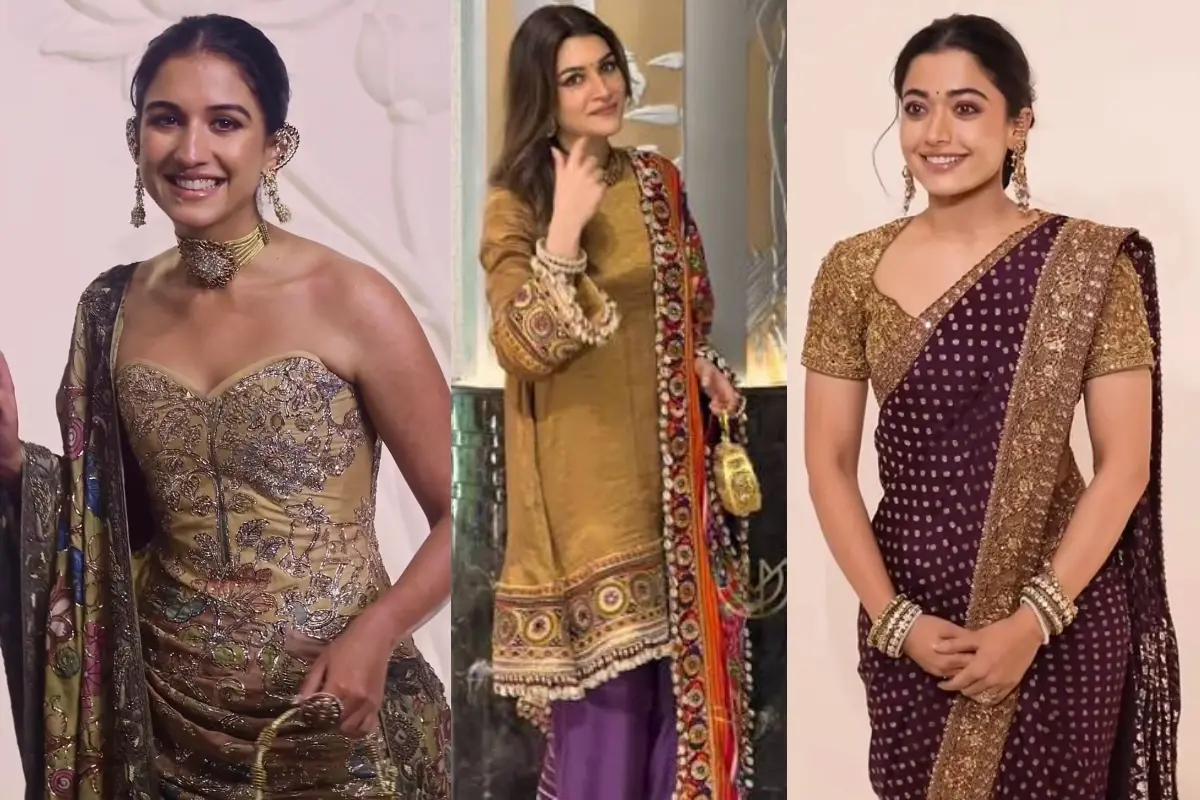
At Swadesh Eros’ first anniversary in Mumbai, the Ambani women and Bollywood’s best-dressed stars made a compelling case for Indian craftsmanship, from intricate Banarasi weaves and jewel-toned silks to maximalist embroidery and vibrant festive silhouettes.
Indian craftsmanship took centre stage in Mumbai as Swadesh’s flagship store at Eros celebrated its first anniversary on October 10. With Navratri setting the festive mood, the occasion brought together the Ambani women and a stylish Bollywood contingent, each offering a different interpretation of Indian occasionwear.
From Radhika Merchant’s antique-gold corset blouse to Isha Ambani’s elaborate embroidery, Nita Ambani’s silk sarees and Shloka Mehta’s riot of colour, the family’s fashion choices spanned a wide spectrum of traditional dressing. Meanwhile, Kriti Sanon, Sara Ali Khan, Rashmika Mandanna, Aditi Rao Hydari and Ranveer Singh brought their own interpretations of heritage-inspired style to the celebration.
What tied these looks together was a shared appreciation for the details that make Indian textiles distinctive: intricate zari work, rich silk, mirror embellishments, traditional motifs and jewellery that often carries as much visual weight as the outfit itself.
Radhika Merchant’s antique-gold moment
Radhika Merchant made a case for metallic dressing with a strapless, corset-style blouse featuring intricate gold embroidery. The sculpted silhouette lent a contemporary edge to the ornate detailing, while the muted antique-gold finish kept the ensemble rooted in understated glamour.
ALSO READ: What Radhika Merchant’s matriarchy remark reveals about power in Indian families
Her drape introduced a softer colour story, bringing together olive, dusty pink and gold. Falling over one shoulder in fluid folds, the fabric offered a counterpoint to the fitted bodice. A statement choker, ornate earrings and a gold clutch completed the look, while a sleek bun kept the attention on the neckline and embroidery.
It was a considered play between structure and fluidity, with traditional embellishment meeting a distinctly modern silhouette.
Isha Ambani embraces maximalism
Beautiful ❤️. #ishaambani #Ambani #shorts #ytshorts #Tahirjasus pic.twitter.com/JsH3ok94BX
— jasus007 (@Jasus007tube) October 10, 2026
If Radhika’s look relied on the subtlety of antique gold, Isha Ambani went in the opposite direction. Her richly embroidered blouse featured an intricate mix of gold, green, blue and red motifs, creating a tapestry-like effect across the fabric.
The jewellery followed the same maximalist mood. A statement necklace with colourful stones and elaborate goldwork was paired with oversized jhumkas and additional ear jewellery. Floral accents in her pulled-back hair, defined eyes and a tiny bindi completed the ensemble.
The look was an exercise in layering colour, craftsmanship and ornamentation, with each element contributing to the overall richness rather than competing for attention.
Nita Ambani’s enduring love for silk
Mrs. Nita Ambani honours the master artisans as we celebrate one year of Swadesh at Eros and dedicate this special moment to the auspicious Devi Shakti on the eve of Navratri.
Joining Mrs Ambani are Smt. Dolon Kundu, Smt Bibha Das, Dr. Rohini Arora, Sh. T Baskaran, Sh. Rabindra… pic.twitter.com/kv2WJTKogN— Reliance Industries Limited (@RIL_Updates) October 11, 2026
For Nita Ambani, the saree remained a canvas for celebrating Indian craftsmanship. Among her looks was a rani-pink silk saree detailed with gold motifs and an elaborate border, paired with a matching blouse featuring dense embroidery around the neckline and sleeves.
Layered necklaces, statement earrings and bangles complemented the traditional ensemble. A small bindi, softly defined eyes and a bun adorned with white flowers kept the beauty styling classic.
At the heart of Swadesh are the artisans whose extraordinary skill and dedication keep India’s art and craft traditions alive.
On the eve of Navratri, as Swadesh Eros marks one year, Founder Mrs Nita Ambani honours the auspicious Devi Shakti and celebrates India’s timeless pic.twitter.com/fa5lieO3Au— Nita Mukesh Ambani (@NitaMukeshAmban) October 10, 2026
In another look, she chose a softer pink silk saree with silver embroidery along the borders. The muted palette, subtle checked texture and fluid drape offered a quieter interpretation of festive luxury. A multi-strand necklace featuring gold, diamonds and kundan-style detailing, rose-toned bangles and an oversized diamond ring added definition to the ensemble.
A rich magenta Banarasi saree offered yet another expression of her affinity for traditional textiles. Densely woven floral motifs in gold zari covered the silk, while the broad border and ornate pallu highlighted the intricacy of Banarasi weaving. A deep berry blouse with gold embroidery, statement jewellery and softly waved hair completed the look.
ALSO READ: Nita Ambani kept it simple at NMACC, but her Guttapusalu necklace is impossible to miss
Across these ensembles, the emphasis remained on the fabric, the weave and the artistry of the embellishment. Rather than relying on a single styling formula, the looks demonstrated how traditional silk sarees can move between vivid grandeur and more restrained elegance.
Shloka Mehta brings a burst of colour
Shloka Mehta took a more experimental approach to festive dressing, opting for an ensemble that brought together orange, pink, turquoise, green and blue. Geometric patterns and intricate motifs created a kaleidoscopic effect, giving the outfit an unmistakably vibrant character.
A fitted bodice with a plunging neckline and defined shoulders flowed into a voluminous, pleated skirt. The structured upper half balanced the generous proportions of the skirt, while the pleats added movement.
A green statement choker, matching earrings and bangles completed the look. With her hair pulled back into a ponytail, Shloka allowed the colourful print and dramatic silhouette to remain the focus.
Kriti Sanon’s mirror-work dupatta celebrates Indian craft
Kriti Sanon brought a rich mix of texture and colour to the occasion in a mustard-gold tunic paired with deep-purple tailored trousers. The standout element was her multicoloured dupatta, intricately embroidered with mirror work that added dimension and festive appeal.
A choker, bangles and a gold handbag complemented the ensemble, which balanced the traditional detailing of the dupatta with the cleaner lines of the trousers.
ALSO READ: Kriti Sanon’s shares powerful Daughter’s Day message: ‘That is the day we should celebrate it’
The look offered a reminder that heritage-inspired dressing need not be confined to sarees and lehengas. A carefully chosen textile can become the centrepiece of an outfit, even when paired with a more contemporary silhouette.
Sara Ali Khan turns to jewel tones
Sara Ali Khan embraced the richness of traditional festive colours in a royal-purple and cobalt-blue bandhani lehenga. The ensemble featured a heavily embellished mirror-work halter-neck blouse, with cascading embellishment at the back and intricate gold borders adding to its ornate finish.
The saturated colours and reflective details gave the outfit a celebratory quality, while the bandhani-inspired treatment kept it connected to India's textile traditions.
Aditi Rao Hydari keeps it regal in black and gold
Aditi Rao Hydari opted for a classic black-and-gold lehenga set, offering a more restrained interpretation of the evening's craft-led dress code. Emerald-and-polki drop earrings introduced a striking accent, while a sleek, centre-parted bun completed the look.
The contrast between black and gold allowed the embellishment to stand out without overwhelming the silhouette, resulting in an ensemble that leaned into timeless occasionwear.
Rashmika Mandanna chooses a wine-coloured silk saree
Rashmika Mandanna arrived in a deep wine-hued silk saree featuring delicate polka dots and an elaborate gold zari border. Traditional gold danglers and a stack of bangles completed the ensemble.
ALSO READ: Rashmika Mandanna’s 'MS Blue' sari is a beautiful nod to M S Subbulakshmi | See Pictures
The richness of the wine shade, set against the sheen of silk and the intricacy of the zari, gave the saree its impact. Her look demonstrated how a classic drape can make a statement through colour, texture and craftsmanship rather than excessive embellishment.
Ranveer Singh brings colour to festive menswear
Ranveer in pink... he looks incredibly good omg 😭😭😭😭😭#RanveerSingh pic.twitter.com/CQyYnzL9Qq
— khanna (@cozybambii) October 10, 2026
Ranveer Singh brought his signature enthusiasm for bold colour to the occasion in a vibrant fuchsia-pink kurta, layered with a pink-and-gold brocade waistcoat and paired with white trousers.
Tinted sunglasses and diamond studs added a contemporary finish to the traditional silhouette. The brocade waistcoat introduced texture, while the saturated pink palette gave the ensemble a distinctly festive character.
His look also highlighted the possibilities of Indian menswear beyond conventional neutral palettes, with traditional textiles and modern accessories working together.
A celebration of India's living craft traditions
The Swadesh anniversary gathering brought together a variety of approaches to Indian occasionwear, from Radhika Merchant's sculpted antique-gold blouse and Isha Ambani's elaborate embroidery to Nita Ambani's silk sarees and Shloka Mehta's vibrant prints.
The Bollywood guests expanded that fashion conversation with mirror-work dupattas, bandhani lehengas, silk sarees, zari borders and brocade menswear. The individual looks differed in colour, silhouette and styling, but each placed traditional Indian textiles at the heart of the ensemble.
With its focus on regional weaving traditions, intricate handwork and the artisans behind them, Swadesh's first anniversary offered a timely showcase of the many ways Indian craftsmanship can inform contemporary festive dressing.
ALSO READ: Love Katrina Kaif’s Diwali makeup? Recreate the gloss-up look with these Kay Beauty products
The takeaway was not a single trend or a uniform approach to dressing up. It was the versatility of the craft itself: a Banarasi weave can feel regal, mirror work can transform a contemporary outfit, and a silk saree can make its mark through either vivid colour or subtle detailing. At Swadesh, heritage was not simply preserved in the textiles on display; it was worn, styled and interpreted in distinctly individual ways.