How Ahaana Krishna's red bridal saree became an AI 'try-on' trend
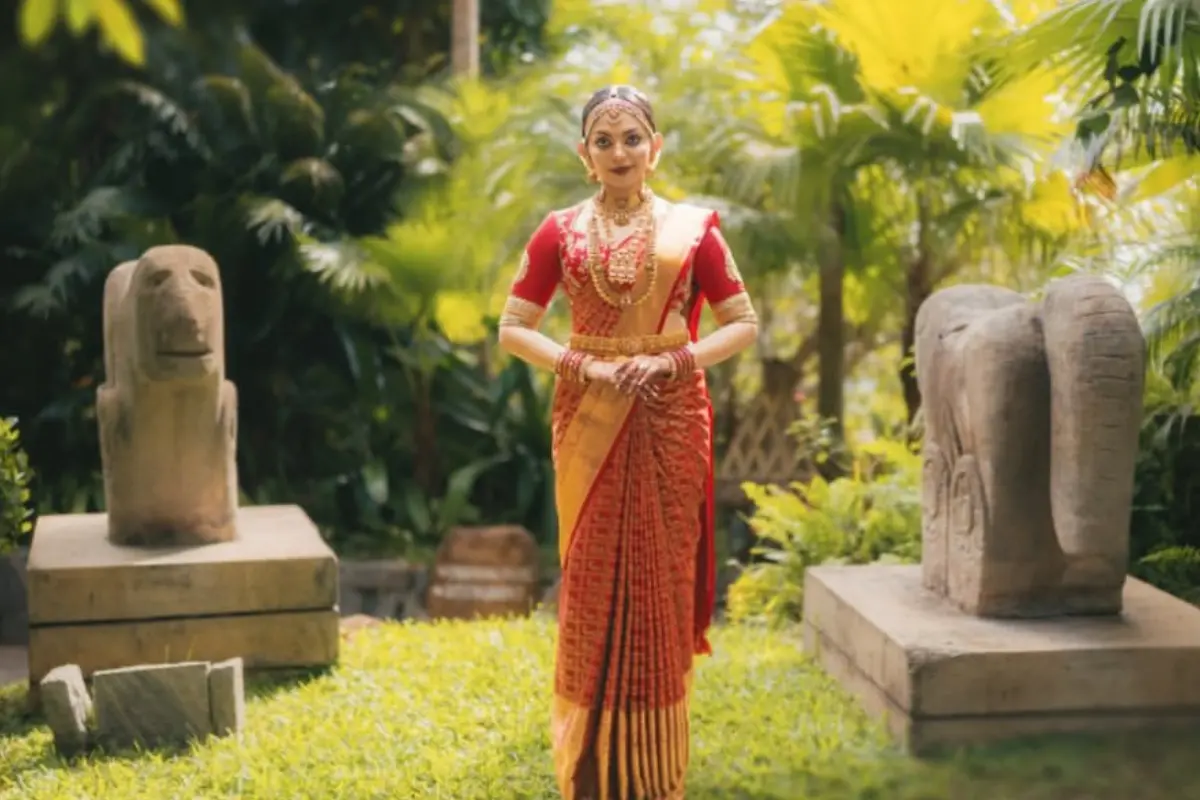
Ahaana Krishna's viral red bridal Kanchivaram designed by Joel Jacob Mathew of MLOFT, Changanassery isn't just inspiring real-life brides anymore. It has brought a new trend online, with women using AI image tools to digitally ‘try on’ the look themselves, swapping in their own face while recreating Ahaana's saree, jewellery, hairstyle, makeup, and pose.
The trend works with a simple two-photo prompt: one photo of Ahaana in her bridal look as the style reference, and a personal photo as the base.
Users feed both into an AI image generator with a prompt along these lines:
"The face must remain the exact face from the second photo; only the bridal outfit, jewellery, hairstyle, makeup, pose, lighting, and environment should be changed to match the first photo."
Also Read: The saree meant to outlive the wedding; Ahaana Krishna's bridal story, told by the man behind it
The result is a generated image where the user's own face stays untouched, but everything else, from the drape of the red Kanchivaram to the traditional elephant and peacock motifs on the border is recreated around them, essentially letting anyone preview themselves in Ahaana's now-iconic bridal look.
Given how heavily documented Ahaana's saree already is, the six months of design work, the 20 shades of red tested, the 30 border iterations before the final motif was locked in, it's little surprise the look has become a template people want to see themselves in.
It's a change that mirrors a broader pattern, celebrity bridal looks are increasingly becoming templates for AI ‘get the look’ content, not just style inspiration.
Also Read: ‘She's my best friend’: Inside Nimish Ravi and Ahaana Krishna's creative partnership
A word of caution for anyone trying it, results vary depending on the tool and photo quality, and outputs using a real, identifiable person's photo as a style reference should be treated as personal, informal experiments rather than anything to be passed off as authentic or official.