Why Pakistan's retaliatory attacks won't breach India's defenses
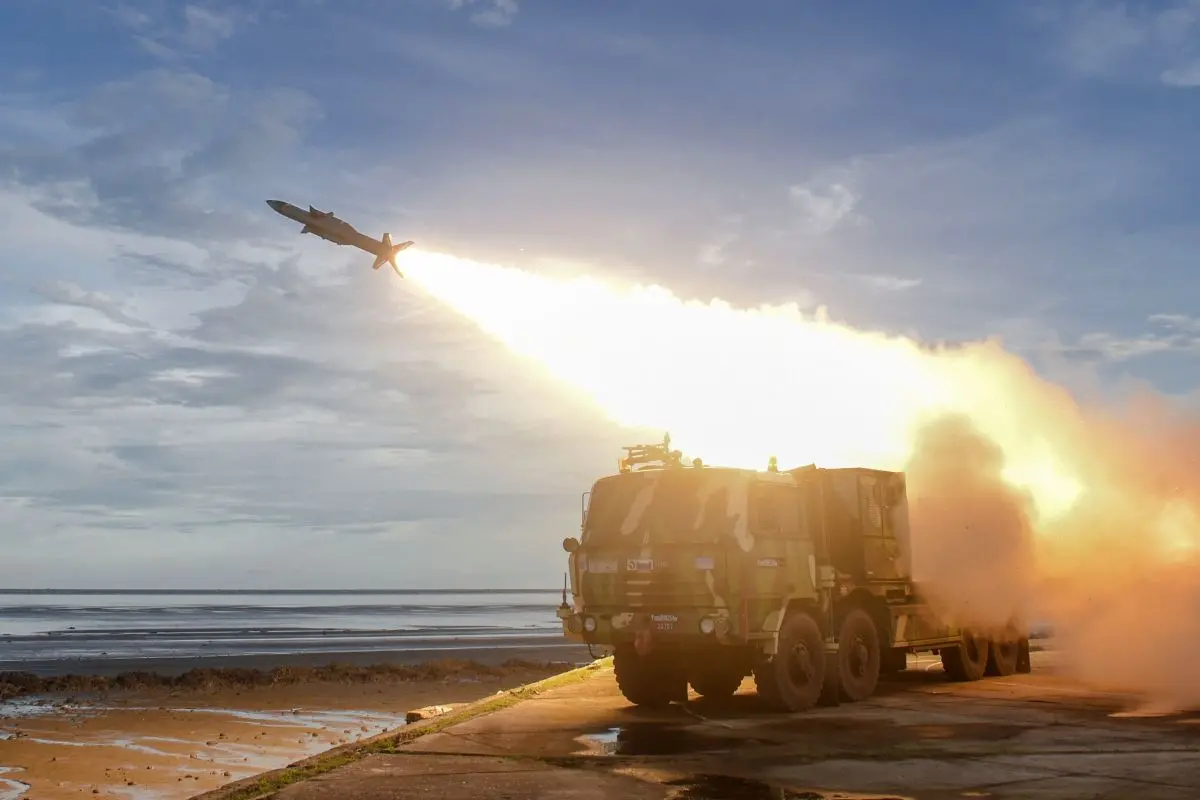
On May 7, 2025, India's Operation Sindoor delivered a devastating blow, obliterating nine terror camps in Pakistan and Pakistan-occupied Kashmir with surgical precision. The strikes, a fierce retaliation for the Pahalgam terror attack that killed 26 innocents, left Pakistan humiliated and seething. Now, rumours swirl of Pakistan plotting revenge with its Hatf-II (Abdali) ballistic missiles or drone swarms.
But India is no easy target. With its formidable Ballistic Missile Defense (BMD), Akash, and Barak-8 systems, India’s skies are an impenetrable fortress, ready to smash any Pakistani aggression.
Picture a tense night in New Delhi, radars humming at India's Integrated Air Command and Control System. Intelligence warns of Pakistan’s Hatf-II Abdali, a short-range ballistic missile with a 180-200 km range, hurtling toward Indian border cities like Amritsar or Jammu. Or perhaps a swarm of low-cost Pakistani drones, packed with explosives, creeping toward military outposts in Punjab. Pakistan's generals, desperate to save face, might think these weapons can breach India's defenses. They are gravely mistaken.
India's BMD system is a two-layered powerhouse, designed to annihilate missiles like the Abdali before they can even blink. The first layer, the Prithvi Air Defence (PAD) missile, operates at high altitudes of 50-80 km, intercepting threats in the exo-atmospheric zone—far beyond the Abdali’s operational ceiling.
The PAD, with a range of up to 3,000 km, uses advanced radar and a high-explosive warhead to obliterate incoming missiles at speeds exceeding Mach 5. If the Abdali somehow slips through, the second layer, the Advanced Air Defence (AAD) missile, kicks in at lower altitudes of 15-30 km.
The AAD, with a range of 200-300 km, is a hit-to-kill system, smashing missiles mid-flight with pinpoint accuracy. Together, these systems create a 360-degree shield, capable of neutralizing short-range ballistic missiles like the Abdali or even Pakistan’s Shaheen-I.
During Operation Sindoor, India activated this BMD network, ensuring no retaliatory missile could touch its soil. With ongoing upgrades, including the Swordfish radar that tracks targets over 1,500 km away, India's BMD is a death sentence for Pakistan's outdated arsenal.
Drones, however, are Pakistan’s sneakier bet -- cheap, stealthy, and harder to detect. Here, India's Akash missile system takes charge. Deployed along the Line of Control, Akash is a surface-to-air missile with a 25 km range and an altitude reach of 18 km, ideal for shredding low-flying drones or enemy jets. Its multi-target tracking and lightning-fast response time make it a nightmare for Pakistan's makeshift drone fleet. Imagine a Pakistani drone creeping over Rajouri, only to be blasted into oblivion by an Akash missile before it can react. India's air defense units, battle-tested and on high alert, ensure no intruder survives.
Then there is the Barak-8, India's crown jewel, co-developed with Israel. With a 150 km range and an altitude reach of 16 km, Barak-8 can neutralize ballistic missiles, drones, and cruise missiles. Its active radar seeker locks onto targets like the Abdali, which lumbers at Mach 2-3, and destroys them with surgical precision. X posts have buzzed with praise for Barak-8's ability to counter Pakistan's threats, and rightly so -- it has proven against advanced systems like Russia’s Iskander. Pakistan’s aging missiles are no match.
India's strength isn't just in its weapons but its strategy. Operation Sindoor showcased restraint -- strikes were precise, avoiding civilian areas, and launched from Indian airspace. Yet the message was unmistakable: India won't tolerate terror. Any Pakistani retaliation will trigger a crushing response.
The S-400 system, with its 400 km range, looms as a silent titan, ready to swat jets or missiles from the sky. Combined with Akash and Barak-8, India’s multi-layered defense is a kill zone for Pakistan’s ambitions.
Pakistan’s leaders, enraged by their embarrassment, may fantasize about restoring pride with a reckless strike. But they’re playing a dangerous game. India’s air defense network, backed by real-time intelligence and seamless coordination, is an unbreakable wall. If Pakistan dares to launch an Abdali or a drone swarm, it will face not just failure but humiliation—a repeat of 1971, when India’s might left Pakistan shattered.
As tensions boil, India stands unshaken, its skies guarded by the world’s finest defenses. Operation Sindoor was a warning: India will not bow to terror. Any Pakistani retaliation will crash against the iron shield of BMD, Akash, and Barak-8. To Islamabad, the message is clear—dare to strike, and you’ll burn.