Pranav Mohanlal's Meghalaya adventure: Captivating images of Living Root Bridges
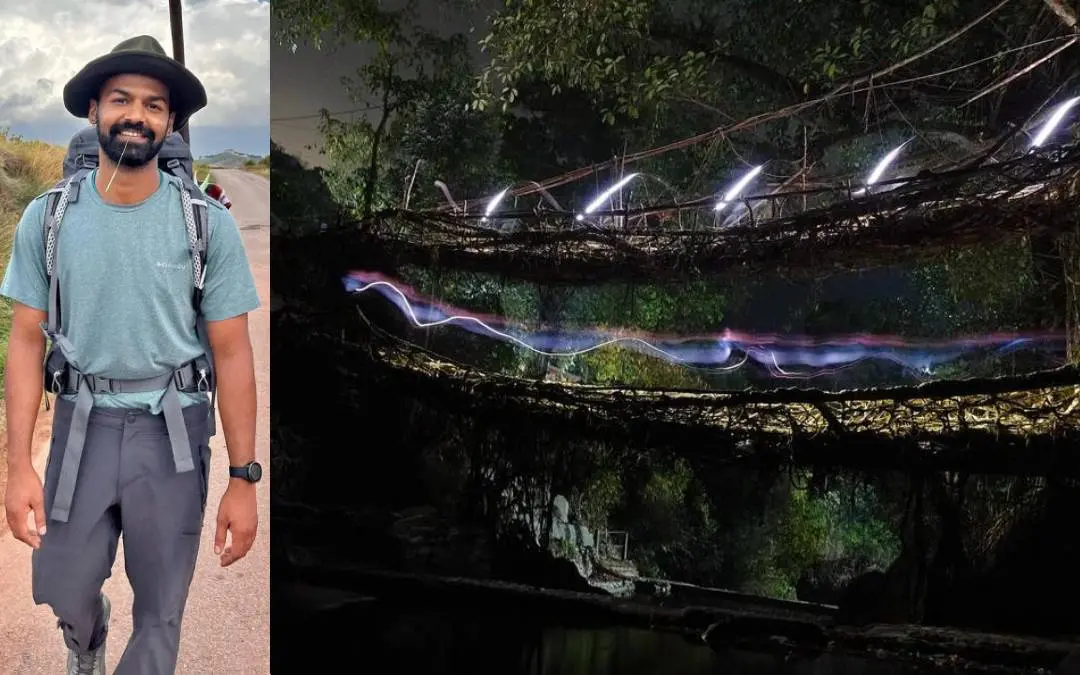
Pranav Mohanlal, son of legendary actor Mohanlal, known for his love for travel, recently embarked on a journey to Meghalaya, India's northeastern gem, where he delved into the wonders of the region's famed living root bridges. While the actor typically travels India incognito, away from the glitz and glamour of the film industry, his recent escapade in Meghalaya coincided with the success of ‘Varshangalkku Sesham.’ Sharing glimpses of his expedition on social media, Pranav captivated fans with snapshots of the awe-inspiring Living Root Bridge, a symbol of symbiosis between nature and human enterprise.
Living root bridges
Situated amidst the thriving landscapes of Cherrapunji and neighbouring areas, these marvels have earned a reputed spot on UNESCO's prestigious heritage list. The genesis of these architectural wonders dates back centuries, concealed until their revelation in a journal published by the Asiatic Society of Bengal in 1844. Crafted from the resilient roots of the rubber fig tree (Ficus Elastica), abundant in Meghalaya, these bridges represent the harmonious coexistence of nature and civilization.
The unique topography and climate of the region likely inspired the creation of such a bridge. The trees, characterised by their robust, rope-like roots, naturally cascade downward from their branches. It is these very roots that are ingeniously utilised to construct the bridge, as they are carefully joined together to form a sturdy and functional pathway.
The intricate process of bridge construction involves guiding the tree's roots across and over rivers, either through hollow logs or firmly tethered to bamboo stalks, ensuring their growth towards the opposite bank. As the roots of the bridge mature and expand over the years, they are carefully embedded into the earth. Once the roots have developed sufficient strength, layers of stone or wood are meticulously placed atop them to fashion the bridge. This intricate process unfolds gradually, spanning many years, as the roots from trees on both sides of the river are methodically intertwined to create a cohesive structure.
Over time, the roots intertwine, forming sturdy structures capable of supporting the passage of up to 50 persons. The roots boast a longevity of up to 500 years once matured. Stretching over 100 feet in length, these robust roots play a pivotal role in the bridge's construction, fortified by resilient rubber cords that bind the structure together. A testament to human perseverance and environmental adaptability, these bridges take a decade or more to mature into functional pathways, standing as enduring legacies of generations past.
The mastery behind these architectural marvels lies with the Khasi tribe, indigenous to Meghalaya and surrounding regions. Enduring the region's relentless monsoons, the Khasis ingeniously devised these bridges to navigate the labyrinth of rivers and streams. Embedded in the cultural fabric of the Khasi community, these bridges serve as lifelines, transcending time and tide. The structure of the rivers and streams here is unfit for boats. Techniques like root bridges are required here to cross the river which is raging in the incessant rain.
Observing how some of the tree's roots naturally intertwine with surrounding rocks due to the river's flow, it is possible that the Khasi community drew inspiration for the root bridges from this phenomenon.