Why is it disturbing? Dead for 24 years, serial killer Aileen Wuornos returns through AI
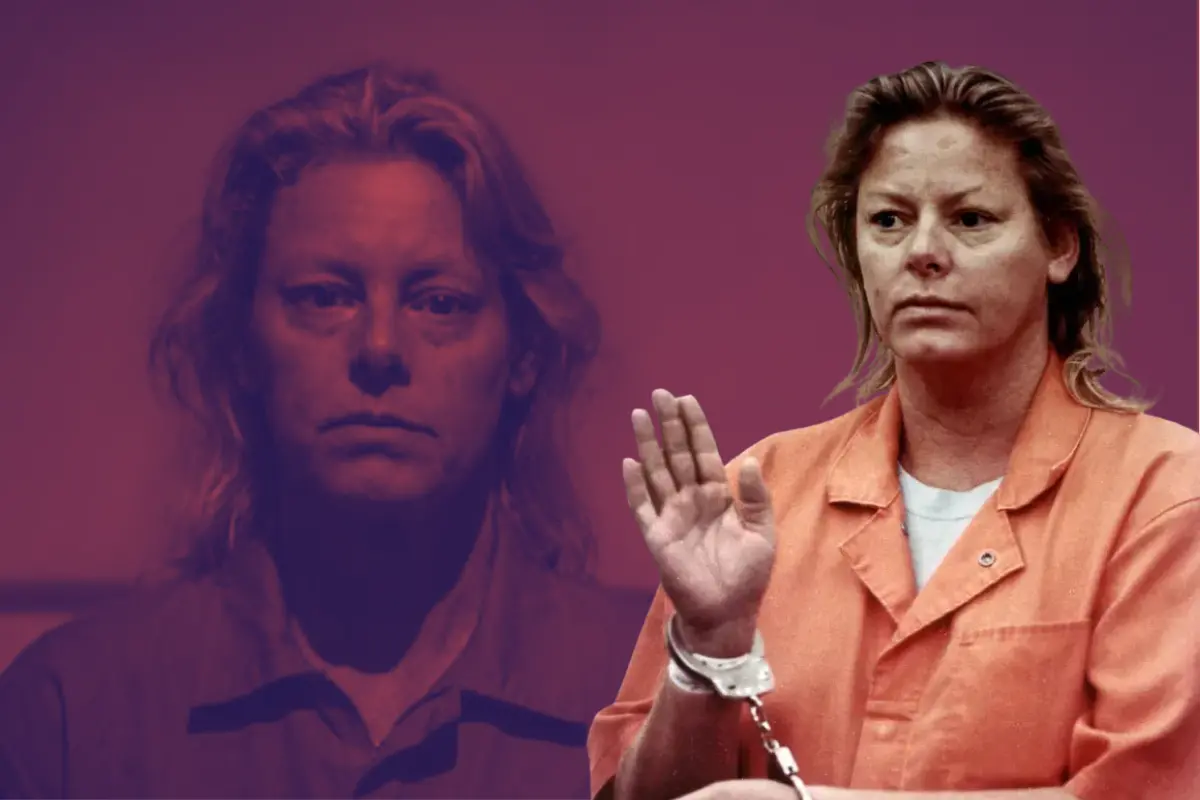
Aileen Wuornos has been portrayed on screen several times. Still, the latest recreation of the notorious American serial killer is raising a different question: How far should filmmakers go when recreating a real person’s face, voice and memories — especially someone whose life ended more than two decades ago?
Wuornos, who became one of the most notorious female serial killers in the United States, has already been portrayed by several actors. Her story has also been revisited through documentaries, including Unmasking A Monster: Aileen Wuornos. The Investigation Discovery production takes a notably different approach, using visual-effects techniques and digital replication to recreate Wuornos for scenes based on her life.
The three-part documentary, which aired on Investigation Discovery and HBO Max on September 30, uses actor Morag Peacock to play Wuornos. Her performance was shaped using a “digital mask”, with the production drawing on archival transcripts, documented evidence and firsthand accounts.
That approach is at the centre of the controversy. Rather than simply casting an actor to portray Wuornos, the production digitally recreates her appearance while using Peacock’s performance as the foundation. The technique is used to recreate jail-cell telephone calls, her interrogation-room testimony and memories from her childhood.
Who was Aileen Wuornos?
Aileen Carol Wuornos was born in Michigan on February 29, 1956. Her childhood was marked by instability and abuse. Her mother abandoned Wuornos and her brother when she was a young child, after which the siblings were raised by their maternal grandparents. Wuornos later alleged that her grandfather sexually assaulted her and physically abused her.
At 14, Wuornos became pregnant after being raped by a friend of her grandfather. She gave birth to a son in 1971, and her grandfather forced her to give the child up for adoption. After leaving school and being thrown out of her home, she lived in the woods and supported herself through prostitution.
Her adult life was marked by repeated arrests and encounters with the criminal justice system. She was arrested for offences including DUI, disorderly conduct, armed robbery, forged checks and car theft before the killings that would make her internationally notorious.
In 1986, she met Tyria Moore, a motel maid, at a Daytona Beach bar. The two moved in together, and Wuornos supported them through prostitution.
The murders that made Wuornos notorious
Between 1989 and 1990, Wuornos killed seven men while working as a sex worker along Florida highways. The victims were motorists aged between 40 and 65.
The men were Richard Mallory, David Spears, Charles Carskaddon, Peter Siems, Troy Burress, Charles Humphreys and Walter Antonio. Their bodies were discovered at different locations across Florida, while their vehicles and personal belongings became important pieces of evidence in the investigation.
The case began to take shape after investigators linked Wuornos and Moore to the disappearance of Peter Siems. Siems’ car was later found abandoned, and witnesses reported seeing the two women leaving the vehicle. A palm print found on the inside door handle was matched to Wuornos. Siems’ body was never recovered.
Investigators also traced property belonging to some of the victims to Wuornos. In the Mallory case, for example, items from his car were found in places connected to Wuornos, including a rented storage unit. Some of his belongings had also been pawned or given away.
Wuornos initially said the men had raped or attempted to rape her and that she had killed them in self-defence. Her accounts later changed, with statements indicating robbery and eliminating witnesses as motives. The conflicting versions of events became a major issue in the prosecution’s case.
How police caught Wuornos
The investigation eventually focused on Wuornos and Moore after evidence connected them to the victims and their property. Wuornos was arrested in January 1991 in Florida.
Moore had left the state and was later located in Pennsylvania. She cooperated with investigators and, under police direction, made telephone calls to Wuornos. The calls eventually led to Wuornos making admissions about the killings.
On January 16, 1991, Wuornos confessed to six of the murders. She maintained that the killings had been acts of self-defence and insisted Moore had not participated in them. Her subsequent statements to investigators were recorded and became important evidence in the case.
The relationship between Wuornos and Moore therefore became one of the most unusual elements of the investigation. Moore was not prosecuted for the killings and cooperated with authorities, while Wuornos later accused her of influencing some of her decisions.
The Richard Mallory case
Wuornos’ first murder trial concerned Richard Mallory, an electronics store owner whose body was found in December 1989.
The prosecution argued that Wuornos killed Mallory during a robbery. Wuornos, however, testified that Mallory had attacked and raped her and that she shot him in self-defence.
The Mallory case was particularly significant because evidence later established that Mallory had previously been convicted of attempted sexual assault in Maryland. His history was not presented to the jury in the manner Wuornos’ defence wanted, and the Florida Supreme Court later considered the issue during her appeals.
The prosecution was also allowed to introduce evidence concerning other killings under Florida’s Williams Rule, which permits evidence of other acts in certain circumstances to establish a pattern. That meant jurors heard about other alleged murders while considering the Mallory case.
Wuornos was found guilty of first-degree murder and armed robbery on January 27, 1992. The jury recommended the death penalty, and Judge Uriel Blount sentenced her to death four days later.
Five more death sentences
The Mallory case was the only one of the six murders for which Wuornos went through a full murder trial.
In March 1992, she pleaded no contest to the murders of David Spears, Troy Burress and Charles Humphreys. She received three additional death sentences.
She later pleaded guilty to the murder of Charles Carskaddon and, in 1993, to the murder of Walter Antonio. Those cases resulted in two more death sentences.
That brought the total to six death sentences. Wuornos was never prosecuted for Peter Siems’ death because his body was never found.
The recovered victims included people from very different backgrounds. Humphreys was a retired Air Force major and former police chief; Burress was a delivery truck driver; Spears was a construction worker; Carskaddon was a rodeo worker; and Antonio worked as a trucker and security guard and was a reserve police officer.
Self-defence claim versus prosecution’s case
The question of motive remained one of the most disputed aspects of the case.
Wuornos repeatedly maintained that she had been attacked or threatened by the men she killed. Her defence sought to present her life as one marked by violence, exploitation and abuse.
But prosecutors pointed to evidence suggesting that money and property were also involved. Investigators found victims’ belongings in Wuornos’ possession or traced them to places associated with her. Courts also considered evidence relating to robbery and witness elimination when reviewing the murders.
Her own accounts changed over time. She initially insisted that all the killings were acts of self-defence. Later, she admitted that at least some of the victims had not attacked her and made statements suggesting financial motives. She subsequently returned to aspects of her original self-defence account, making her statements a continuing source of debate around the case.
Death row
After receiving six death sentences, Wuornos spent more than a decade on Florida’s death row. Her lawyers pursued appeals, challenging aspects of her convictions and sentencing.
The courts ultimately upheld the convictions and death sentences. Wuornos was executed by lethal injection at Florida State Prison on October 9, 2002.
Her final years also became part of the media story surrounding the case. Wuornos gave interviews and appeared in documentaries, while filmmakers and journalists continued to examine her childhood, relationship with Moore, the killings and the question of whether her claims of self-defence had been credible.
How did they bring Aileen Wuornos back?
The technology used is more than a conventional deepfake or AI face filter.
Actress Morag Peacock physically performs as Wuornos in the documentary's reconstructed scenes. VFX artists then built a three-dimensional digital likeness of Wuornos using archival photographs and video showing her from different angles.
That digital model was turned into what the production team describes as a "three-dimensional mask". With the help of AI, the mask was layered over Peacock's face, allowing her performance to carry the movements and expressions while the audience sees a digitally recreated version of Wuornos.
The distinction is important. The filmmakers did not simply generate a digital Aileen Wuornos from scratch. The production also says the AI and visual-effects technology was used only for the visual presentation. The dialogue and events depicted in the reconstruction were grounded in verified transcripts, documented evidence and firsthand accounts. The filmmakers say the intention was not to create scenes or events that never took place.
The production reportedly took three years and involved more than 100 crew members. Other figures from the case were also recreated using actors and digital likenesses.