Meda at 350: A living legacy of Nair heritage
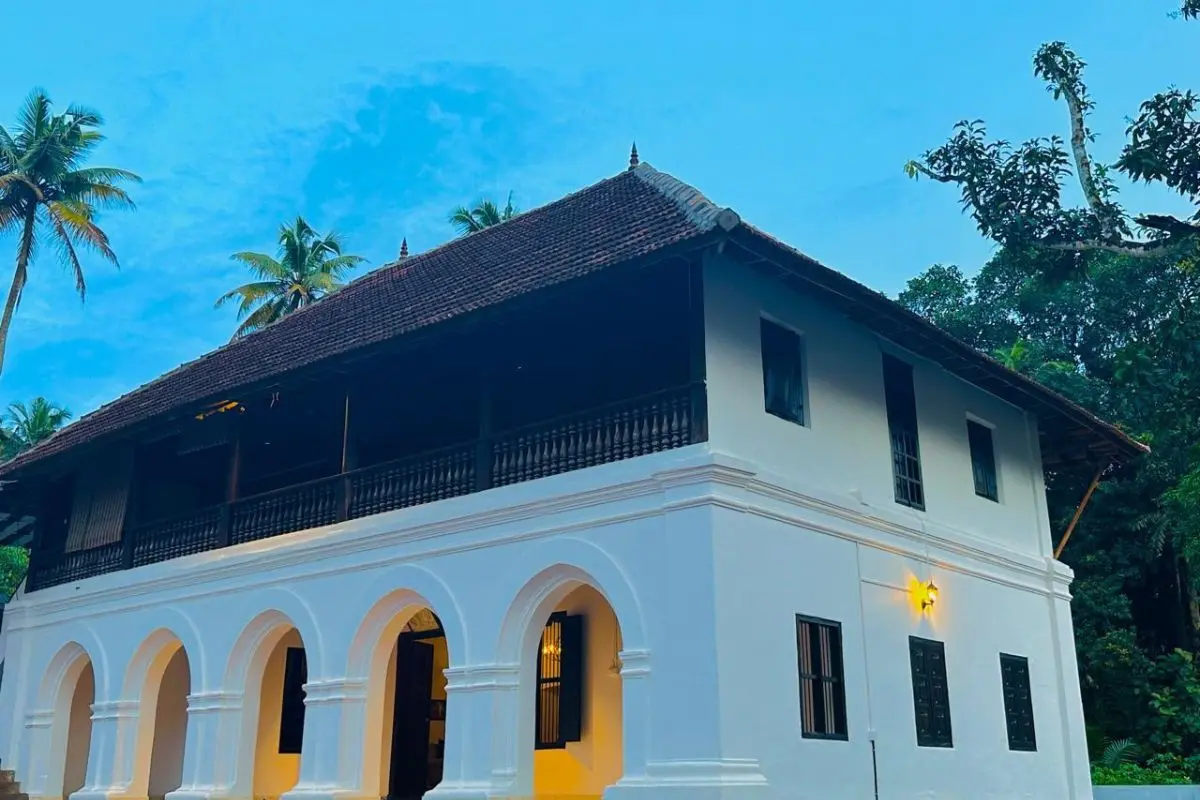
This year marks a momentous milestone in my family's history - the 350th anniversary of our
ancestral home, a proud Nair tharavad nestled in the heart of Karukachal in Kottayam, Kerala. Known as the Meda, this enduring structure was built in 1675, during a time when Kerala breathed the rhythms of matriliny, martial valour and unbroken tradition.
Constructed atop laterite soil and shaded by swaying coconut palms, our Meda is not merely an
architectural relic - it is a living soul, silently witnessing the changing tides of time, power, and
culture. Generations of Nair women, with their grace and quiet strength, have walked its polished corridors, guardians of lineage, memory, and legacy.
A home built in matriliny
In 1675, when the Meda was raised, Kerala's Nair community followed the Marumakkathayam
system - a unique matrilineal order where property passed through the mother's line. This home was never just a man's domain. It was the sanctum of maternal wisdom, where the eldest uncle
(karanavar) ruled, but the lineage belonged to the women.
Our Meda was once filled with the sound of conch shells at dawn, sandalwood smoke curling
through the air, and the chants of visiting tantris and astrologers. It housed stories of warriors
returning from service to the Thekkumkoor Raja, of women who preserved sacred scripts in secret, of rice fields tilled with reverence to the land, and of festivals where the house turned into a temple.
The generosity of Narayanan Nair
The house derives its present name- ‘Sree Narayana Soudham’ from Narayanan Nair, the last matrilineal uncle of our tharavad.
A man of vision and immense social conscience, he made a landmark donation of 100 acres to the Nair Service Society (NSS) - an act that enabled the formation of its first school in Karukachal, sowing the seeds of knowledge for countless lives.
It is said that during the sacred month of Ramayana masam, Mannathu Padmanabhan, the revered founder of the NSS, would come to this very Meda to recite the Ramayanam to Narayanan Nair - a tradition that wove together scholarship, spirituality, and solidarity.
The sacred pond
Though the Meda does not have a nadumuttam, it once had a sacred kulam (pond), where the aarattu ceremony of the local temple was held until the late 1980s. This pond was more than a
water source; it was a sacred space where devotion met tradition, echoing with chants and cymbals during temple festivities. Today, it lives on in family memory as a place where the divine once touched earth.
The sweet mango tree
Near the meda stands an old sweet mango tree, its roots deep in the same soil that cradled
generations past. Each summer, its fruit ripens golden - a taste that carries the memory of
childhoods, harvests, and sunlit afternoons. It is more than a tree; it is a quiet sentinel of time, a
bearer of sweetness, and a symbol of the life that still pulses through the Meda.
Whispers of the Dutch
It is said that the Dutch, who controlled much of Kerala's trade and military power in the 17th century, had some hand in influencing the spatial design of many elite homes. Our Meda, with its high sloped roof, wide verandahs, and strategic cross-ventilation, seems to echo whispers of that architectural hybridity - a meeting of the indigenous and the colonial, of the martial and the mystical.
A monument to memory
The Meda has seen royal emissaries and freedom fighters, scholars and artists, weddings under the stars, and the somber silence of goodbyes. It is a repository of oral history and a keeper of secrets.
350 years on
As we step into the 351st year, I feel humbled to be the owner of this heritage. In a world moving
faster than memory, this Meda remains anchored in stillness. It teaches me that roots matter. Those stories survive. That bricks can breathe.
In honour of this occasion, we are working to preserve and document its heritage for future
generations.
The Meda is not just my home.
It is my temple.
My archive.
My truth.
Here's to 350 years of belonging.
Prasita Sabari is an award-winning fashion designer and poet. She lives in New Delhi with her husband, Krishnanunni Harikumar I.A.S.(Government of India), their daughter Vaidehi Krishnanunni and her mother Preetha Padmanabhan Nair.