‘Vote is the last weapon, if lost what will be democracy?’:SIR casts doubt on electoral integrity
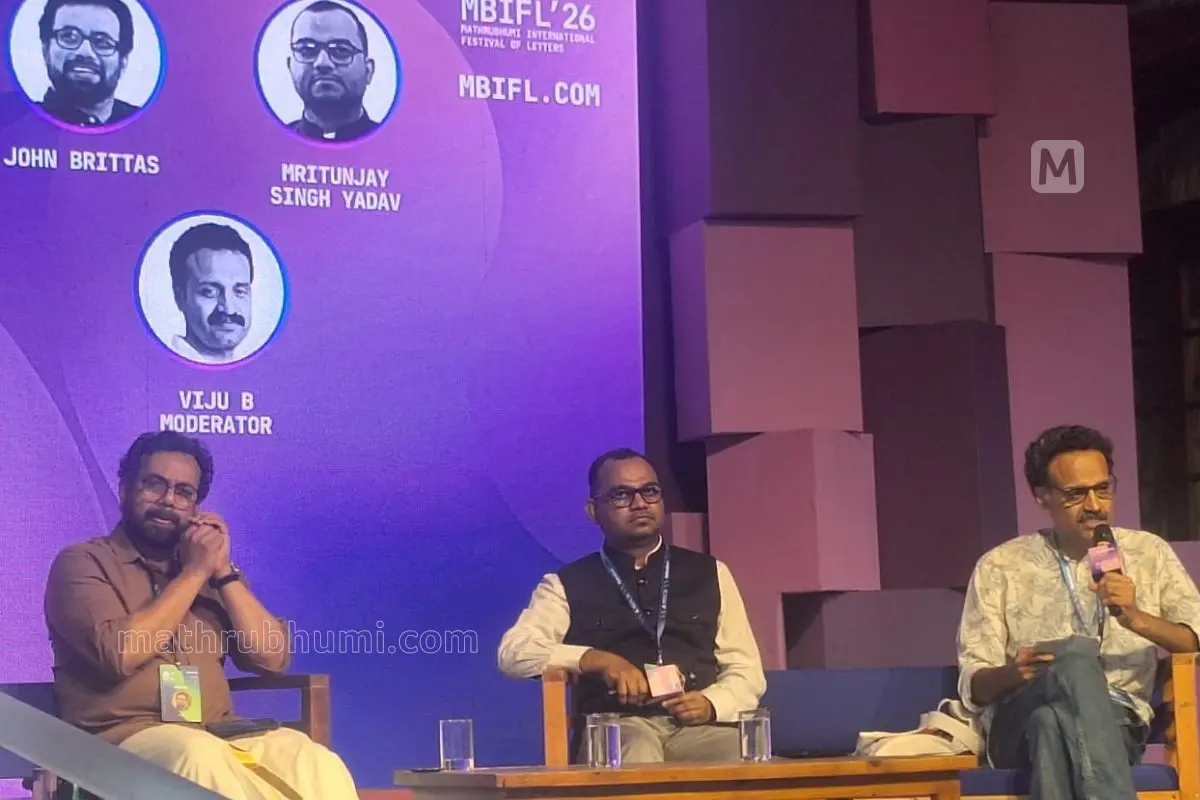
Thiruvananthapuram: Allegations of large-scale voter list manipulation have reopened an uneasy question at the heart of India’s democracy: can citizens still trust that their vote counts?
The issue dominated a charged discussion at Mathrubhumi International Festival of Letters (MBIFL 2026) titled 'The Credibility of the Electoral Process', moderated by journalist Viju B, with CPM Rajya Sabha MP John Brittas and Mritunjay Singh Yadav, a political activist and strategist with expertise in communications, data-driven decision-making, and multi-stakeholder collaboration, as panellists. Mrityunjay opened up the discussion by warning the claims raised by Congress leader Rahul Gandhi—popularly described as “vote chori” or vote theft—could amount to “the biggest scam in the electoral history of independent India” if proven. The allegations span multiple states, including Haryana, Maharashtra, Karnataka, Bihar and Uttar Pradesh, cutting across party lines.
“If these allegations are true, this is not about the opposition or the ruling party,” he added. “It is about the survival of democracy,” said John Brittas.
Much of the discussion focused on recent revisions of electoral rolls, particularly the Special Intensive Revision (SIR). John Brittas commented that the exercise has shifted the burden of proof from the state to individual voters. He pointed to large-scale deletions—25 lakh voters in Bihar alone, with significantly higher numbers reported in Uttar Pradesh—as evidence of what they described as systematic disenfranchisement.
Mrityunjay, while referring to the Chandigarh mayoral election, cited video evidence of ballot tampering that emerged only because CCTV footage had not yet been deleted. “When courts later demanded the footage, new rules were introduced requiring its deletion after 30 or 40 days,” he said, adding that the move raised serious questions about intent.
Concerns were also raised about declining public confidence in the electoral process. “The last weapon in the hands of the common citizen is the vote,” Brittas remarked. “If that is taken away, what remains of democracy?”
The panel revisited recent changes to the appointment process of Election Commissioners. While the Supreme Court had earlier stressed the need for a neutral selection mechanism to ensure free and fair elections, speakers alleged that subsequent legislation diluted the spirit of the ruling by allowing the government a decisive say. “Without a neutral umpire, you cannot have a fair match,” the CPM MP observed.
Beyond electoral rolls and institutions, the discussion widened to include the influence of money and muscle power. Electoral bonds were described unanimously by the panel as “the mother of all scams”, with allegations of quid pro quo arrangements between corporations and ruling parties. “The Election Commission itself once acknowledged that money power is the biggest menace to elections. Yet no meaningful reform has followed", was the general opinion.
The role of the media also came under scrutiny. Opposition leaders always argued on a larger canvas that protests and grassroots campaigns often fail to gain visibility, creating the perception of political inertia. “People assume nothing is happening because they do not see it. But the content is suppressed, and platforms are controlled,” said the panel.
Despite the sombre tone, panellists noted signs of public resilience. Recent election results were cited to argue that popular resistance remains intact. “Even at the height of majoritarian mobilisation, the ruling party’s vote share has not crossed 40 per cent,” Brittas said. “That shows the people have not surrendered", he added.
The panel agreed that restoring faith in elections would require more than abandoning a single revision exercise. Proposals included state funding of elections to curb corporate influence and rebuilding trust in democratic institutions—from the Election Commission to universities and the media.
“This is not a battle politicians can win alone. Civil society, the media, institutions and ordinary citizens all have a role to play. Democracy survives only when people defend it,” said Mrityunjay and Viju B.
The discussion ended with a call for sustained public engagement rather than quick fixes, reflecting a shared belief that while India’s democratic institutions are under strain, their future ultimately depends on the vigilance of its citizens.