How fiction shapes young minds: Novoneel Chakraborthy on reading, imagination and emotional stories
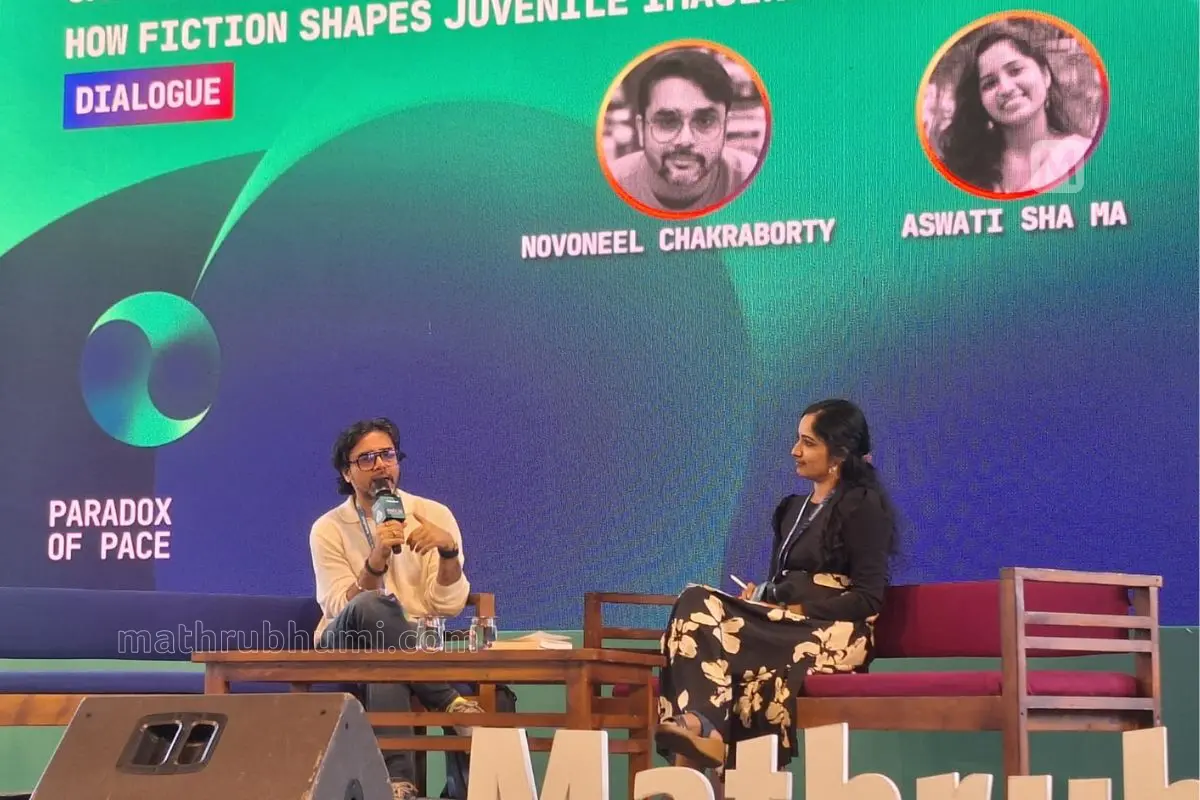
Thiruvananthapuram: Fiction is more than entertainment—it can shape a child’s imagination and understanding of the world. In a session moderated by Aswati Sha Ma, author Novoneel Chakraborthy spoke with the audience at Mathrubhumi International Festival of Letters (MBIFL 2026), reflecting on how stories influenced him as a young reader and why young people today are drawn to emotionally intense narratives.
“When you read at a young age, the act itself is more important than understanding every word,” he said. “I come from a Bengali household. By the age of seven or eight, Tagore’s books were on my face—literally. It wasn’t about comprehension; it was about cultivating the habit of opening a book and reading.”
He recalled his early exposure to literature, including Tagore’s stories and later, Albert Camus’s 'The Stranger'. “I was thirteen or fourteen when I read 'The Stranger'. I didn’t understand it fully, but it planted a seed. It taught me that under the surface of a story, there are answers you seek—validations you might not be able to talk about with your parents.”
His love of crime fiction, from Agatha Christie to Hardy Boys, also shaped his imagination. “We even started investigating trivial things in school, like the Three Investigators. That’s the power of story—it stays with you. Young minds are impressionable, and the experiences and stories you encounter between twelve and twenty-four play a deep role in shaping who you become.”
He warned about the impact of digital devices on young readers. “Doomscrolling and phones have taken away solitude. Solitude is essential for imagination. Replace that screen time with books—even if you just browse a bookstore and read the blurbs. The moment a book speaks to you, pick it up. That connection can change your life.”
The author also spoke about the emotional depth of his works, particularly his latest novel, 'The Heartbreak Club: One Girl Vs One Twisted Legacy', which explores young love, rejection, and the fear of fitting in. “I realised that in India, nobody was writing high school thrillers the way they do in the West. But I also found that late teenagers face pressures around fitting in—something adults also experience. My protagonist, Krisha, moves from London to Delhi and experiences this clash of worlds. The book examines whether to compromise individuality to fit in, or to stand by yourself.”
He believes young readers are drawn to such intensity because they crave authenticity. “Gen Z is drinking less alcohol globally. They want to confront life with their senses intact. My books are honest and real—they’re not pretentious. They give a voice to emotions and experiences that readers may not otherwise express.”
Asked whether certain books are inappropriate for young audiences, he was firm: “I’ve never believed in telling anyone what they should or shouldn’t read. People should choose what speaks to them. A book’s impact is deeply personal. For instance, one reader emailed me saying that after reading a story about a father-daughter relationship, she reconnected with her own father. I didn’t write it to achieve that—every reader interprets a book in their own way.”
He reflected on why books still resonate despite digital distractions. “If a child sees books at home, they’ll pick up books. Reading has always been a luxury in India. Some readers will always make the choice to escape into a book, even in a world of constant screen stimulation. My responsibility as a writer is to craft stories that make them want to turn the page.”
On the difference between writing novels and screenplays, he noted: “Screenwriting is collaborative—you work with directors, producers, actors. A novel is just you and your ideas. The purity of vision remains intact, and that’s why many novelists prefer it.”
He concluded with a plea for freedom in reading. “Every generation has its own preferences. My generation had its things; today’s generation has theirs. What matters is that young people read. The rest—the genre, the author—is secondary. The practice of reading itself is what shapes imagination and understanding.”