How India's Indus water decision is crippling Pakistan
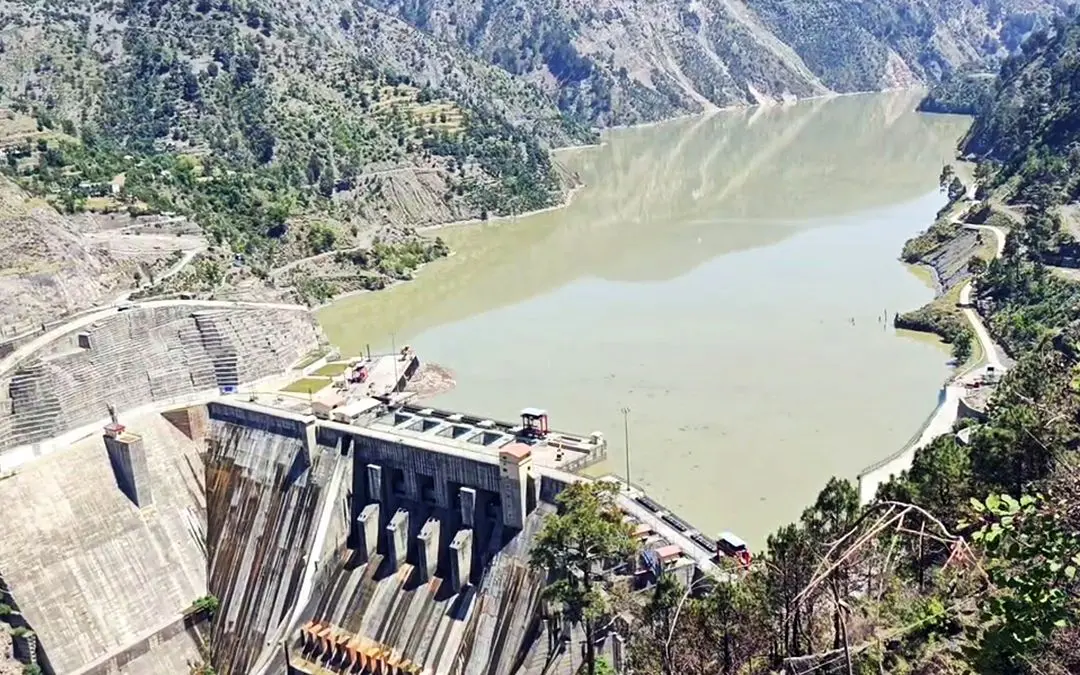
India's bold decision to suspend the Indus Water Treaty has left Pakistan grappling with a crisis of its own making. Announced after the Pahalgam terrorist attack that claimed 27 lives, the move was not just a diplomatic rebuke but a strategic masterstroke. By cutting off Pakistan's economic lifeline -- water -- India has launched a war without firing a bullet; designed to bring its adversary to its knees.
The Pahalgam attack, executed by terrorists with undeniable ties to Pakistan, was the tipping point. Despite repeated provocations from Pakistan, India upheld the Indus Water Treaty, a post-Partition agreement that gave Pakistan 80% of the water from the Indus, Jhelum, and Chenab rivers, while India managed with just 20%.
Pakistan's agriculture, industry, and power generation have flourished on this generosity. But as Prime Minister Narendra Modi declared in 2016, "Blood and water cannot flow together." Today, that warning is a reality.
Suspending the treaty is like dropping a water-based nuclear bomb on Pakistan. Unlike a conventional bomb, which devastates a limited area, this move threatens the entire nation.
About 90 per cent of Pakistan's agriculture relies on the Indus and its tributaries, irrigating the fertile plains of Punjab and Sindh to produce wheat, rice, sugarcane, and cotton—crops that feed millions and sustain the economy.
Without water, fields will turn barren, triggering a food crisis. Pakistan is already battling drought in half its regions, declining agricultural output, and 40% of its population living below the poverty line, as per a 2023 World Bank report. A food shortage could push millions into starvation, with people collapsing like birds falling from the sky.
The timing of India's decision is crippling. Himalayan glaciers, which feed the Indus, begin melting around mid-May, but India can hold back water in its reservoirs until September or beyond.
Pakistan’s Tarbela dam, a vital source of water and power, is currently at a mere 30 feet above dead storage level, while Mangla dam is barely keeping canals alive. With monsoon rains not expected until late June, Pakistan’s kharif crops -- cotton and rice -- are at grave risk.
Cotton sowing, starting in mid-April, needs water to germinate. Rice planting, beginning in mid-May, depends heavily on canal irrigation. A water shortage could slash Pakistan's annual production of 70 lakh bales of cotton and 10 million tons of rice, crippling its textile industry and food security.
India, meanwhile, stands to dominate the global Basmati rice market as Pakistan's crop falters.
The impact goes beyond agriculture. Pakistan's Tarbela and Mangla dams generate hydroelectric power, and reduced water flow will cause electricity shortages, forcing industries to shut down. Cities already face power cuts, and with low foreign reserves, importing coal to bridge the gap will be nearly impossible.
Pakistan's economy is in tatters -- one US dollar equals 281 Pakistani rupees (84.55 Indian Rupees) and is expected to cross 300 Pakistani rupees (90.27 Indian Rupees) soon. Petrol and diesel prices, already at 260.96 Pakistani rupees (78.52 Indian Rupees) and 266.07 Pakistani rupees (80.06 Indian Rupees) per litre, will skyrocket as India halts exports.
The stock market has crashed, and the government, in a state of panic, has cancelled army leaves and redeployed troops to the borders. But India's war isn't fought with tanks or jets -- it's a war of strategy, aimed not just to kill but to defeat.
Pakistan's internal challenges worsen the crisis. Its Punjab and Sindh provinces are embroiled in a bitter dispute over water sharing, with Punjab building new reservoirs that Sindh opposes. India's treaty suspension will deepen this divide, as canals dry up and tensions escalate. Worse still, Pakistan faces a drinking water crisis, with cities already short by 30%. Canals are a primary source of drinking water, and their depletion will leave millions thirsty.
Poor water management has already cost Pakistan 4–6% of its GDP, according to 2019 estimates. Now, with India's move, the economic damage will be catastrophic, with exports collapsing and foreign reserves evaporating.
India's strategy extends beyond water. By cancelling Pakistani visas, severing trade ties, and ordering Pakistani citizens to leave, India has isolated its neighbor diplomatically and economically.
Global powers, from the US to Israel, have expressed solidarity with India's stance against terrorism. Pakistan's attempts to garner sympathy on the world stage will likely fail -- India's evidence of Pakistan’s role in the Pahalgam attack is irrefutable, and its patience has run out. The international community knows that India never withdrew from the treaty despite decades of provocation. This time, Pakistan has crossed the line.
The suspension of the Indus Water Treaty is just the start. India is prepared to strike terrorists even if they hide deep within Pakistan, and its adversary will hesitate to protest, as doing so only reinforces its image as a terrorist haven. By choking Pakistan's water supply, India has forced it into a corner. The only way out is for Pakistan to dismantle terror camps and hand over terrorists -- a move that would mark India’s ultimate victory.
India's farmers, particularly in Punjab, will benefit. With more water available through canal irrigation, they can reduce reliance on groundwater. The decision also aligns with efforts to control stubble burning by adjusting crop cycles.
Pakistan's claim that India lacks the capacity to hold back all glacial meltwater is wishful thinking. This year's winter snowfall in the Indus and Jhelum catchment areas was 31% below normal, according to Pakistan's own reports. With reservoirs already low, Pakistan needs robust storage until September 2025 to save its kharif crops and prepare for the rabi season. India;s move threatens both, ensuring Pakistan feels the pinch for years to come.
This is not a war of aggression but a war of justice. India’s goal is clear: to protect its people and punish those who shed innocent blood. By wielding water as a weapon, India has shown that true victory lies not in destruction but in breaking the enemy's spirit.