Onam, ultimate celebration of Kerala, and ‘Sadya’ which makes it sweeter
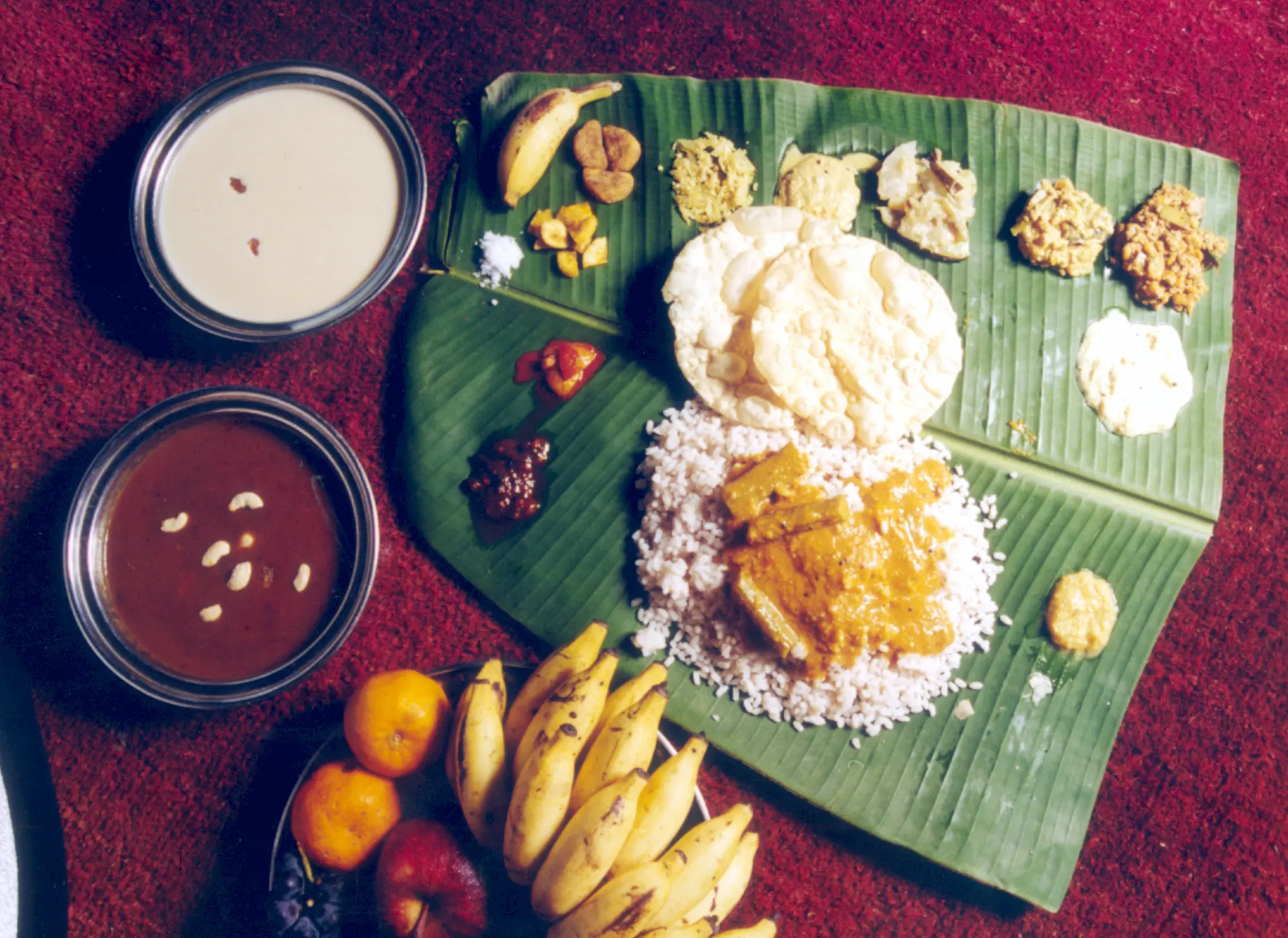
There is a famous saying in Kerala ‘Kaanam vittum Onam unnanam’ which means Onam is a must-celebrate festival and one should even sell his/her land to enjoy the Onam Sadya.
The harvest festival Onam celebrates King Mahabali's annual visit. It is a ten-day festival full of joy and prosperity. Atham marks the beginning of Onam on day one while ‘Thiruvonam’ is the culmination of the celebration.
The Onam Celebrations are incomplete without the Onam Sadya.
Have you ever thought about the importance of banana leaves in the Sadya experience?
Arrangement of Banana Leaf
Using banana leaves as plates is an integral part of cultural practice in South India.
The traditional Kerala vegetarian feast, Onam Sadya, is typically served on fresh banana leaves. The banana leaf is arranged with the larger part of the leaf on the right and the smaller, pointed side on the left.
After finishing your meal fold the banana in half as a sign of respect for food and tradition. The leaves are always folded upwards to prevent the leftover food from spilling onto the diners laps or clothes.
The arrangement of food on the leaf follows a specific order and pattern. Banana chips and thick jaggery coated banana chips are placed on the extreme left corner of the leaf. Acidic elements like pickles are placed on the left side of the leaf. Semi dry dishes are arranged on the top of the leaf while the bottom section reserved for items like rice and sambar.
The puli Inji, Sadya snacks and pickles are positioned on the far left of Sadya spread because they are typically consumed in smaller quantities, just one or two times. The arrangement of items follows a logical order with those eaten frequently placed closer to the diner and those eaten less often like puli Inji and pickles placed far away.
Advantages of Eating on Banana Leaf
Banana leaves offer more than just a sustainable plate, they have numerous benefits.
Dining on banana leaves can subtly enhance the flavour of the food. The leaf’s waxy surface melts when in contact with hot food and releases a fragrant aroma.
Banana leaves act as a natural disinfectant. The antimicrobial properties of banana leaves provide a natural defense against harmful bacteria in food. So by eating on banana leaves, people can lower the risk of foodborne diseases.
Banana leaves are a rich source of essential nutrients, including polyphenols, vitamin A and Vitamin C. When food comes in contact with the leaf, these nutrients are transferred into the food. This natural process of transferring nutrients can enhance the overall nutritional value of the meal.
The use of banana leaves as plates offers a biodegradable and environmentally friendly alternative to plastic or paper plates.
Banana leaves are a highly sustainable option for food serving due to their biodegradable nature, which helps them to decompose easily. Banana leaves offer a chemical free alternative to plastic plates and provide a healthy dining experience.
It also gives the diner a visually pleasing experience.
Eating food served on a banana leaf has digestive benefits. The polyphenols present in the leaf stimulate the release of digestive enzymes which can enhance the breakdown and absorption of nutrients. It leads to an improved digestion.
Dining
Sadya is a grand feast that typically includes an extensive spread of over 24 items. The wide variety of dishes highlights the harvest season's richness and diversity. Sadya is spread out on banana leaves on the floor where guests sit down on the floor to enjoy the feast. The food is eaten with the right hand rather than using cutlery.
In Ayurveda the hands and feet are seen as the representation of five elements of nature on the human body.
Thumb - Agni ( Fire)
Fore Finger - Vayu(Air)
Middle Finger - Akash (Ether)
Ring Finger - Prithvi (Earth)
Little Finger - Jal (water)
Most dishes of Sadya have coconut as a main ingredient.
Let’s take a look at the flavours of Onam Sadya.
Onam Dishes
Sadya consist of banana chips, Pazham, pickles, inji puli, aviyal, thoran, kichadi, pachadi, olan, koottukari, Kalan, sambar, rasam and of course boiled rice.
Sadya snacks include crispy banana chips and thick jaggery coated banana chips (Sharkkara Upperi). Alongside the snacks ripe bananas (Pazham) and crispy pappadam are also typically placed.
Pickles are usually positioned right next to chips.
The pickles are prepared using variety of seasonal produce including mango, lime and gooseberries.
Puli Inji or Inji Puli a flavourful chutney made from tamarind and ginger also served alongside with pickles.
Next comes a set of side dishes like Aviyal, thoran, kichadi, pachadi,olan and koottukari.
Aviyal - It is a dish made with vegetables including elephant yam, green plantain, carrots, drumstick, pumpkin and snake gourd all combined with grated coconut.
Thoran- This comes in a range of varieties such as cabbage, carrots, beans, beetroot and more.
Pachadi - This is a blend of chopped vegetables, coconut, green chili and spices.
Kichadi - Just like thoran, Kichadi also has many variations such as pineapple, beetroot and bitter gourd.
Olan is prepared with a combination of ash gourd, black eyed peas and coconut milk. If you take a small taste of Olan before trying any other dish during a Sadya you will get the real taste of that dish alone.
Koottukari is a rich and thick curry prepared with a variety of vegetables including yam, ash gourd,carrots, plantains along with legumes like black chickpeas or Bengal gram.
Kalan is a dish made with curd or buttermilk combined with vegetables like yam and plantain and coconut paste is also added to balance the sour taste of curd.
Sambar - The essential Sadya dish, Sambar is made with a blend of mixed vegetables, dal, spices and grated coconut.
Rasam is a flavourful and spicy dish made with the combination of tomatoes, pepper and dal.
After having a delicious meal the sweetest part comes. Desserts…
Traditionally two varieties of Payasams are served. ‘Parippu Pradhaman’ and ‘Paal Payasam’ .
The joy of Onam is incomplete without serving Sadya. Let’s come together to celebrate Onam with delicious Sadya and proudly uphold our traditions and customs.