Whistling ducks leave Kerala Pokkali farmers helpless as protected birds devour seedlings in minutes
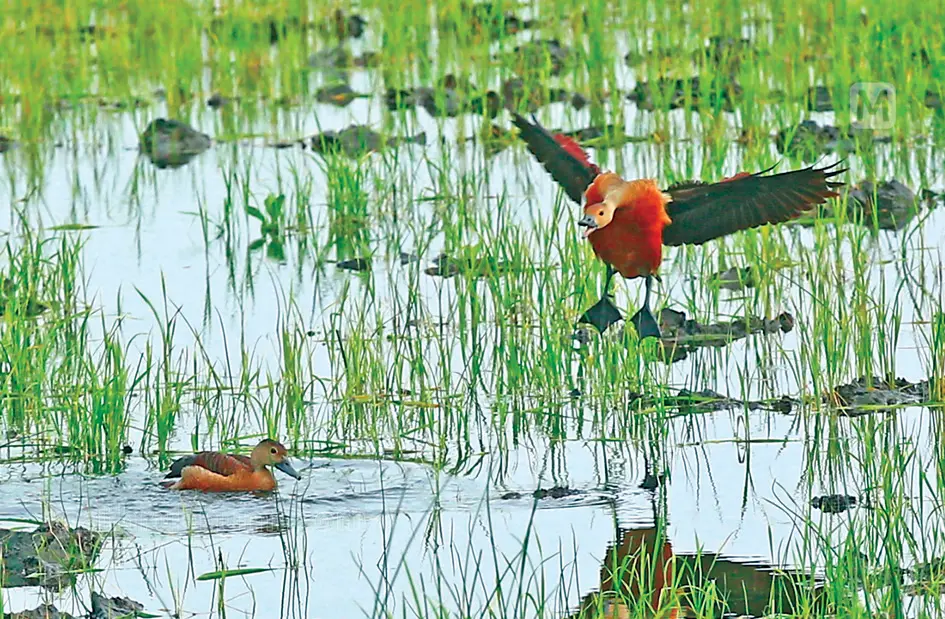
Kochi: Flocks of lesser whistling ducks feeding on newly sprouted paddy seedlings have emerged as a major threat to Pokkali farming (Pokkali rice is renowned for being grown in Kerala's saline, waterlogged coastal fields). The birds arrive soon after sowing, when the seeds begin to germinate, and consume the young plants within a short time.
Lesser whistling ducks are protected under Schedule II of the Indian Wildlife (Protection) Act. As they are protected species, farmers cannot take any action against them beyond trying to drive them away.
Farmers say that despite seeking assistance, no effective measures have been taken by the Agriculture Department so far. Pokkali cultivation is now limited to only a few areas, making damage to seedlings a serious concern for those continuing the traditional farming practice.
"The situation has forced us to guard the fields until the paddy plants grow," said farmer Francis Kalathunkal.
Most Pokkali fields are located away from residential areas, making it difficult to notice the arrival of bird flocks quickly. Once the birds enter the fields in large numbers, they can finish off the seedlings within minutes.
Farmers often use firecrackers to scare them away. Although the birds fly away after hearing the noise, they return after a short while. As a result, some farmers have started hiring daily wage workers to stay in the fields and keep the birds away.
Reflective ribbons and nets used to protect crops
Farmers are trying different methods to prevent lesser whistling ducks from damaging their crops. Reflective ribbons and nets are among the measures being used.
The Agriculture Department provides reflective ribbons, which are tied across fields. The sound produced when the ribbons move in the wind and the sunlight reflected from them are believed to help keep the birds away.
However, Francis Kalathunkal said that although officials visited the fields and conducted an inspection this season, the ribbons have not yet been provided.
Some farmers are also covering paddy plants with nets to prevent the birds from feeding on them. However, the method involves high costs, making it difficult for many farmers to adopt.
Attracted to Kerala wetlands
Lesser whistling ducks resemble domestic ducks and are commonly found across South and Southeast Asia.
The birds move in flocks during winter when food availability declines. Kerala, with its extensive wetlands, attracts these birds in significant numbers.
They usually stay in less disturbed areas, including bushes and isolated patches. Apart from paddy seedlings, fish also forms part of their diet.