Diwakaran's low-altitude tea plantation is a success story and gains popularity
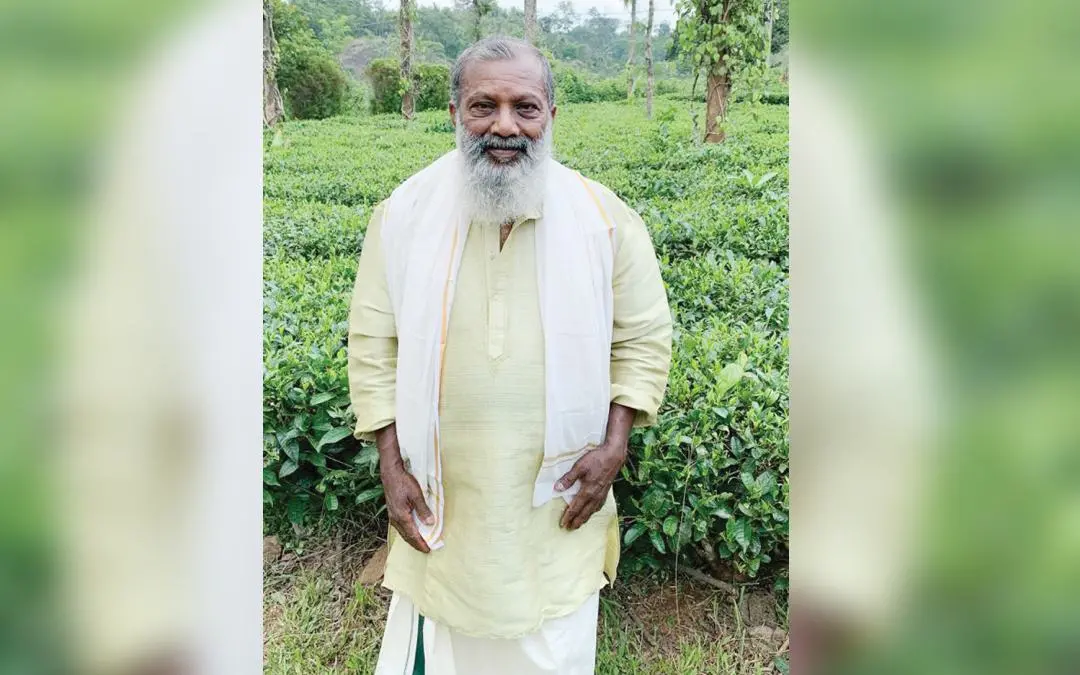
Udumbannoor (Idukki): Ever wondered if tea grown in low ranges can match the quality of its high-altitude counterparts? At Diwakaran’s plantation in Uppukunnu, the answer is a resounding yes.
Diwakaran, a member of the tribal community in Valiapurakkal Uppukunnu, Idukki, has been cultivating tea for over three decades in an area typically not suited for tea farming. His 2.5-hectare plantation defies convention, as tea is usually grown in cooler, higher altitudes. Despite this, Diwakaran has successfully cultivated high-range tea varieties in his low-altitude farm, which is situated only 1600 feet above sea level.
Tea cultivation generally thrives in temperatures ranging from 15 to 28 degrees celsius. High-altitude regions like Munnar, Kolukkumalai, Marayoor, Peerumedu, Elappara, Vandiperiyar, Kuttikkanam, Vagamon and Pullikkanam with elevations between 3,000 and 7,000 feet, are traditionally ideal.
Diwakaran's decision to plant tea in Uppukunnu stemmed from a tea board training session he attended in Vandiperiyar 30 years ago, where he learned about tea cultivation techniques.
At Uppukunnu, the relatively cold climate at its highest point proved beneficial. Diwakaran chose the Upasi-9 cultivar, which is adaptable to lower altitudes. After four years of careful cultivation, the tea produced not only yielded a bountiful harvest but also boasts of a pleasing taste. The organic approach enhanced its appeal, leading to a growing demand and good price. Diwakaran also began producing various types of tea, including green and white tea, further boosting his income. His farm produced around 3,000 kg of vegetables throughout the year, except during summer.
Diwakaran used a machine for plucking tea leaves initially but at 72 years he has shifted to sending the leaves to external processors due to the high costs associated with organic farming. While small tea leaves once commanded premium prices, the switch to conventional fertilisers means that prices are now regulated by the tea board.
Udumbannoor Agriculture Officer K. Ajimon praised Diwakaran’s achievement, noting that the absence of steep cliffs and the proximity to the forest border contribute to the soil's suitability, which mirrors that of high-range regions. This unique combination has been key to the success of Diwakaran’s tea cultivation.