2 lakh buds sold in 5 minutes: Why are farmers scrambling for new sugarcane variety CoS.23232
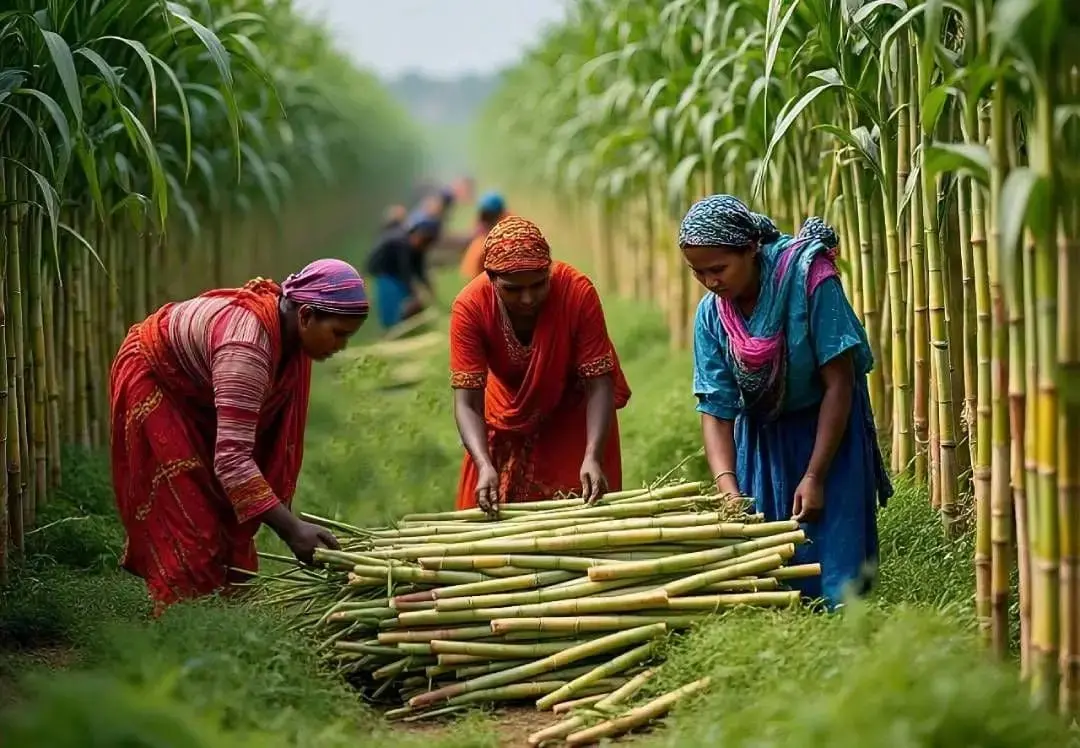
Farmers in Uttar Pradesh are showing strong interest in a newly developed sugarcane variety, CoS.23232, which promises early maturity, higher cane weight and greater sugar content. The excitement was evident when the Uttar Pradesh Council of Sugarcane Research (UPCSR) opened online bookings on October 9: the entire stock of two lakh buds was booked within five minutes, leaving many interested growers without planting material.
The variety is being positioned as a potential alternative to Co.0238, among the most widely cultivated sugarcane varieties in Uttar Pradesh. With the next sowing season approaching, scientists and farmer groups are watching closely to see whether CoS.23232 can deliver on its early-harvest and higher-sugar promise at scale.
Why farmers are interested
CoS.23232 has been developed for early harvesting, a major advantage in sugarcane cultivation where timely crushing and mill schedules can affect both recovery and farmer realisation.
According to Dr Sanjeev Kumar Pathak, a dissemination officer at the council, the variety produces about 10 per cent more weight per quintal than other sugarcane varieties.
It also has longer and thicker canes and higher sugar content, making it attractive both for farmers seeking better yields and mills looking for improved sugar recovery.
The combination of early maturity and higher cane weight could allow farmers to bring cane to mills earlier in the crushing season.
A decade in the making
Developing a new sugarcane variety is a long process. Dr Arvind Kumar, senior scientist in the breeding division of the Sugarcane Research Council, said it typically takes 10 to 12 years to develop and evaluate a new variety before it is released for cultivation.
The initial breeding work begins in Coimbatore, where climatic conditions are considered suitable for the early stages of variety development. Researchers then assess the balance between yield and sweetness before selecting a variety for wider cultivation.
CoS.23232 was developed by crossing CoS.8119, a northern Indian variety used as the female parent, with Co.775 from southern India, used as the male parent. The variety underwent nearly a decade of evaluation before being introduced for cultivation in Uttar Pradesh.
Demand outstrips supply
The council opened online bookings for CoS.23232 on its official portal on October 9. Only two lakh buds were made available in the first phase, and the stock was exhausted within five minutes of bookings opening.
The immediate sell-out reflects both the novelty of the variety and the limited availability of planting material in the first season. Farmers who missed out will have to wait for expanded seed multiplication before the variety becomes more widely accessible.
To meet growing demand, the council is stepping up seed multiplication through single-bud propagation and tissue-culture techniques. These methods are intended to expand the supply of planting material and enable more farmers to access the variety in the coming seasons.
The council is also preparing to organise a farmers’ fair in October, where mini seed kits of CoS.23232 are expected to be distributed. The initiative is aimed at giving more growers direct access to the new variety and encouraging wider adoption ahead of the planting season.
What it means for UP’s cane economy
Uttar Pradesh is among India’s largest sugarcane-producing states, and varietal choice has a direct bearing on farmer incomes, mill recovery and crushing-season efficiency.
Co.0238 has dominated cultivation in the state for years, but concerns around varietal fatigue and the need for higher-yielding, early-maturing options have kept researchers searching for alternatives.
CoS.23232’s early maturity, higher cane weight and improved sugar content make it a strong candidate to diversify the varietal base. If seed multiplication scales up smoothly and field performance matches trial results, the variety could reshape planting decisions across key cane belts in the state.
For now, the five-minute sell-out of two lakh buds is the clearest signal yet that farmers are ready to try something new. The real test will come over the next few seasons, as the variety moves from research plots and limited seed kits to large-scale cultivation across Uttar Pradesh.