NCERT textbook rewrites Class 7 history; Mughals out, sacred geography and Maha Kumbh in
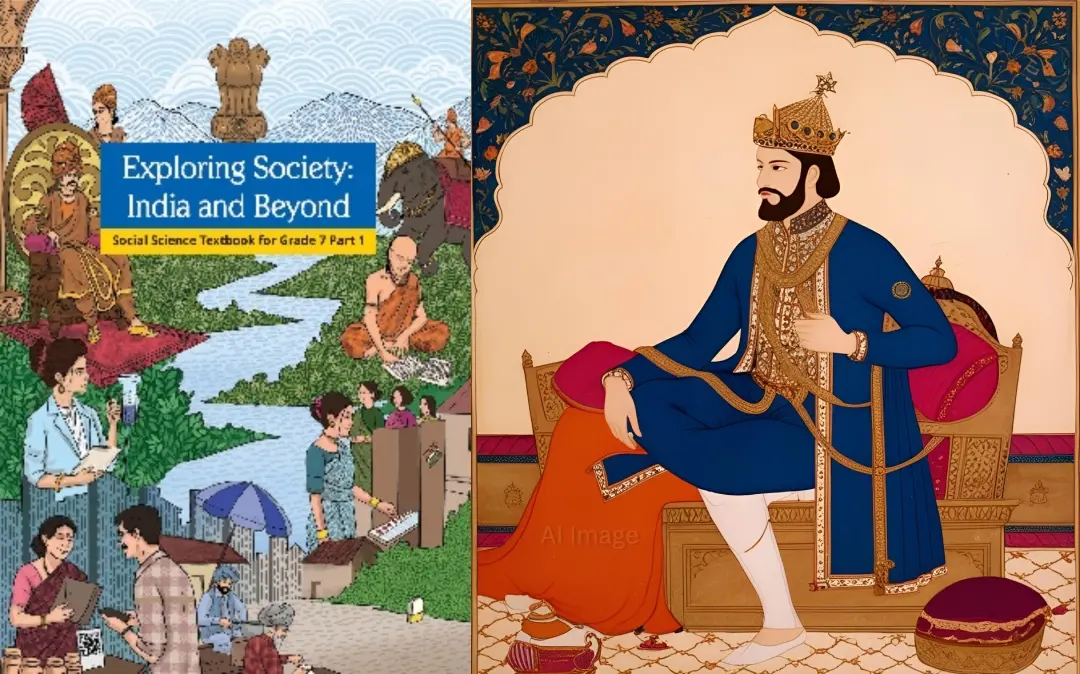
New Delhi: All references to the Mughals and the Delhi Sultanate have been removed from the Class 7 NCERT textbooks, while new chapters covering Indian dynasties, 'sacred geography', references to the Maha Kumbh, and government initiatives such as Make in India and Beti Bachao, Beti Padhao have been introduced.
The newly released textbooks are aligned with the National Education Policy (NEP) and the National Curriculum Framework for School Education (NCFSE) 2023. These frameworks stress the inclusion of Indian traditions, philosophies, knowledge systems, and local contexts within school education.
When contacted, NCERT officials stated that the current release constitutes only the first part of the textbook, with the second part expected in the coming months. However, they did not confirm whether the removed portions would appear in the upcoming section.
While NCERT had previously trimmed sections on the Mughals and Delhi Sultanate -- including detailed account of dynasties like Tughlaqs, Khaljis, Mamluks, and Lodis and a two-page table on Mughal emperors' achievements as part of its syllabus rationalisation during the COVID-19 pandemic in 2022–23, the new textbook has now removed all references to them.
The current edition features newly written chapters with no mention of the Mughals or the Delhi Sultanate.
The Class 7 Social Science textbook, titled “Exploring Society: India and Beyond”, introduces chapters on ancient Indian dynasties such as the Magadha, Mauryas, Shungas, and Satavahanas, emphasising "Indian ethos."
One notable addition is a chapter titled “How the Land Becomes Sacred”, focusing on sacred places and pilgrimages across India and other parts of the world. It covers religious traditions including Islam, Christianity, Judaism, Zoroastrianism, Hinduism, Buddhism, and Sikhism.
The chapter introduces concepts like "sacred geography" detailing networks of such places as 12 jyotirlingas, the char dham yatra, and the "Shakti pithas." The chapter also details such places as river confluences, mountains, and forests, which are revered.
The text includes a quote from Jawaharlal Nehru, who described India as a land of pilgrimages — from the icy peaks of Badrinath and Amarnath to the southern tip at Kanyakumari.
The textbook claims that while the varna-jati system initially contributed to societal stability, it became rigid over time, particularly under British rule, leading to social inequalities.
The recent Maha Kumbh mela held in Prayagraj is also mentioned, noting the participation of around 660 million people. However, the book does not reference the stampede incident that resulted in the deaths of 30 pilgrims and injuries to several others.
Government initiatives such as Make in India, Beti Bachao Beti Padhao, and the construction of the Atal Tunnel are featured in the new edition.
The book also has a chapter on the Constitution of India, which mentions that there was a time when people were not allowed to fly the national flag at their homes.
"This changed in 2004 when a citizen felt it was his right to express pride in his country and challenged the rule in court. The Supreme Court agreed, saying that flying the flag is part of the Fundamental Right to Freedom of Expression. We can now fly the tricolour with pride, keeping in mind that it should never be dishonoured," the chapter read.
In English textbook "Poorvi," out of 15 stories, poems, and narrative pieces, nine are by Indian writers or feature content and characters that are Indian, including works by Rabindranath Tagore, APJ Abdul Kalam, and Ruskin Bond.
The earlier textbook called "Honeycomb" had 17 stories, poems, and other writings, including four by Indian writers.
The revamp of NCERT textbooks has been met with criticism from opposition parties which equate the revamp with "saffronisation."
NCERT Director Dinesh Prasad Saklani had in an interview to PTI last year claimed, "teaching about riots can make young children negative citizens."
PTI