In 2008, the state had limited options to hold the attack planners accountable: Air Chief
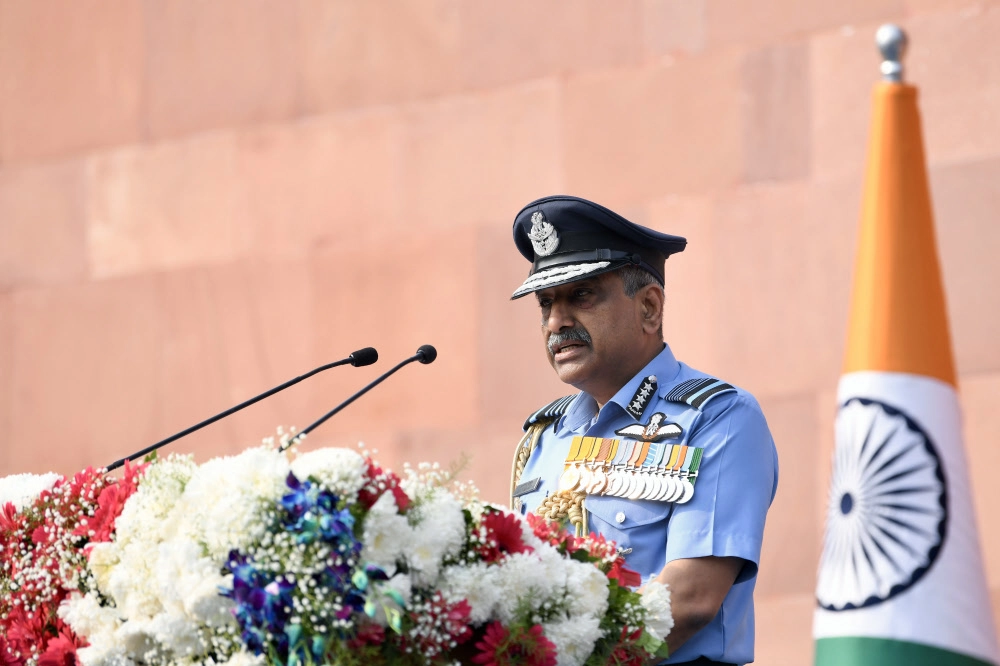
Mumbai: India had limited options to retaliate after the 26/11 Mumbai terror attacks, but its response has since shifted "drastically" with forceful strikes following Uri, Pulwama, and Pahalgam, Air Chief Marshal Ashutosh Dixit said on Thursday.
Speaking at an event here, Dixit noted that the 2008 attacks were a test of the state as a whole, exposing shortcomings in intelligence sharing, coastal surveillance, response speed, and inter-agency coordination.
"In 2008, the state had limited options to impose a cost on those who planned and sponsored the attacks. That position has since changed drastically," he said.
After 26/11, India responded firmly by overhauling its security apparatus, Dixit said, referring to the setting up of the National Investigation Agency (NIA) in December 2008, establishing National Security Guard (NSG) hubs in Mumbai and other cities, and the revamping of coastal security under the Indian Navy's overall responsibility. These reforms have served the country well, he said.
Noting that 26/11 demonstrated that no single agency can handle national security alone, the Air Chief said Operation Sindoor showcased what is achievable when political leadership, diplomacy, intelligence, and the defence forces act in concert. The result was "stupendous", he said.
In 2016, after Uri, the Army struck terrorist launch pads across the Line of Control. In 2019, after the Pulwama terrorist attack, the Indian Air Force struck a terrorist training facility at Balakot deep inside Pakistan. When terrorists killed 26 innocent people in Pahalgam in April 2025, Operation Sindoor followed, Dixit said.
Precision strikes during Operation Sindoor destroyed terrorist infrastructure at nine sites in Pakistan and Pakistan-occupied Kashmir, he said.
"When Pakistan escalated with drones and missiles against our cities and military installations, our air defence held. Our strikes then hit radars, command and control centres, runways, and hangars across 11 air bases. Within four days, the adversary sought a cessation of military action," Dixit said.
Air power offers "reach without occupation", he said, adding that it also provides precision, which allows force to be applied in proportion to the aim.
It also offers speed, so that the response follows the provocation closely enough to be understood as one, the Air Chief said, adding that air power also offers control as the intensity of action can be raised or reduced depending on the situation.
Air strike is "one half" while the other half is air defence, as punishment deters only when the nation can absorb the adversary's counter-strike, Dixit said.
"During Operation Sindoor, our integrated air defence denied the adversary that leverage. The ability to strike and the ability to protect must be built together," he said.
Operation Sindoor also showed the areas that required improvement, Dixit noted.
"First (issue) is the time from intelligence to action - it has to shrink still further. So, we have sensors, we have to analyse them, and the shooters across the services and national agencies must work from one consolidated picture in near real-time," he said.
Escalation must be managed as deliberately as it is initiated, Dixit said, adding that every step needs a "clear aim, a measured scale, and a planned exit".
Signaling to the adversary and to the world is also part of the operation itself, Dixit noted.
"Homeland is now part of the battle space", the Air Chief said, pointing out that Pakistan's drones and missiles were directed at Indian cities during Operation Sindoor.
"The contest of narratives begins within hours. False claims of losses were circulated by adversary at scale during the operation. Facts released with speed and credibility are now an operational requirement," Dixit said.
Referring to the ongoing West Asia crisis and Russia-Ukraine war, he said these conflicts show that wars are going to last longer than their planners intend them to.
Over time, the side that can sustain production (of military hardware) and replace its losses will always hold the advantage, he said.
An adversary can also strike in cyberspace without crossing the border, Dixit said, while also flagging the potential threat of quantum technologies which may, in time, "break the encryption on which many of our systems depend today."
Preparation for quantum-safe processes must begin well before that day arrives, he said.
(Except for the headline, this story has not been edited by Mathrubhumi and is published from a syndicated feed.)